In California, backyard shooting is illegal in most residential areas, regardless of property ownership. State penal codes and municipal ordinances prohibit firearm discharge within city limits and enforce 150-yard safety distances from occupied structures. Private property alone doesn’t grant shooting rights—you’ll need written permits, minimum acreage requirements (often 5+ acres), neighbor consent, and certified backstops. Licensed shooting ranges offer legal alternatives. Understanding your specific zone’s restrictions and enforcement consequences requires verifying local ordinances before attempting any discharge.
Why Is Backyard Shooting Illegal in Most California Neighborhoods?
Why can’t you discharge firearms in your California backyard? Most neighborhoods enforce backyard shooting bans through local ordinances designed to protect community safety. These residential restrictions exist because firing weapons in populated areas creates genuine hazards. Bullets travel unpredictably through structures, yards, and neighboring properties. Local ordinances specifically prohibit reckless discharge on private property within city limits. Even unintentional harm triggers criminal liability under state law. California’s safe storage requirements compound these restrictions by mandating secure firearm containment. Municipalities recognize that residential density makes backyard shooting inherently dangerous. Firing weapons near occupied structures violates multiple statutes simultaneously. Your neighbors’ proximity makes what seems like isolated activity a public safety concern. These regulations reflect community-wide standards rather than arbitrary restrictions.
What Are California’s Safety Zone and Distance Requirements?
How far must you stay from occupied structures when discharging firearms in California?
California enforces a 150-yard safety distance rule for backyard shooting near dwellings. This distance requirement applies to occupied residences, related structures, and any inhabited buildings. Local ordinances often impose stricter regulations depending on your municipality.
California requires a 150-yard safety distance from occupied dwellings when discharging firearms, with stricter local ordinances varying by municipality.
Key safety considerations for your area:
- Maintain minimum 150 yards from occupied dwellings and structures
- Check municipal codes for additional restrictions within city limits
- Avoid reckless discharge near public roads and populated zones
- Verify local ordinances before attempting any discharging near properties
Understanding these safety distance requirements protects you from criminal liability. Your responsibility extends beyond federal guidelines to include local enforcement standards. Before setting up any shooting area, contact your city or county planning department to confirm permitted distances and designated zones that comply with all applicable regulations.
What Does Your City or County Actually Prohibit?
Your city or county likely enforces specific firearm discharge restrictions that go beyond California’s baseline 150-yard safety distance. I’d recommend contacting your local city clerk or police department directly. They’ll clarify which ordinance applies to your backyard situation.
Many municipalities prohibit discharge entirely within city limits, regardless of property size. Others designate specific shooting zones or require permits for any firearm use. Irvine’s ordinance 3-4-135, for instance, restricts possession and discharge except in approved areas.
Local rules frequently establish proximity requirements near schools, roads, and residential structures. Some counties ban discharge in open-space preserves entirely. Storage and transport restrictions often apply too—locked cases and unloaded firearms during transport.
Hours of operation matter significantly. Your county may prohibit evening or weekend shooting. Verify these specifics before attempting backyard discharge in California.
When Private Property Allows Shooting: Acreage, Permits, and Neighbor Consent Requirements
Even if your local ordinance doesn’t explicitly ban backyard shooting, acreage and private property ownership alone don’t grant you legal permission to discharge firearms. California firearm laws require you to navigate multiple compliance layers beyond property lines.
Private property ownership doesn’t automatically permit backyard firearm discharge in California; state regulations and local ordinances create multiple compliance requirements beyond property lines.
Consider these requirements:
- Minimum acreage standards vary by county; some demand 5+ acres with specific setback distances from property boundaries
- Permits and licenses may be mandatory, requiring applications through your county sheriff or local authorities
- Neighbor consent documentation protects you legally; written agreements establish awareness of shooting activities
- Safe backstop design with earthen berms or commercial systems containing projectiles entirely on your property
You’ll need to verify each requirement with your city or county office. Private property doesn’t override state regulations or local ordinances. Confirmation before shooting prevents violations and maintains community trust among neighbors sharing your area.
Are BLM and Public Lands Near Your Home Legal Alternatives?
If your backyard shooting isn’t viable, you’ll want to explore BLM lands near you—these multi-use public properties often permit target shooting in undeveloped areas where discharge isn’t posted as prohibited. Before heading out, contact your local BLM office directly and verify current conditions, since shooting restrictions vary by site and management designations aren’t always visible on standard maps. You’ll need to follow California’s wildfire prevention rules, Leave No Trace ethics, and safety protocols; any fire you cause remains your legal responsibility.
BLM Land Access Requirements
Where can you legally shoot on public lands near your home? BLM lands offer shooting opportunities, but accessing them requires understanding specific requirements that protect both you and surrounding communities.
- Public road access only: You must enter BLM lands through established public roads; crossing private property demands written permission from the owner
- Local ordinances compliance: Check your county’s discharge laws and required safety distances before shooting near property lines or residential areas
- Safety distance enforcement: California state law mandates minimum distances from homes, roads, and occupied structures that vary by jurisdiction
- Resource protection responsibility: You’re liable for any fires you cause; follow Leave No Trace ethics and extinguish all fire hazards completely
BLM maps help locate accessible lands, but they don’t identify specific shooting sites. Contact your local BLM office for current restrictions and approved shooting areas in your region.
Local Shooting Restrictions Apply
How do you know which shooting locations actually comply with California law? Local ordinances vary significantly across municipalities, and you can’t assume backyard shooting is permissible on your private property. Many California cities explicitly prohibit firearm discharge within city limits, regardless of land ownership. You’ll need to verify municipal codes before attempting any backyard shooting activity.
California Penal Code establishes strict standards. Discharging firearms can violate noise ordinances, land-use regulations, and safety regulations even on private property. Violations carry criminal penalties and liability exposure. Private property status doesn’t exempt you from prosecution if your shooting endangers neighbors or breaches local restrictions.
Your responsible approach involves checking your city’s municipal codes directly. Contact your local police department or city clerk’s office for current regulations. Public shooting ranges and supervised private bays offer compliant alternatives that keep you legally protected.
Does Your Property Legally Qualify for Shooting?
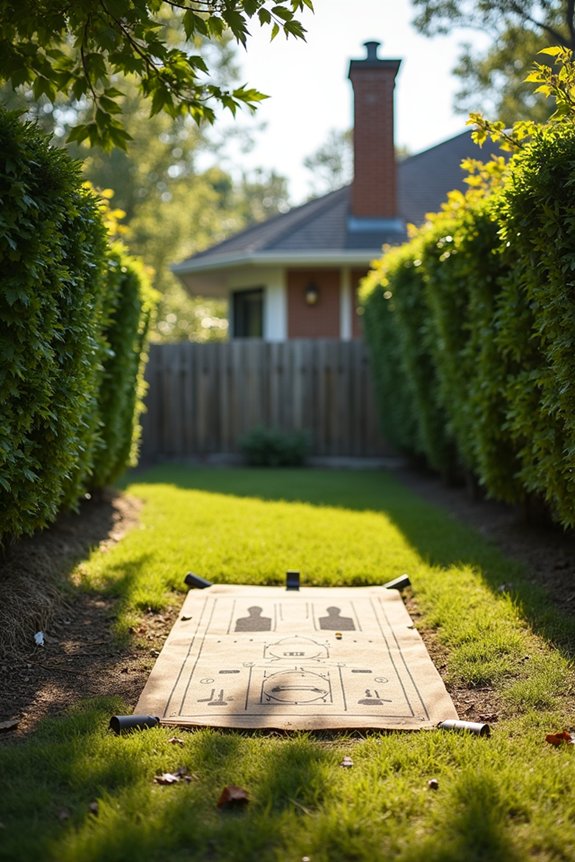
Your property’s legal qualification for shooting depends on three primary factors: location classification, local ordinances, and specific zoning designations.
- Rural versus suburban designation: Rural properties typically permit discharge; suburban areas prohibit backyard shooting entirely under local ordinances
- Minimum acreage requirements: Many counties mandate specific lot sizes—often 5+ acres—before discharge legality applies to private property
- California Penal Code compliance: Sections 246.3 and 25850 govern discharge legality regardless of ownership; violations carry criminal liability
- Zoning verification necessity: Residential zones almost always restrict firearms discharge, while some unincorporated areas permit it under specific conditions
Before considering any backyard shooting activity, you’ll need to verify your exact property classification with your county assessor’s office. Contact your local law enforcement agency regarding discharge legality in your specific zone. Many property owners assume private property automatically permits shooting; this misconception creates serious legal consequences. Confirm zoning designations and obtain written permission documentation from your municipality.
Licensed Ranges as Your Legal Shooting Option
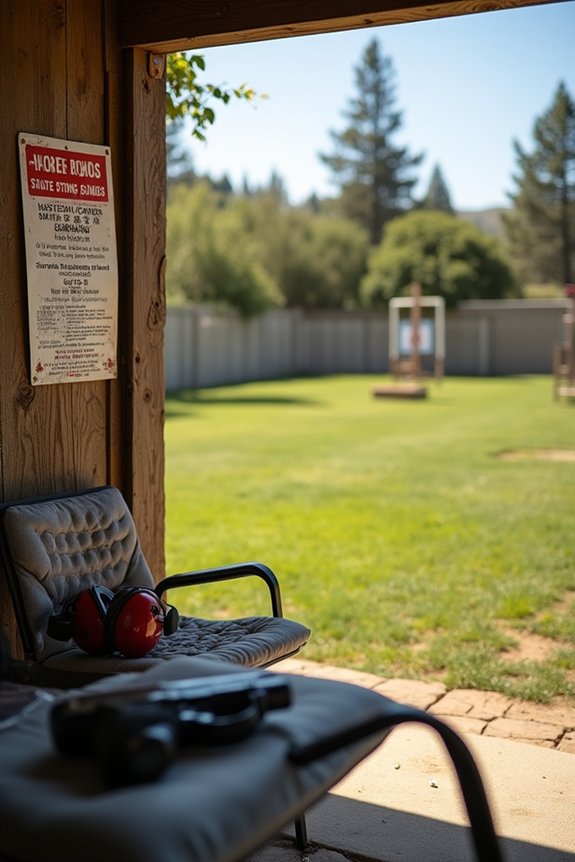
Given California’s restrictive backyard discharge laws, licensed shooting ranges represent your most straightforward legal alternative for firearm practice. I’d recommend exploring facilities that align with your shooting interests and schedule constraints.
| Feature | Public Indoor Ranges | Outdoor Licensed Ranges |
|---|---|---|
| Time Limits | Restricted | Unlimited |
| Firearm Types | Limited calibers | Handgun, rifle, PCC |
| Environment | Narrow booths | Open space |
| Lighting | Artificial | Natural daylight |
| Distance Capability | Close quarters | Extended rifle distances |
Licensed ranges enforce comprehensive safety protocols and range rules that protect all shooters. You’ll transport firearms unloaded, follow staff guidance, and use managed ammunition systems. Outdoor facilities like CTALA offer superior training opportunities through fresh air, natural light, and realistic distances. This legal framework keeps you practicing responsibly while maintaining full compliance with California’s private property restrictions and local ordinances.
Consequences of Illegal Backyard Shooting in California
While licensed ranges provide a legal framework for your firearm practice, circumventing California’s backyard shooting prohibitions carries serious criminal penalties.
Unlawful discharge violations trigger immediate legal consequences you’ll want to avoid:
Unlawful discharge violations trigger immediate legal consequences including misdemeanor charges, fines, and potential firearm possession bans.
- Penal Code 246.3 violations result in misdemeanor charges, fines up to $1,000, and potential jail time
- Felony elevation occurs when backyard shooting endangers inhabited structures or occupied vehicles
- Firearm possession bans restrict your future ownership rights following conviction
- Local ordinances enforcement adds county-specific penalties beyond state law consequences
Private property ownership doesn’t shield you from liability. Whether you’re shooting crows on telephone poles or firing celebration rounds, local ordinances prohibit discharging firearms near structures, roads, or open spaces. County maps and ordinance verification reveal your property’s restrictions. Criminal charges accumulate quickly when violations involve proximity to neighbors or populated areas, permanently affecting your shooting privileges and legal standing.
Does Unincorporated Land Give You More Shooting Freedom?
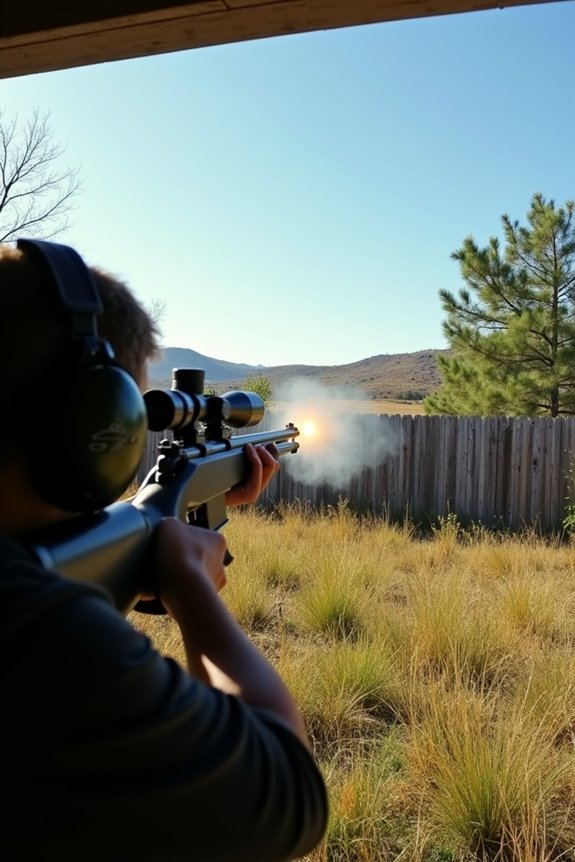
You might think unincorporated county land offers more shooting freedom, but county regulations and local ordinance variations still apply. I’d recommend checking your specific county’s firearm discharge rules, setback distances from structures, and any conditional land-use permits before assuming you can shoot freely. Even on unincorporated parcels, BLM restrictions, fire hazard zones, and neighbor proximity standards constrain what’s legally permissible.
Unincorporated County Regulations
Does shooting in unincorporated county land actually grant you more freedom than city areas? You’ll find fewer zoning restrictions, but don’t assume you’ve found a shooting haven. County ordinances still govern your activities on unincorporated land. You need explicit private property permission from the landowner before discharging firearms. State laws regarding lead ammunition, fire safety, and safe storage remain enforceable everywhere.
Your shooting location must comply with these requirements:
- Verify current county ordinances specific to your shooting area
- Obtain written landowner consent for private property use
- Install adequate backstops preventing rounds from traveling beyond your property
- Check BLM regulations if adjacent to public land boundaries
Before planning your shooting session, contact your county sheriff’s office and review local BLM regulations. Compliance protects you legally and maintains community safety standards across unincorporated regions.
Local Ordinance Variations
The misconception that unincorporated county land offers unrestricted firearm use persists among California shooters, yet the reality remains considerably more regulated. You’ll find that local ordinances vary substantially across counties, restricting backyard shooting through specific safety regulations and distance requirements.
| County Type | Distance Requirements | Noise Limits | Fire Safety Code |
|---|---|---|---|
| Urban Unincorporated | 300-500 feet | 85 decibels | Strict |
| Rural Unincorporated | 100-300 feet | 90 decibels | Moderate |
| Incorporated Cities | Prohibited | Restricted | Strict |
| Special Districts | 200-400 feet | 85 decibels | Varies |
Even unincorporated areas enforce county fire safety codes and property-use regulations. I recommend contacting your specific county government office before pursuing California firearms activities. They’ll clarify distance requirements, safety regulations, and whether backyard shooting complies locally. This prevents legal complications.
Getting Written Permission From Your Sheriff or County (Where Available)
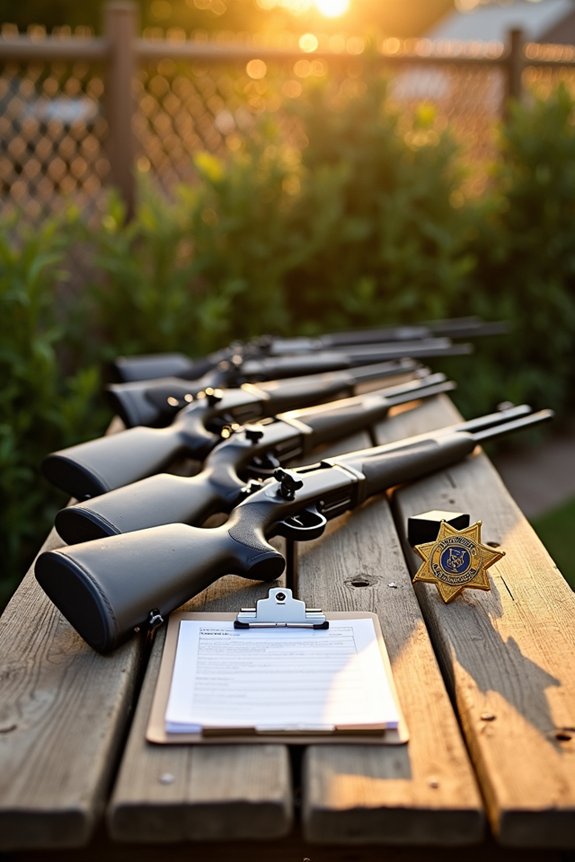
In California, several counties and unincorporated areas require written authorization from the sheriff’s office or county government before you can legally discharge firearms on private property.
If you’re seeking permission to shoot in your backyards, you’ll need to understand your specific county’s requirements:
- Contact your local sheriff’s office to request written permission documentation for firearm discharge
- Provide detailed information about your property location, size, and proposed shooting activities
- Expect conditions such as designated shooting hours, mandatory safe backstops, and noise restrictions
- Receive formal authorization specifying allowed firearm types, range boundaries, and permit duration
Written permission documents establish clear legal protection for your shooting activities. However, you must verify that municipal ordinances and your landowner’s policies don’t impose additional restrictions. Compliance with all stated conditions prevents criminal charges and maintains your authorization status throughout the permit period.
Where Can You Legally Shoot in California? (A Quick Reference)
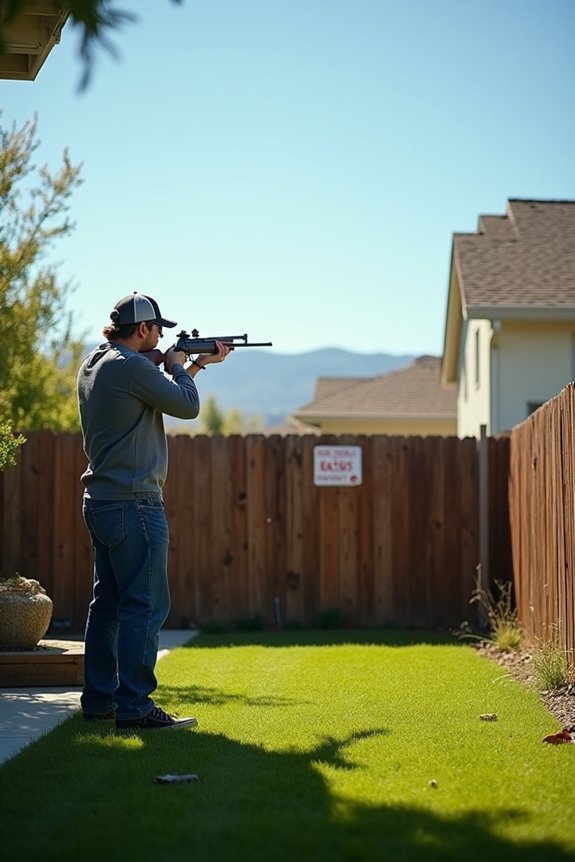
Where you can discharge firearms in California depends entirely on location type and local jurisdiction approval. Public shooting ranges represent your safest, most legally sound option. These facilities maintain proper backstops, distance markers, and safety protocols that protect you from liability. Private property shooting requires careful navigation. Your backyard shooting plans demand verification of local ordinances before proceeding. Many municipalities prohibit discharge within city limits, regardless of property ownership. County regulations often impose minimum acreage requirements and distance restrictions from neighboring structures. Safe discharge standards mandate proper target placement, adequate backstops, and clear firing zones. If you’re considering shooting ranges instead, you’ll find state-regulated facilities designed specifically for firearm use. Contact your local sheriff’s office to confirm whether backyard shooting aligns with existing ordinances in your area.
Next Steps: Finding Legal Shooting Opportunities in Your Area
Now that you’ve understood California’s backyard shooting restrictions, I’ll help you identify three concrete pathways forward. Research your specific city’s municipal ordinances first—they contain precise firing prohibitions, distance requirements from structures, and penalty details that govern your property. From there, you can evaluate public shooting ranges, private land options with owner permission, and facilities like CTALA’s outdoor range, which provide controlled environments with established safety protocols and oversight.
Local Ordinance Research
How do you know whether your backyard shooting plans comply with local law? You’ll need to research your specific California city and county ordinances before firing any firearms or BB guns on your property.
Start your local ordinance research with these steps:
- Contact your city hall or police department directly for current backyard shooting regulations and permit requirements
- Review municipal code documents online, which detail firearms restrictions, noise ordinances, and safety zones within your jurisdiction
- Check zoning maps identifying prohibited shooting areas and residential density classifications affecting legality
- Consult county bulletins listing specific restrictions that may supersede city rules in unincorporated regions
Local ordinances vary significantly across California communities. Suburban areas typically impose stricter regulations than rural zones due to population density and safety concerns. Verifying requirements prevents potential criminal charges and keeps your shooting activities lawful and compliant with all applicable codes.
Public Range Alternatives
If your local ordinances prohibit backyard shooting, public ranges offer a straightforward legal alternative. I’ve found that public ranges provide compliant venues for handgun, rifle, and PCC use without backyard shooting restrictions limiting your practice.
| Range Type | Key Features | Best For |
|---|---|---|
| Indoor Ranges | Time limits, restricted calibers, narrow booths | Quick sessions |
| Outdoor Ranges | Open space, no hourly limits, multiple bays | Extended practice |
| CTALA | 1,500+ acres, 50 bay configurations, unlimited access | Comprehensive shooting |
When evaluating public ranges, I prioritize facilities enforcing consistent safety rules and offering no hourly time constraints. CTALA stands out among outdoor shooting venues because you can practice handgun and rifle simultaneously across extensive acreage. These safety rules support community compliance and professional operations. Finding legal shooting opportunities means selecting ranges matching your practice goals.
Private Land Options
While public ranges eliminate most legal complications, owning private land offers you shooting opportunities that don’t depend on facility hours or membership fees. You’ll need to navigate local ordinances and set up properly before firing any rounds.
Requirements for private land shooting:
- Verify landowner permission in writing and confirm no HOA restrictions apply
- Install a certified backstop system rated for your caliber and distance
- Review county fire safety codes and burn restrictions in your jurisdiction
- Maintain safe handling protocols including clear sightlines and established boundaries
Rural or farmland ownership requires state compliance with fire safety standards. Your backstop must meet specific height and material requirements based on shooting distance and caliber. Contact local county authorities to confirm all restrictions before establishing your range setup.