
The standard shower curtain measures 70 inches wide by 72 inches long, though your actual needs depend on measuring your specific space. I’d measure wall-to-wall across your shower opening, then add 12 inches for overlap and fabric fullness. For length, measure from your curtain rod to the floor, then subtract 8–10 inches to account for hanging rings. These calculations help maintain proper water containment and coverage.
Understanding these measurements helps you avoid common sizing mistakes that affect functionality.
What Is a Standard Shower Curtain Size?
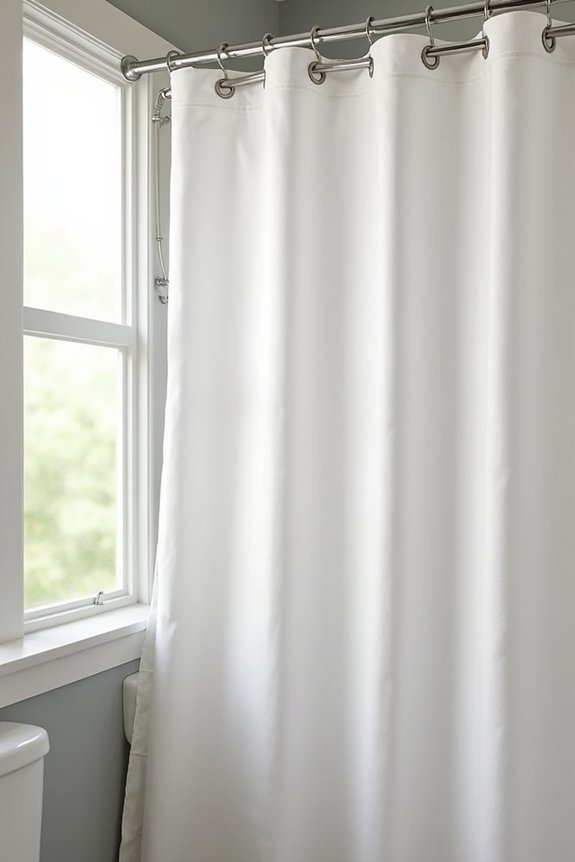
How do you know if a shower curtain will actually fit your bathroom? Understanding standard size dimensions is important. The standard shower curtain measures approximately 70 inches wide by 72 inches long, converting to roughly 180 centimeters by 180 centimeters. This standard size accommodates most regular bathrooms and typical bathtubs effectively. Brands like DZEE Textiles offer variations such as 71″ x 74″, which remain within standard parameters. These dimensions provide adequate water containment while maintaining practical usability. Standard sizes balance coverage requirements with installation simplicity. However, bathrooms with unusual layouts or distinctive ceiling heights may necessitate deviations from conventional measurements. Knowing your bathroom’s specific dimensions helps you select a shower curtain that functions properly and fits securely within your space.
Measure Your Shower Width Wall-to-Wall
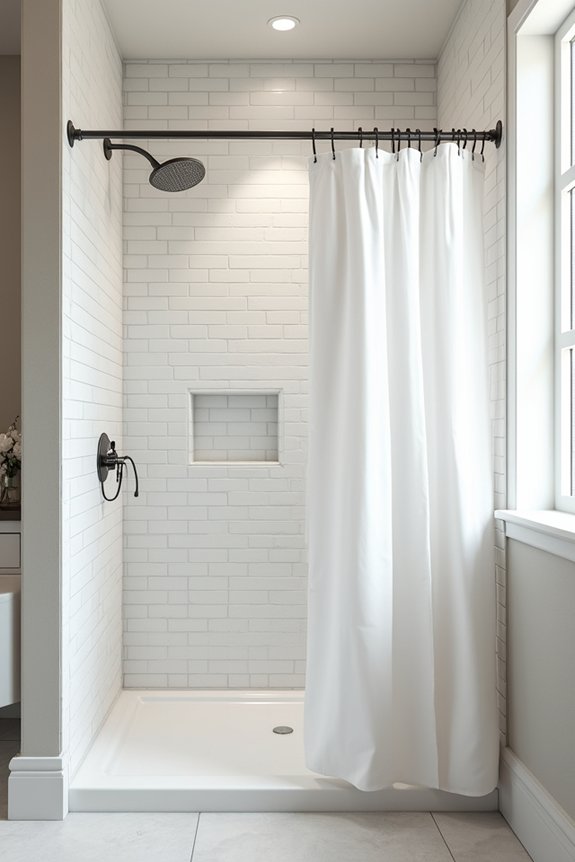
Before you can select the right shower curtain width, you’ll need to measure your shower opening from wall to wall. This measurement gives you the foundation for proper curtain sizing. Grab a tape measure and position it horizontally across your shower area, measuring from one wall to the opposite wall. Record this number precisely.
| Measurement | Action |
|---|---|
| Wall-to-wall distance | Record exact measurement |
| Add 12 inches | Calculate total width needed |
| Compare to standard sizes | Match closest available option |
Once you have your shower width, add 12 inches to this wall-to-wall measurement. This additional coverage allows your curtain to drape properly when closed, minimizing water escape along the sides. Standard curtain widths like 72 or 84 inches align with these calculations. If your measurement falls between standard options, select the width closest to your adjusted total.
Add 12 Inches to Your Width Measurement
Once you’ve recorded your wall-to-wall measurement, add 12 inches to that number. This addition serves a practical purpose: it creates fabric overlap and prevents water from escaping onto your bathroom floor around your shower or tub base.
The extra 12 inches allows your curtain to wrap slightly beyond the edge when closed. This extension stops water from reaching your bathroom floor. The overlap also accommodates the natural drape of fabric, which prevents pulling or tension on rings and hooks.
After adding 12 inches to your width measurement, identify the closest standard curtain size available. Common widths include 72 inches and 84 inches. Select whichever option aligns with your adjusted measurement. This approach provides adequate coverage and functional performance in your specific bathroom space.
Measure From Rod to Floor for Length
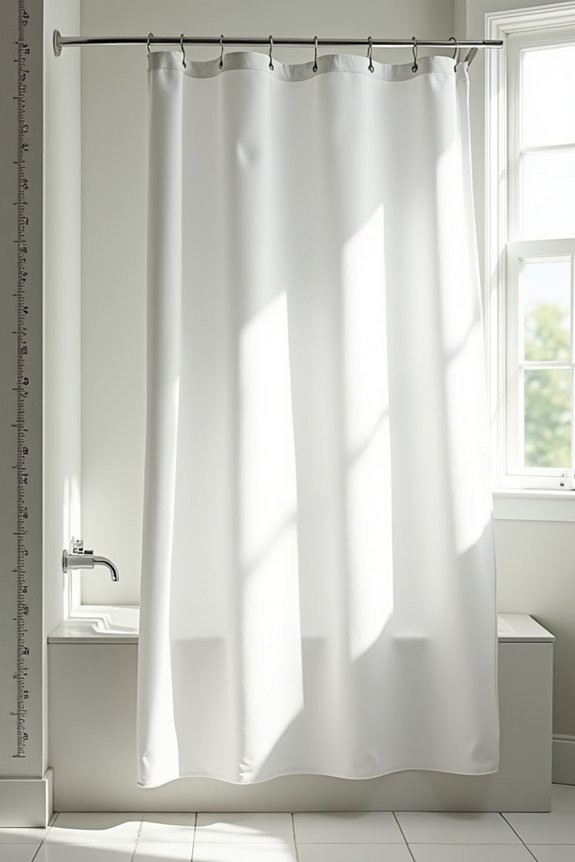
To find your curtain’s correct length, measure the distance from your rod to the floor, which gives you the baseline dimension for your hanging setup. You’ll need to account for curtain rings, since they add extra drop—measure from where the rings attach rather than from the rod itself. Subtracting 8–10 inches from this total length prevents your curtain from dragging on the floor while maintaining a finished appearance.
Rod To Floor Distance
How you measure from your curtain rod to the floor directly determines whether your shower curtain hangs properly. I recommend using a tape measure to find the exact rod to floor distance in your bathroom. This measurement guides your curtain length selection and prevents common fitting issues. Standard curtain sizes typically measure 72 inches or 84 inches for most bathrooms. However, you’ll need to subtract 8–10 inches from your rod to floor measurement to account for hanging rings. This adjustment keeps your curtain from touching the floor, maintaining proper clearance. If your rod hangs higher or lower than average, adjust the standard curtain size accordingly. Including ring attachment height in your calculations provides accuracy. This approach delivers a clean, just-above-floor placement that functions optimally.
Accounting For Hanging Rings
Hanging rings introduce a variable that shifts your effective curtain length by several inches. I recommend measuring from the point where rings attach to the curtain rod, not from the rod itself. This measurement reflects your actual curtain drop more accurately than measuring from the rod’s top edge. Your panel length should align with the rod-to-floor distance minus 8–10 inches, accounting for the ring mechanism’s height. Standard options like 72-inch and 84-inch panels work well depending on your bathroom configuration. When you select hanging rings, verify that the ring’s hook position doesn’t compress your fabric unexpectedly. This approach keeps your curtain bottom skimming or hovering slightly above the floor, preventing water pooling while maintaining a finished appearance.
Preventing Floor Contact
Why does your curtain’s bottom edge matter more than you might think? I’ll measure the distance from my rod to the floor to determine the correct length. This rod-to-floor measurement serves as my baseline for selecting appropriate curtain dimensions.
I subtract 8–10 inches from that measurement to account for hanging rings and maintain proper floor clearance. This gap prevents my curtain from dragging on the bathroom floor, which causes moisture damage and mildew growth. Standard lengths like 72 inches and 84 inches exist precisely because they accommodate this clearance requirement.
I consider taller ceilings or longer tub installations when choosing between these options. An 84-inch length maintains that critical gap while providing visual proportion. The ring drop itself influences my final length calculation, preserving accuracy. Proper floor clearance protects both my curtain’s integrity and my bathroom’s condition.
Subtract 8–10 Inches From Your Length Measurement

Once you’ve measured from the rod to the floor, subtract 8–10 inches from that total length. This adjustment accounts for your curtain hanger mechanism, which raises the hanging point above the rod itself. The deduction keeps your panel length from dragging on the floor.
| Measurement Type | Rod-to-Floor Length | Final Panel Length |
|---|---|---|
| Standard bathroom | 84 inches | 74–76 inches |
| High ceiling space | 96 inches | 86–88 inches |
| Compact shower area | 72 inches | 62–64 inches |
Applying this calculation prevents your curtain from touching wet surfaces. The gap you create protects against moisture accumulation and maintains a clean appearance. Your panel hovers above floor level without bunching. This straightforward math delivers a functional installation that works effectively in any bathroom setup.
Standard Shower Curtain Widths: 72 vs. 84 Inches
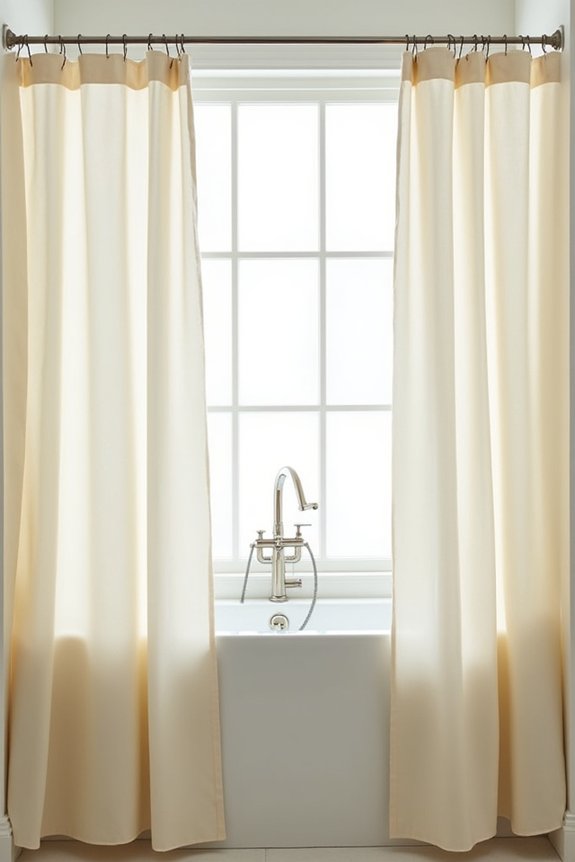
I can help you select the right width by understanding how 72-inch and 84-inch curtains function differently. The 72-inch width suits standard shower openings, while the 84-inch option provides extra coverage for curved rods or extended tub areas. Measure your wall width, then add 12 inches to determine which standard size gives you optimal overlap and splash protection.
Width Selection Guidelines
How do you know whether 72 or 84 inches will work best for your shower? Match your measurement to the right shower curtain size.
| Wall Measurement | Recommended Width | Coverage Result | Best For |
|---|---|---|---|
| 48-60 inches | 72 inches | Full coverage with minimal excess | Standard bathrooms |
| 60-72 inches | 72 inches | Adequate drape without bunching | Most residential spaces |
| 72-84 inches | 84 inches | Professional appearance with proper overlap | Larger openings |
| 84+ inches | 84 inches | Maximum splash protection and visual balance | Walk-in showers |
Measure wall-to-wall, then add 12 inches to your measurement. This formula determines which standard width provides full coverage and a relaxed, draped look when closed. For wider tub openings, the 84-inch width delivers additional drape and enhanced splash protection during use.
Measurement Plus Allowance
The formula for selecting the right shower curtain width isn’t complicated—you’ll measure your opening and add 12 inches to that number. This allowance creates the relaxed drape you want. The measurement plus allowance approach keeps your curtain covering the entire opening without gaps. Standard widths available align with this calculation method.
Here’s how the measurement plus allowance works:
- Measure wall-to-wall width of your shower or tub opening
- Add 12 inches to accommodate overlap and fullness
- Select the closest standard width option available
- Verify the total measurement covers your space entirely
A 60-inch opening requires a 72-inch curtain. A 72-inch opening requires an 84-inch curtain. This straightforward width calculation prevents undersized curtains that expose tile. Your measurement plus allowance determines functional coverage and visual balance in your bathroom space.
Standard Shower Curtain Lengths: 72 vs. 84 Inches
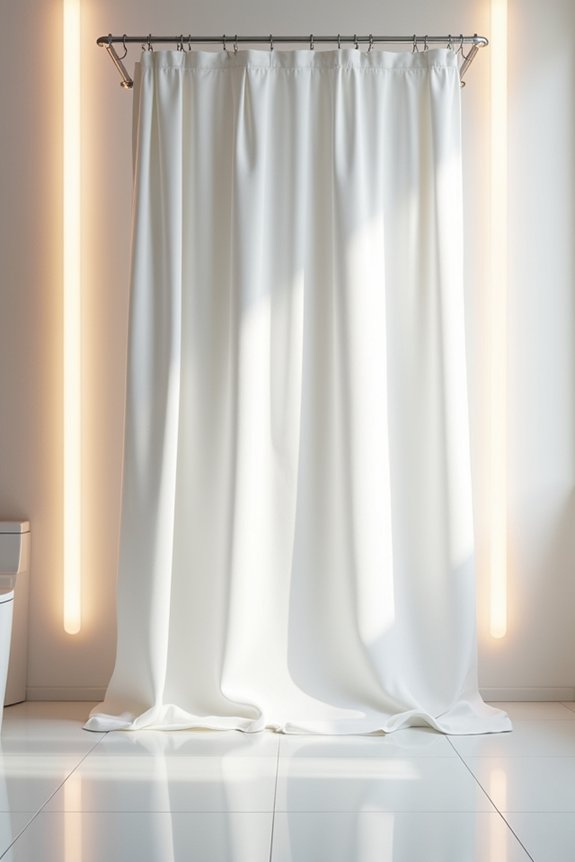
Most bathrooms work well with either 72-inch or 84-inch shower curtain lengths, yet choosing between them requires measuring your specific space. The 72-inch standard fits most conventional tubs and showers effectively. This length aligns with typical wall-to-floor measurements when your rod sits close to the floor level.
The 84-inch option works better for longer tubs and higher ceilings. You’ll have extra clearance that prevents curtains from pooling on floors or catching moisture. When selecting standard shower curtain lengths, measure from your rod to the floor directly. Subtract 8–10 inches if you’re using hanging rings for installation.
Bathrooms with higher ceilings may require lengths exceeding 84 inches. Standard bathrooms typically function well with 72 inches. Your specific measurements determine which length works best for your setup.
Extra-Tall Curtains for High Ceilings
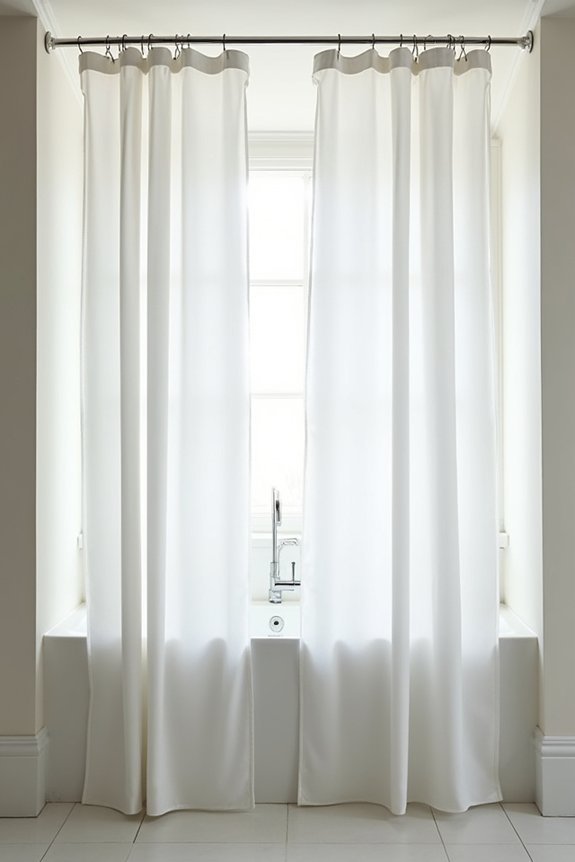
Beyond the standard 72 and 84-inch options, extra-tall curtains serve bathrooms with ceilings exceeding typical heights. Extra-tall curtains typically range from 180 x 240 cm (72 x 96 inches), providing complete coverage in high-ceiling spaces. When selecting a shower curtain size for your elevated bathroom, measuring from rod to floor determines proper fit.
What to consider:
- Lengths between 84–96 inches (214–244 cm) accommodate vaulted or cathedral ceilings effectively
- Rod placement above standard 77 inches eliminates visual gaps at the top
- Liners should match or stay slightly smaller than curtain dimensions for proper water protection
- Full-length drape extends from elevated rod height to just above flooring
This approach prevents gaps that expose your bathroom’s interior during use.
Extra-Wide Curtains for Larger Showers
Why do standard shower curtains fall short in spacious bathrooms? Extra-wide shower curtain size options address this challenge directly. I recommend considering 108-inch widths paired with 72-inch lengths for larger showers. This extra-wide configuration provides fuller coverage and reduces water splashes on your bathroom floor.
Extra-wide shower curtains at 108 inches provide superior coverage and splash protection for spacious bathroom layouts.
The width guideline suggests your curtain should measure 1.5 to 2 times your rod width. For wider openings, 108 inches provides adequate drape without gaps. Extra-wide curtains minimize splash exposure, protecting your bathroom layout effectively.
Before installation, verify your rod and hardware can support the additional fabric weight. Standard hardware sometimes struggles with extra-wide configurations. Confirm compatibility with your liner dimensions. Most 108-inch curtains work with common liners, maintaining your bathroom’s functional design while accommodating spacious shower areas.
Specialty Sizes: Stall Showers, Small Tubs, and RVs
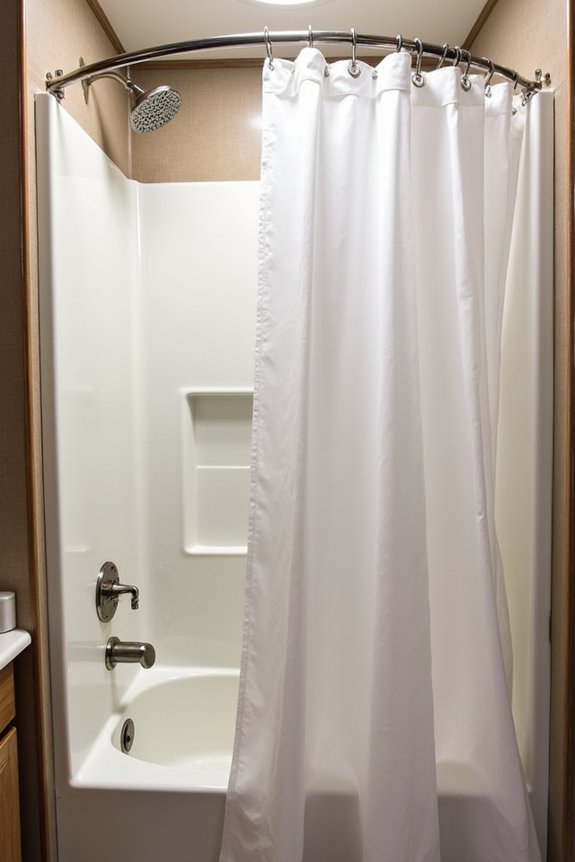
Narrower shower configurations demand curtain dimensions that differ markedly from standard installations. I’ll guide you through specialty sizes that fit your specific space requirements.
Specialty Shower Curtain Dimensions:
- Stall showers: 54 inches wide by 78 inches long for compact openings
- Small tubs: 54–60 inches wide by 72 inches long for tight bathroom layouts
- RV showers: 48–60 inches wide by 60–65 inches long for travel trailers
- Ultra-compact stalls: 36 by 72 inches for extremely limited clearance
These measurements provide proper coverage without excess bunching. Stall showers benefit from the standard 54-inch width, while small tubs require slightly shorter lengths. RV showers need careful dimension matching due to confined spaces. Ultra-tight installations use 36-inch widths for optimal fit. Understanding your exact opening dimensions prevents installation problems and maintains functional coverage throughout your showering routine.
Choosing a Liner That Matches Your Curtain Size
I recommend selecting a liner that matches your curtain’s dimensions within one to two inches for optimal seal and water protection. Your liner’s length should align with your curtain—a 72-inch curtain requires a 71–72 inch liner, while an 84-inch curtain pairs with an 83–84 inch liner to prevent dragging and maintain full coverage. You’ll also need to verify that your chosen liner’s width accommodates your curtain’s panel width or fits inside by 1–2 inches per side, and confirm compatibility with your hanging system’s roller rings for smooth, reliable operation.
Liner Size Compatibility
How you match your liner size to your curtain dimensions directly determines water containment and visual appearance. This guide explains what makes compatibility work effectively.
Your liner size compatibility depends on precise measurements matching your standard shower curtain:
- 72-inch curtains require 71–72 inch liners for flush bottom edges without gaps
- 84-inch curtains need 83–84 inch liners preventing water seepage at the base
- Width matching keeps the liner covering the entire curtain panel without bunching
- Ring or button-hole accommodation allows smooth sliding without obstruction or binding
The width should match your curtain width exactly when using standard panels. For button-hole or ring-attachment systems, verify the liner accommodates these mechanisms without catching. This attention to specification prevents water from escaping your shower enclosure while maintaining clean lines throughout your bathroom space.
Material And Protection
Your shower curtain’s lifespan depends directly on selecting a liner that matches its dimensions precisely. I recommend pairing your outer curtain with a liner of equal size or 1–2 inches smaller in width to provide proper water coverage without bunching. This liner protection strategy prevents moisture, mold, and mildew from compromising your curtain’s fabric.
Curtain compatibility matters significantly. A 71″ x 74″ curtain pairs effectively with an identically sized liner or one measuring 69″–70″ wide. Roller rings work well with liners, enabling smooth movement while preventing adhesion to shower walls.
For button-hole curtains, verify that your liner’s attachment design matches your ring system. This alignment maintains proper hang and function throughout regular use, protecting your investment while delivering reliable performance season after season.
Button-Holes and Roller Rings: Pick the Right Setup

Ring Selection and Installation
- 72-inch panels feature 12 button-holes requiring appropriately spaced rings for balanced weight distribution
- 84-inch panels contain 15 button-holes, accommodating additional rings for improved stability
- Roller rings enable smooth gliding motion across your rod without friction or resistance
- Button-hole construction creates secure attachment points that prevent panel shifting during use
Your liner size should match your curtain dimensions or measure 1–2 inches smaller. This alignment keeps button-holes aligned properly with ring attachment points. Selecting roller rings specifically designed for your panel length prevents operational issues. The correct setup allows your curtain to hang evenly and move smoothly throughout daily use.
How to Hang Your Curtain for the Best Look
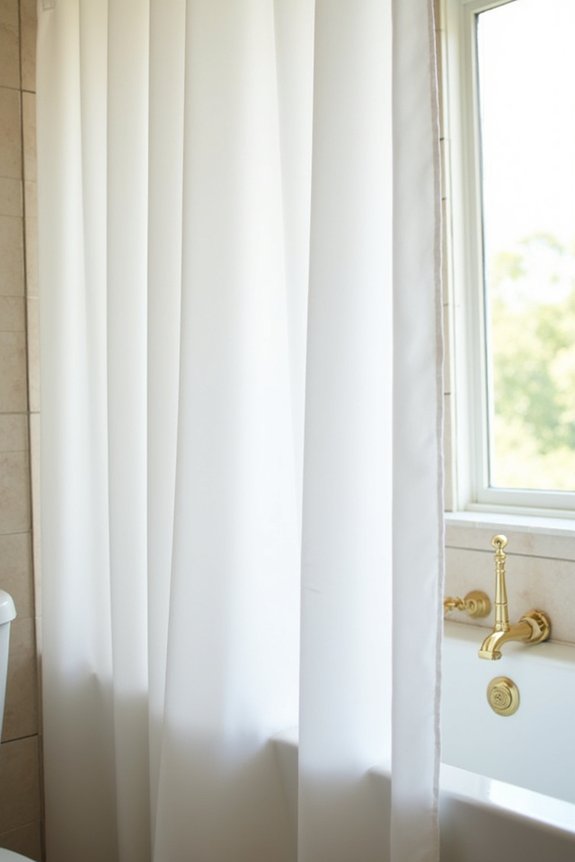
Achieving the right proportions requires careful measurement and strategic placement before you install any rings or attachments. I’ve found that adding 12 inches to your wall-to-wall width determines proper curtain size, with 72 or 84 inches being standard options. For length, I measure from the rod top edge to the floor, then subtract 8–10 inches to prevent dragging.
| Measurement Type | Action Required |
|---|---|
| Width | Add 12 inches to wall width |
| Length | Subtract 8–10 inches from floor distance |
| Liner fit | Match curtain or reduce by 1–2 inches |
| Ring drop | Include attachment length in height |
Using a curtain rod width multiplied by 1.5 to 2 creates fullness and coverage. When using rings, account for their drop to achieve proper hang. Your liner should match the curtain size or be slightly smaller, providing optimal fit and protection.
Don’t Make These Sizing Blunders
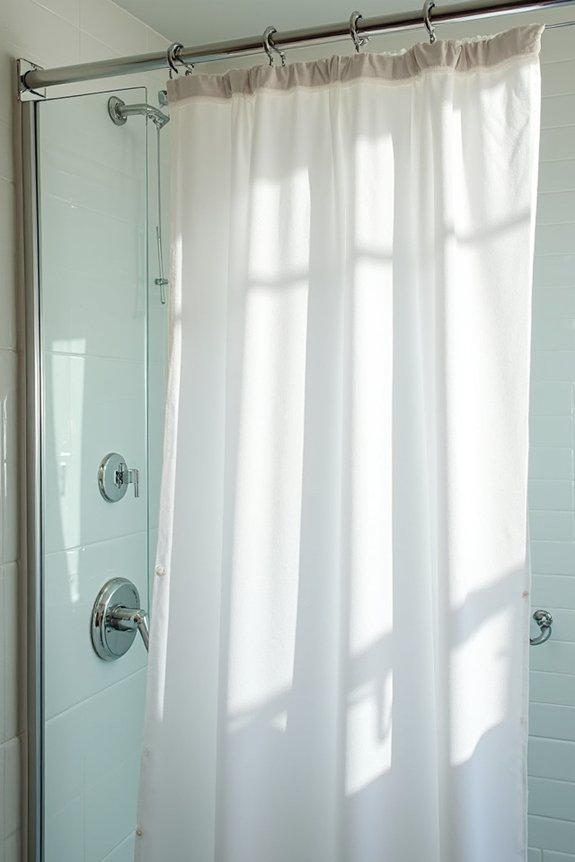
I’ve found that most sizing mistakes stem from incorrect measurements rather than poor product quality. You’ll encounter two critical errors: failing to subtract the 8–10 inch allowance from your length measurement, which causes the curtain to drag on the floor, and neglecting to add 12 inches to your wall-to-wall width, which creates insufficient coverage and water leakage. These measurement blunders directly impact both functionality and appearance, making accuracy necessary before you purchase.
Common Measurement Mistakes
Why do so many shower curtain installations end up misaligned or inadequately sized? I’ve found that measurement mistakes commonly derail even straightforward projects. Understanding standard widths and curtain length requirements prevents costly errors.
Common mistakes I see repeatedly:
- Measuring wall-to-wall without the 12-inch drape allowance, leaving gaps at rod ends
- Failing to subtract 8–10 inches from curtain length, causing panels to drag on floors
- Assuming standard widths of 72 or 84 inches fit all setups, ignoring 54–108 inch variations
- Overlooking ring height when measuring from rod to floor, resulting in incorrect proportions
I recommend verifying your rod dimensions before purchasing. Standard widths aren’t universal across installations. Account for drape allowance and floor clearance explicitly. When using rings, measure accounting for their added hanging length. These precision adjustments eliminate misalignment and provide proper coverage.
Width and Length Errors
Getting your curtain dimensions wrong at the measurement stage compounds into visible gaps, improper draping, or panels that scrape the floor. Width misalignment occurs when you neglect the 12-inch coverage allowance beyond wall-to-wall measurements. Standard 72-inch and 84-inch widths work for most bathrooms, but selecting incorrectly creates gaps when the curtain closes. Length errors stem from forgetting to subtract 8–10 inches from your rod-to-floor distance. This oversight causes the panel to bunch on the floor or hang too short, exposing your shower interior. Specialty showers demand non-standard widths like 54 inches or 108 inches; misalignment here leads to overflow problems. Account for hanging rings and liner compatibility during measurement. Accurate dimensions prevent installation frustration and maintain proper water containment throughout your shower enclosure.
Need Help? When to Ask for Custom Sizing
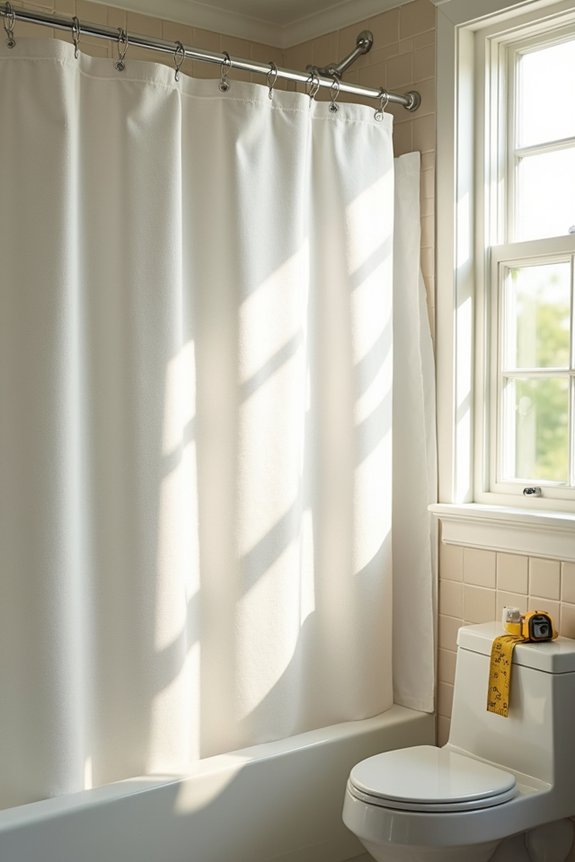
Standard shower curtain dimensions—typically 72 inches wide by 72 or 84 inches long—work for most bathrooms, but yours might require something different. I recommend custom sizing when your measurements fall outside standard ranges. Here’s when you should pursue custom options:
Standard shower curtain dimensions work for most bathrooms, but custom sizing may be necessary when your measurements fall outside typical ranges.
- Wider wall openings exceeding 70 inches demand increased shower curtain width to prevent water leakage
- Ceiling heights taller than standard require longer panels beyond typical 84-inch lengths
- Measurements indicating widths over 108 inches or lengths longer than 84 inches necessitate custom panels
- Unusual architectural features create gaps where standard liners fail to contain water properly
Custom sizing provides proper water containment, minimizes bunching, and maintains your bathroom’s desired appearance. Contact providers offering tailored widths and heights. Confirm compatibility with existing liners, rings, and rod hardware before ordering. Taking accurate measurements prevents costly mistakes and guarantees functional fit.