You’ll hear three distinct termite sounds in walls: clicking and head-banging from soldier termites striking tunnel walls, soft rustling from workers tunneling through wood, and hollow drum resonance when you tap compromised areas.
These sounds intensify between 10 PM and 2 AM in warm conditions around 73–80°F. However, most termite damage occurs silently behind walls before any audible signs emerge, making professional acoustic detection necessary for early intervention before structural compromise becomes severe.
Head-Banging, Rustling, and Hollow Taps: The Three Sounds Termites Make
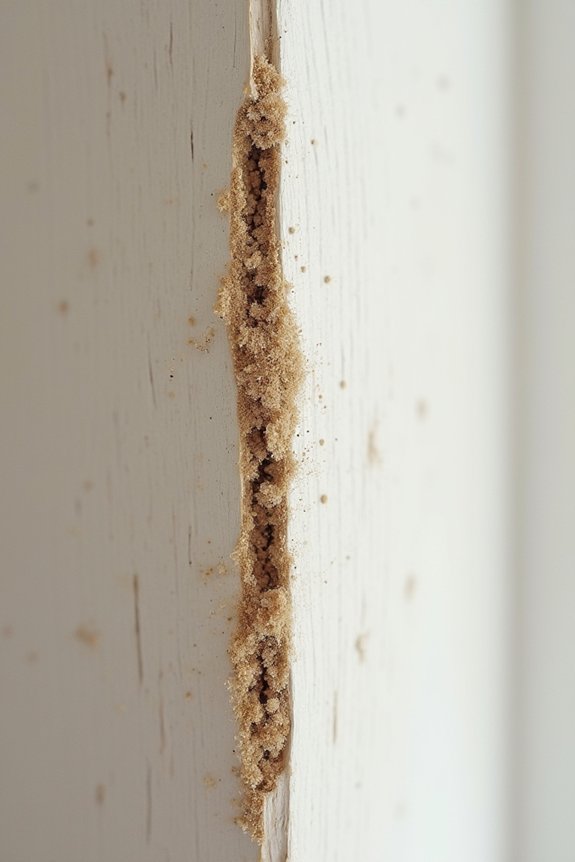
When you hear sounds emanating from your walls, you’re likely encountering one of three distinct termite noises that’ll help you understand what’s happening inside. Head-banging by soldier termites produces the loudest warning signal, traveling through tunnels to alert the colony of threats. This sharp, percussive sound indicates active defensive behavior within your walls. Rustling from mass feeding creates a soft, papery noise as workers consume surface wood fibers. This gentle scraping suggests ongoing structural damage progression. Hollow taps emerge when you strike wood that termites have hollowed from the inside, leaving only a thin shell. This drum-like resonance reveals internal consumption patterns. Each sound originates from wood and varies with termite activity, providing insight into behaviors occurring behind your walls rather than confirming infestation alone.
Why Most Termite Damage Happens in Complete Silence
Despite the three distinct sounds termites produce, most structural damage occurs without any audible warning whatsoever. Termite activity often progresses silently behind walls, causing substantial deterioration before audible cues emerge. These colonies consume wood systematically, creating hollow wood conditions that accumulate over months or years in near-total quiet.
Silent damage represents the greater threat because it advances undetected. You won’t hear head-banging or rustling during early-stage infestations when termite populations remain small. Visual indicators like mud tubes and frass typically appear before sound becomes noticeable. This reality underscores why yearly professional inspections matter—they catch damage that noise-based detection misses entirely. Sound doesn’t guarantee absence of infestation; silence certainly doesn’t guarantee protection.
Head-Banging: How Soldier Termites Signal Danger
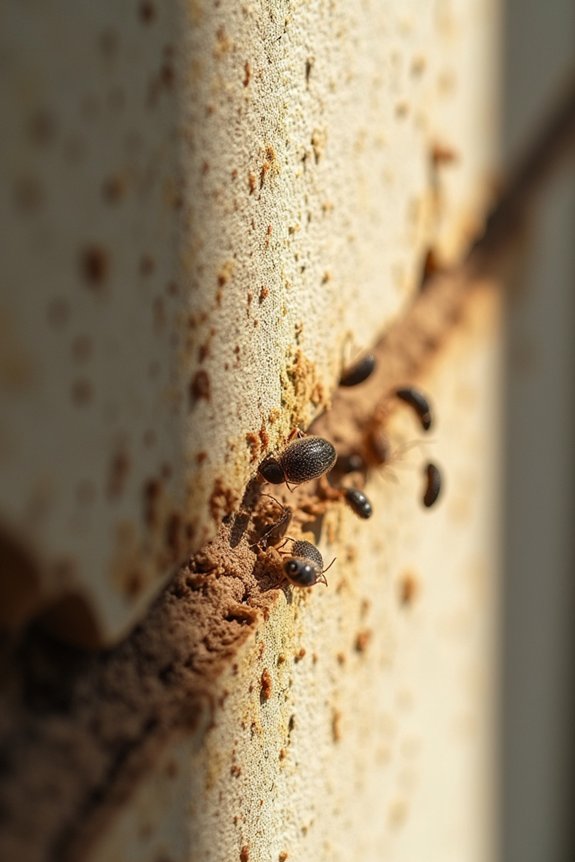
Soldier termites regularly produce one of the most detectable sounds within an active colony: head-banging. They strike their heads forcefully against tunnel walls, creating loud rattling noises that travel through wood and structural cavities. These vibrations function as an early warning system, alerting nearby termites to potential threats.
The head-banging produces rapid tapping or rattling signals distinct from other termite sounds. Quick bursts trigger colony-wide alerts, causing reduced activity in surrounding insects. You can observe this behavior by gently tapping wood trim near windows or doors, which may provoke responsive rattling from the nest.
Identifying these termite sounds helps you recognize active infestations. The mechanical nature of head-banging—its consistent rhythm and transmission through materials—makes it a reliable indicator of soldier termite presence and defensive responses.
Rustling and Chewing: What Active Feeding Sounds Like
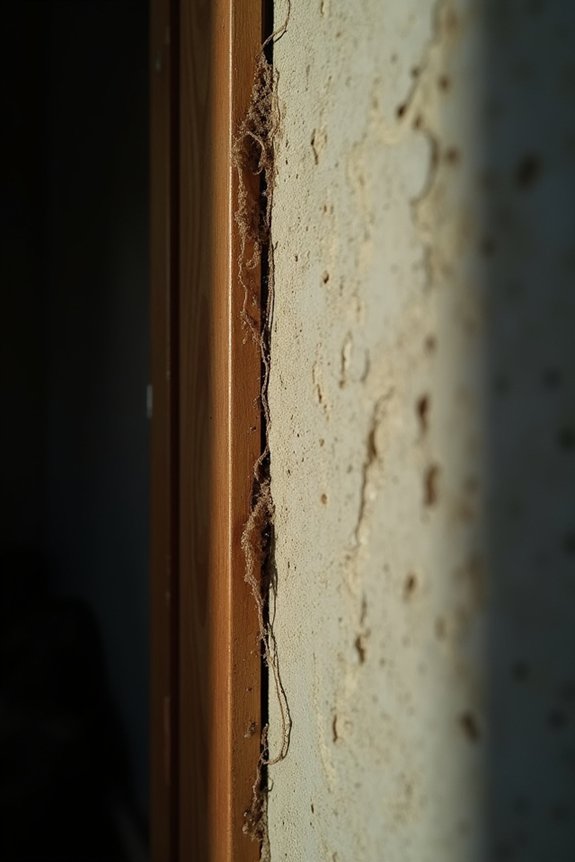
When termite workers feed on wood, they create rustling sounds that signal active colony feeding within your walls. You’ll hear soft, papery chewing noises resembling leaves moving in light wind, originating directly from tunneling activity inside the wood structure. Turn off your HVAC system and use a stethoscope to distinguish these worker sounds from soldier termite head-banging and confirm the presence of mass feeding activity.
Sound Of Active Feeding
How do you distinguish active termite feeding from other household sounds? This guide will help you identify the specific termite sounds you’re hearing in your walls.
| Sound Type | Characteristics | Location | Indicator |
|---|---|---|---|
| Wood rustling | Soft, papery, continuous | Inside walls | Active feeding |
| Hollow tapping | Subtle, percussion-like | Structural wood | Internal damage |
| Head-banging | Loud, rhythmic thumping | Wall cavities | Alarm response |
| Worker activity | Quiet, leaf-like noise | Surface layers | Feeding progress |
Active feeding produces constant wood rustling as workers chew through surface fibers. You’ll notice this soft, papery sound resembles leaves moving in light breeze conditions. The rustling originates directly inside walls, making it most noticeable in quiet environments. Hollow tapping occurs when you strike affected wood, revealing internal structural compromise. These termite sounds indicate ongoing damage that requires immediate inspection and professional assessment.
Identifying Worker Termite Activity
Now that you understand the general characteristics of termite sounds, you’ll want to focus specifically on what worker termites produce during active feeding. Worker termites generate rustling noises as they consume surface wood fibers within your walls. This sound resembles leaves rustling in light breeze conditions, remaining constant and localized to affected areas. The chewing produces subtle noises detectable with stethoscopes or sensitive listening equipment, particularly in quiet environments. Mass feeding rustling represents the most common sound homeowners notice when workers tunnel rapidly through wood. These chewing sounds typically accompany hollow-sounding wood when tapped, signaling internal structural damage. Identifying this combination—rustling within walls paired with compromised wood integrity—confirms active worker termite feeding and indicates progressive infestation requiring immediate professional assessment and treatment intervention.
The Hollow Drum Test: How Tapping Reveals Termite Damage
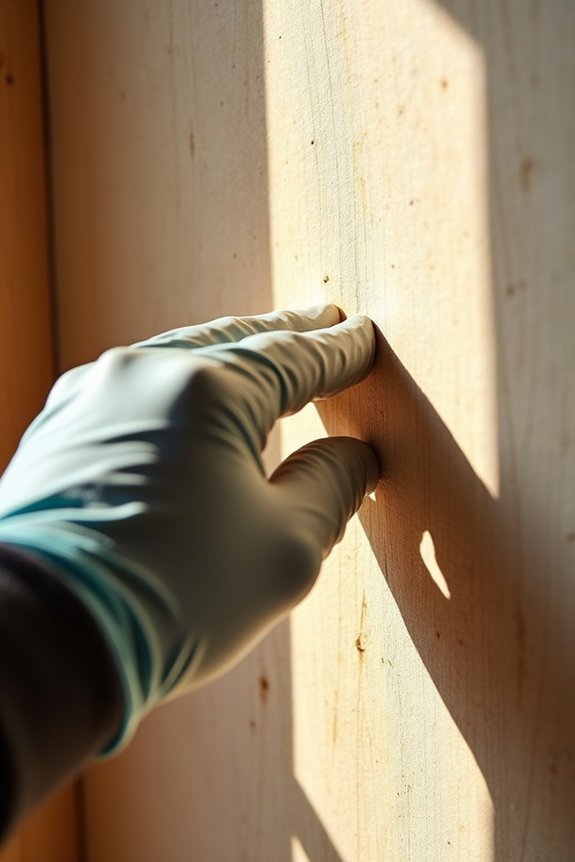
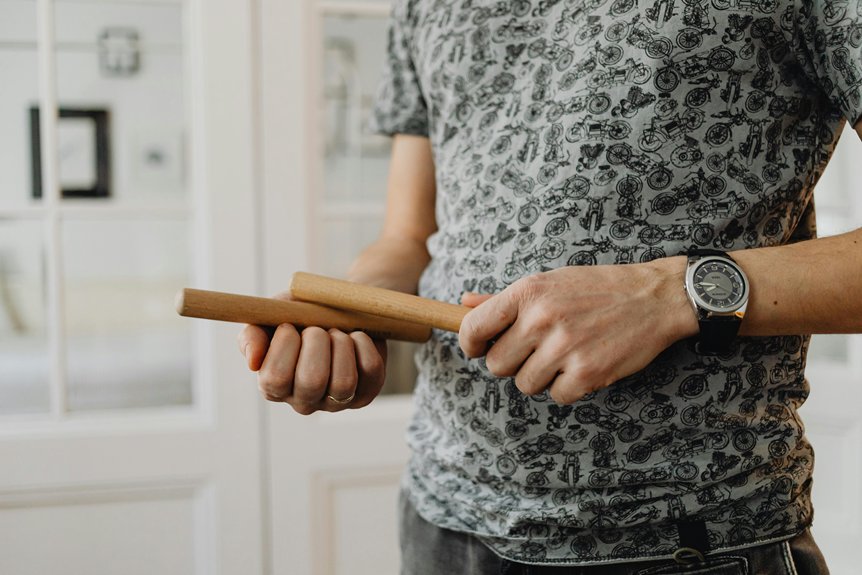
One of the most straightforward diagnostic methods for detecting internal termite damage involves the hollow drum test, a technique that relies on tapping wood surfaces to assess structural integrity. When you tap infested wood, termites in walls create distinct hollow or resonant sounds that indicate internal voids and tunneling. Sound timber produces dull, solid tapping responses, while compromised wood yields drum-like echoes revealing the thin shell remaining after termite consumption.
Focus on baseboards, window frames, and door jambs where termites commonly tunnel first. A hollow drum test combined with visual evidence strengthens your assessment substantially. Look for mud tubes, frass, or discarded wings alongside tapping results. This methodical approach provides reliable preliminary detection before professional inspection confirms active infestation and damage extent.
When Are Termite Sounds Loudest and Easiest to Detect?
Detecting termite sounds requires you to understand when colony activity peaks and environmental conditions amplify acoustic signals. Nighttime listening, specifically between 10 PM and 2 AM, yields the clearest results. During these hours, your home’s quiet environment allows termite sounds to travel unobstructed through walls.
| Time Period | Activity Type | Sound Intensity |
|---|---|---|
| Spring | Head-banging (soldiers) | Moderate |
| Summer | Mass-feeding rustling | Loudest |
| Night (10 PM–2 AM) | General colony activity | Peak detection |
Temperature and humidity significantly influence how prominently termite sounds propagate. When conditions reach 73–80°F with steady moisture levels, acoustic signals strengthen considerably. Turn off your HVAC system and concentrate near baseboards, trim, and frames where hollow wood conceals activity. Audible sounds without tools typically indicate large infestations requiring professional inspection through tapping and structural assessment.
How to Listen for Termites in 6 Steps
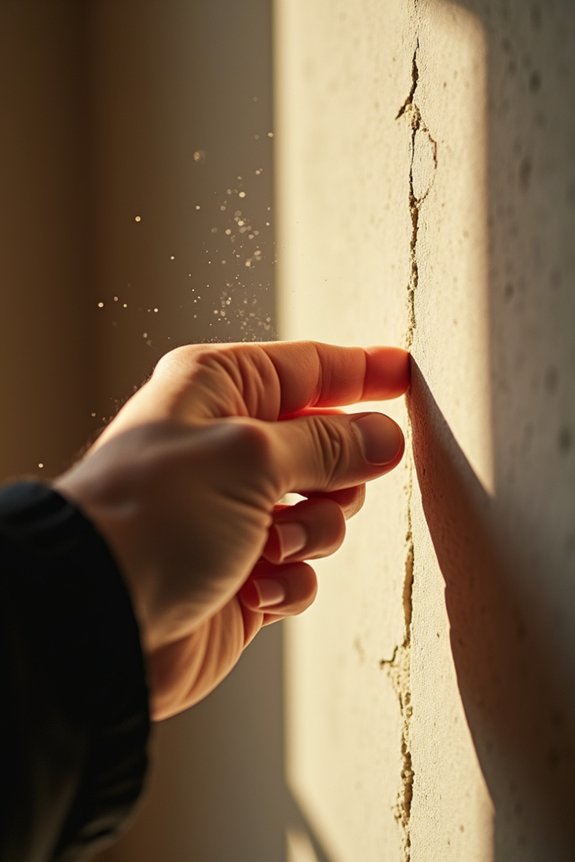
Can you reliably detect termite activity through walls without professional equipment? Yes, with systematic listening. Here’s how I approach it.
First, I eliminate noise sources—HVAC, televisions, and appliances—creating silence. Second, I obtain a stethoscope or budget alternative to amplify termite sounds by approximately 20 decibels. Third, I target high-risk zones: baseboards and frames around windows and doors where termites concentrate near ground level.
Eliminate noise sources, use a stethoscope to amplify termite sounds, and target baseboards and window frames where termites concentrate.
Fourth, I schedule listening during 10 PM to 2 AM when termite sounds reach maximum intensity. Fifth, I position the device against hollow wood and listen for clicking or rustling patterns indicating activity. Sixth, I document observations—precise location, time, sound characteristics—to correlate with visual evidence professionals identify.
Recording detailed findings strengthens your case when consulting pest specialists about suspected infestations.
Termites vs. Carpenter Ants, Rodents, and Beetles
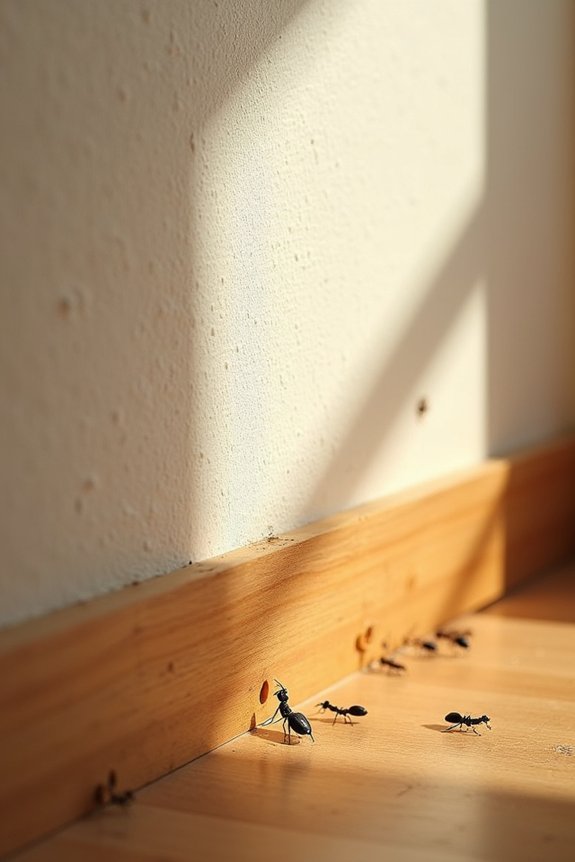
I’ll help you identify what you’re hearing by comparing termite sounds to similar pests. Termites produce soft rustling and faint clicking from inside walls, while carpenter ants generate distinct, rhythmic crunching—typically loudest between 10 PM and 2 AM. Rodents create louder scratching and squeaking that’s easier to locate, and wood beetles emit slower single ticks at 1–3 per second on hardwood.
Sound Pattern Distinctions
How’d you distinguish termite noises from similar pests inside your walls? Termite tapping occurs in patterns tied to specific behaviors. Soldier termites produce head-banging sounds when threatened, creating rhythmic vibrations. Worker termites generate soft rustling during feeding—a consistent, low-volume noise. The hollow drum resonates when wood surfaces vibrate from colony activity. Carpenter ants, by contrast, produce loud crunching with irregular intervals, intensifying between 10 PM and 2 AM. Rodents create scratching and squeaking sounds that’re easier to pinpoint. Wood beetles generate single ticks at 1–3 per second—slower and more isolated than termite activity. Termites don’t squeak or produce footstep-like movements. These distinctions help you identify the pest and determine your response strategy accurately.
Identification Through Audio Clues
When you’re trying to identify wall pests through sound alone, distinguishing termites from carpenter ants, rodents, and wood beetles requires understanding their distinct acoustic signatures.
| Pest Type | Sound Characteristics | Detection Difficulty |
|---|---|---|
| Termites | Head-banging, hollow tapping, wood rustling | Subtle, consistent |
| Carpenter Ants | Loud, irregular crunching with clear rhythm | Easier to locate |
| Rodents | Scratching, gnawing, squeaking | Pronounced, recognizable |
Termite sounds remain consistently quiet and repetitive. Head-banging by soldier termites produces distinct patterns. Hollow tapping and wood rustling indicate active feeding zones. Carpenter ants generate noticeably louder, crunching noises peaking between 10 PM–2 AM. Rodents emit squeaking and footstep-like sounds absent in termite activity. Wood beetles tick at 1–3 intervals per second, targeting hardwood exclusively. Termites lack the squeaking and pronounced scratching patterns other pests display, making their acoustic signature identifiable through patient listening.
What Early Termite Infestations Sound Like and Why Early Detection Matters
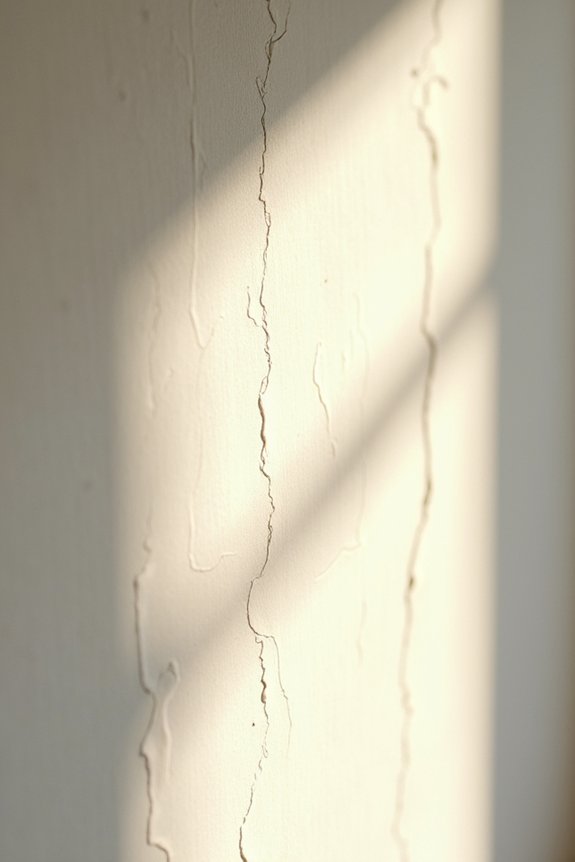
Why do early termite colonies produce sounds you’d barely notice during the day? Ambient household noise masks the faint tapping and rustling that termite soldiers create through head-banging behavior. These insects strike tunnel walls deliberately, generating vibrations that travel through wood at approximately one meter per second. You’ll detect hollow sounds most effectively between 10 PM and 2 AM, when environmental activity drops significantly. The acoustic signature includes soft clicking and rustling within wall cavities where workers chew through structural material. Combined with a papery scent when tapping suspected areas, these audio indicators signal internal feeding before visible damage emerges. Early detection matters: professional inspection within 48 hours prevents extensive structural repairs. Act on subtle sounds immediately.
Large Termite Infestations: Why Sounds Become Obvious
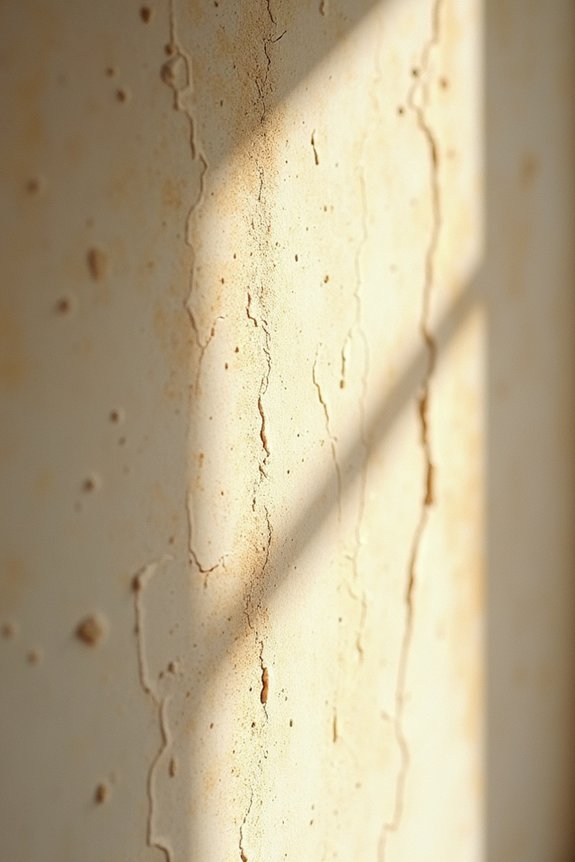
As termite colonies expand beyond initial stages, the acoustic signals they produce shift dramatically from subtle to unmistakable. You’ll notice distinct changes in termite sounds as populations grow exponentially within your walls.
Large infestations generate several audible indicators you should address:
- Head-banging vibrations: Soldier termites strike tunnel walls repeatedly, creating loud percussion-like warnings that travel through structural cavities
- Soldier rattling: These defensive termites produce some of the loudest colony noises detectable from outside the infested area
- Worker rustling: Massed activity generates continuous soft rustling and faint clicking as thousands chew wood fibers simultaneously
- Hollow drum effect: Tapping affected wood produces distinctive hollow sounds indicating substantial internal tunneling and structural compromise
- Nighttime amplification: Sounds intensify during 10 PM–2 AM in heated walls and basements when ambient noise decreases
These acoustic signals indicate colonies have established extensive tunnel networks throughout your home’s structural framework.
What to Do Immediately If You Hear Termites in Walls
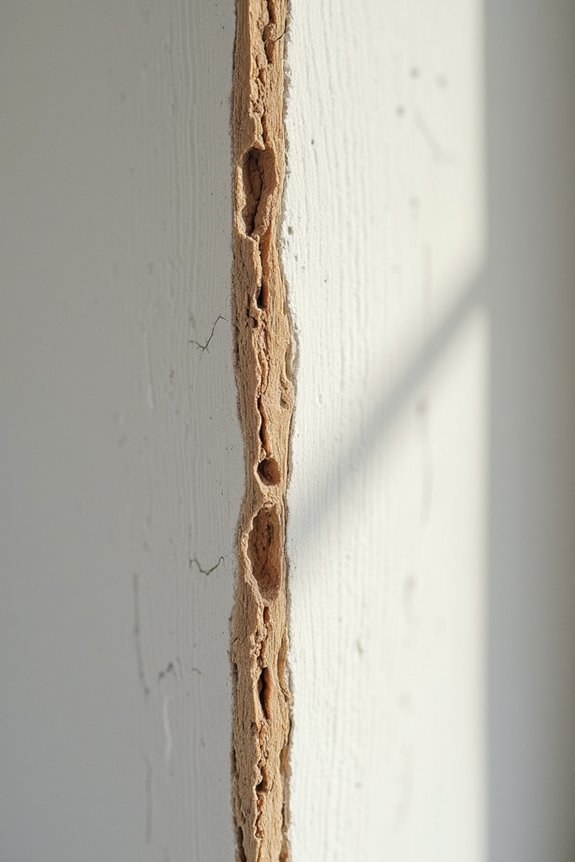
Detecting termite sounds in your walls demands swift, methodical action within a narrow response window. When you hear clicking or a hollow sound, don’t disturb mud tubes or spray pesticides. Instead, preserve evidence for professionals. Document exactly where you heard the noise and note the time.
| Action | Timing |
|---|---|
| Listen for clicking sounds | 10 PM–2 AM |
| Target baseboards and door frames | Nighttime hours |
| Turn off HVAC systems | Before listening |
| Contact licensed professional | Within 48 hours |
| Avoid disturbing evidence | Immediately |
Call a licensed professional for inspection within 48 hours of detecting termites in walls. Delaying this step allows colonies to progress toward major structural damage. Your swift response prevents costly repairs and halts infestation spread.
What Professional Detection Tools Reveal
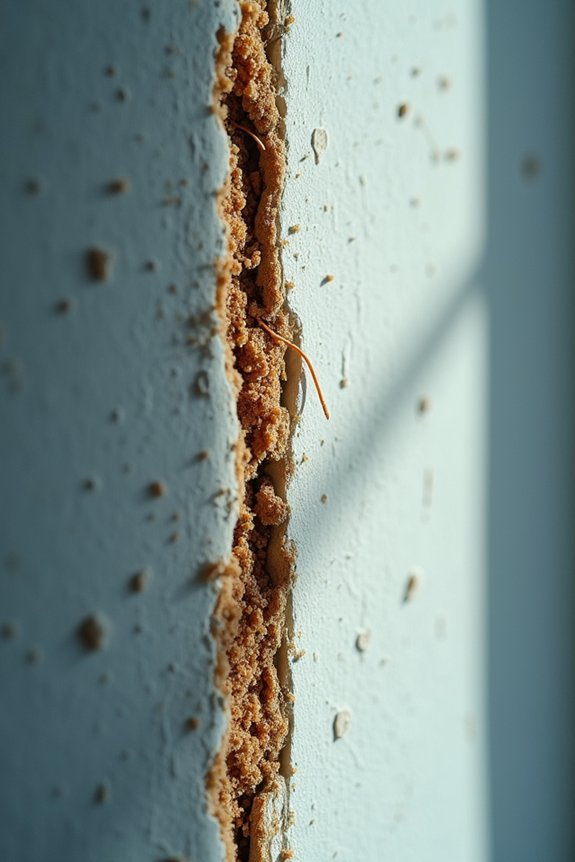
I can’t hear what professional acoustic sensors detect—they capture frequencies between 1–100 kHz, well beyond your human hearing range of roughly 20 kHz. These tools pinpoint termite colonies within inches by analyzing sound waves from chewing and movement, revealing infestations as small as 50 termites per board foot that’d remain completely silent to your ear. The trade-off? Professional detection equipment costs money upfront, though it eliminates guesswork about whether you’re actually dealing with termites or just hearing things.
Beyond Human Hearing Capability
How far beyond the human ear’s 20 kHz limit does termite detection actually extend?
Professional acoustic detection tools operate in the 1–100 kHz range, far surpassing what we can inherently hear. Here’s what separates professional inspection from basic listening:
- Acoustic sensors pinpoint subsonic termites with precision beyond human capability
- Early-stage infestations become visible at just 50 termites per board foot
- Electronic detection identifies activity before audible signs emerge in walls
- 20+ decibel amplification through mechanic’s stethoscopes enhances field listening under $20
- Peak activity windows occur 10 PM–2 AM when background noise drops
When you hear termite sounds without tools, the infestation’s already substantial. Professional inspection catches subsonic termites months earlier. This acoustic detection capability means you’re not relying on creaking walls or clicking noises anymore. Technology extends your detection well beyond human hearing limits.
Pinpoint Accuracy Technology Available
Professional-grade acoustic detection tools reveal termite activity that remains completely silent to your ear. Acoustic sensors capture termite sounds spanning 1–100 kHz frequencies. These specialized devices pinpoint termite activity within inches of actual infestation sites. You can deploy affordable mechanic’s stethoscopes, costing under $20, which amplify termite sounds by 20+ decibels. This amplification lets you locate active areas during systematic inspections. Advanced acoustic sensing detects colonies containing merely 50 termites per board foot. Early identification becomes possible before visible structural damage manifests. When termite sounds become audible without tools, professionals recognize the infestation as substantial, demanding immediate professional intervention for comprehensive treatment.
Detection Limitations and Cost Considerations
What you’ll actually detect depends on your tool’s frequency range, your budget, and the colony’s size.
Professional acoustic detection operates at frequencies spanning 1–100 kHz, far exceeding human hearing capabilities. However, detection limitations exist across multiple dimensions:
- Acoustic detection equipment ranges from $500 to $5,000+, creating accessibility barriers for homeowners
- Sounds in walls require sufficient colony density; fewer than 50 termites per board foot may remain undetectable
- Detection limitations include wall material interference, background noise masking, and structural layout complexity
- Cost considerations demand professional service fees ranging $300–$800 per inspection appointment
- Pinpoint accuracy narrows activity location to inches, yet still requires invasive verification methods
Audible termite sounds without tools indicate advanced infestations demanding immediate professional intervention. Most damage progresses silently despite detectable acoustic activity, making early detection investments worthwhile for property protection.
When Should You Call a Pest Control Expert?
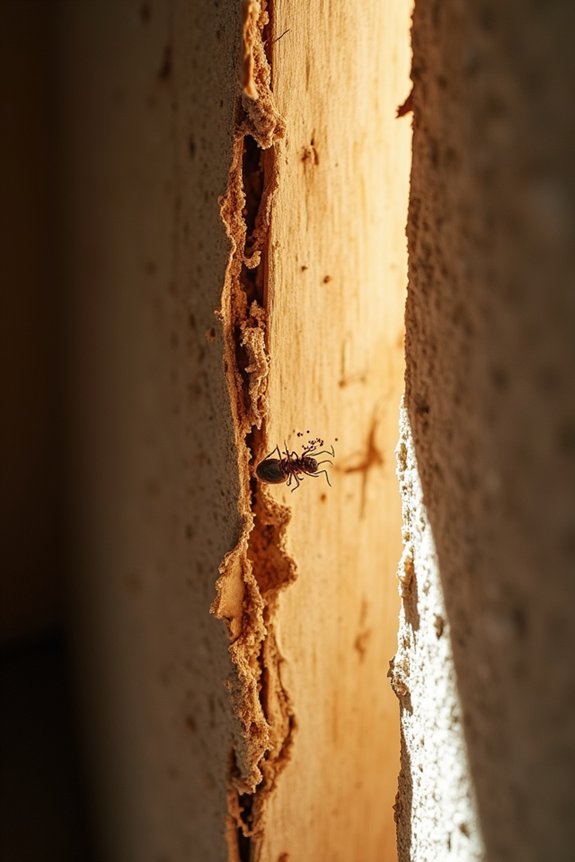
When you’ve detected audible termite activity in your walls, timing matters considerably. I recommend calling a pest control expert immediately if you hear head-banging sounds, which soldier termites produce as a warning sign. Hollow-sounding wood indicates structural damage requiring professional inspection within 48 hours.
| Audio Warning Sign | Action Required |
|---|---|
| Tapping or rustling at night | Schedule inspection within one week |
| Audible clicking without tools | Contact expert within 48 hours |
| Head-banging sounds | Call immediately for urgent assessment |
| Hollow-sounding wood upon percussion | Professional inspection required same day |
Sounds you hear without equipment suggest large infestations. You’ll benefit from expert assessment, which identifies colony size and damage extent. Licensed pest control professionals possess specialized detection equipment and treatment protocols. Act quickly—early intervention prevents costly structural repairs and protects your home’s integrity.