No, electric fireplaces don’t require venting. They produce zero emissions because they generate heat through electric resistance coils, not combustion. LED flame effects are purely visual—no actual burning occurs. Since there’s no fuel burning, no carbon monoxide, carbon dioxide, or particulate matter enters your home. This ventless design allows installation in apartments, condos, and spaces without chimney access. You’ll maintain cleaner indoor air quality while enjoying flexible placement options. Understanding how their heating mechanism differs from gas units reveals additional advantages worth exploring.
Do Electric Fireplaces Produce Emissions or Combustion Byproducts?
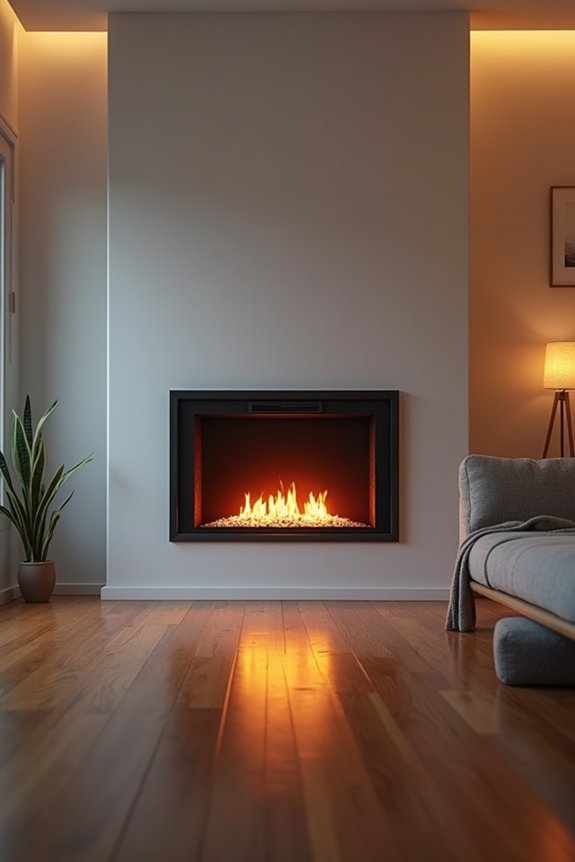
Electric fireplaces don’t produce emissions or combustion byproducts because they operate through electrical power rather than fuel combustion. Instead of burning wood or gas, they use a heating element and LED flames to create ambiance without exhaust. You won’t encounter wood smoke, gas fumes, or other harmful emissions inside your home. This emission-free operation means you’re not introducing combustion products into your living space. The LED flames are purely visual effects, generated through light and reflector technology, confirming their clean performance. Because there’s no actual burning happening, venting becomes unnecessary for electric fireplaces. This makes them practical for apartments, condos, and homes with venting restrictions. You maintain complete control over indoor air quality while enjoying fireplace aesthetics and warmth simultaneously.
Why Venting Isn’t Required for Electric Fireplaces?
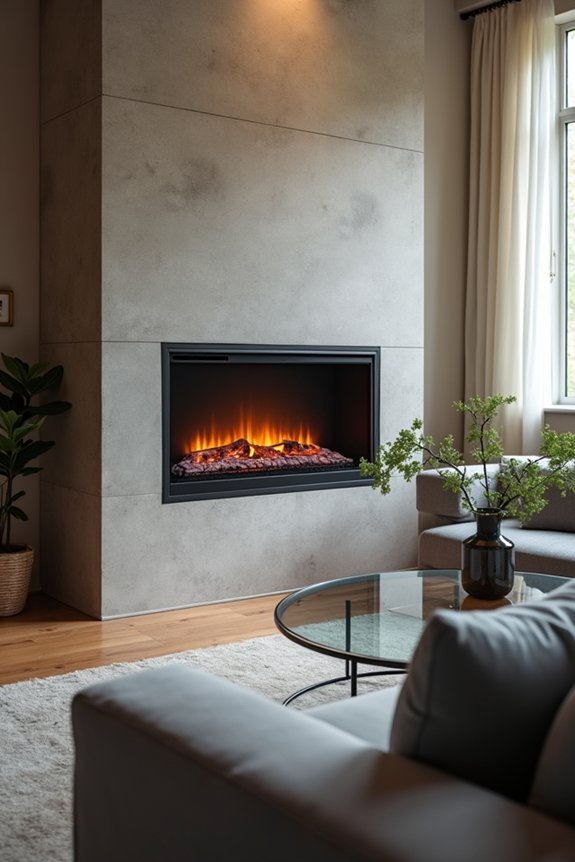
Since electric fireplaces generate heat through electric resistance coils rather than combustion, they produce zero emissions, combustion byproducts, or exhaust gases. You won’t encounter carbon monoxide, carbon dioxide, or particulate matter that would require removal through venting systems or chimney structures. This absence of hazardous emissions allows for safe indoor operation without the air quality degradation typical of wood-burning or gas units.
No Combustion Emissions
Why do electric fireplaces operate without venting requirements that traditional fireplaces demand? I’ll explain: electric units don’t burn fuel, so they produce zero combustion emissions. This emissions-free operation eliminates the need for venting pathways entirely. Traditional fireplaces require exhaust routes; electric models don’t.
| Fireplace Type | Combustion Process | Emission Byproducts | Venting Requirement |
|---|---|---|---|
| Wood | Active fuel burning | Carbon monoxide, smoke | Dedicated chimney |
| Gas | Fuel combustion | Nitrogen dioxide, water vapor | Shared or dedicated vent |
| Electric | Electric heating element | None | Interior-venting unnecessary |
You can install electric fireplaces anywhere because they’re venting-free units. The electric heater and LED flame effects generate warmth without producing harmful gases. You won’t need shared vents, dedicated chimneys, or maintenance protocols. This emissions-free technology makes electric fireplaces suitable for interiors where traditional venting options are restricted or unavailable.
Safe Indoor Operation
Can you safely operate a heating appliance indoors without venting concerns? Yes. Electric fireplaces deliver vent-free operation, making them ideal for enclosed spaces where traditional venting isn’t feasible.
Since these units produce no combustion byproducts, indoor safety improves substantially. They’re emissions-free devices that convert electricity into heat and visual flame effects. This eliminates hazardous gas accumulation entirely.
Consider these advantages:
- No carbon monoxide or nitrogen dioxide buildup in your living space
- Unrestricted placement in apartments, condos, and rooms without chimney access
- Elimination of draft-related heat loss through venting systems
- Reduced risk of backdrafting dangerous fumes indoors
The absence of real flames means no oxygen depletion occurs. Your home’s air quality remains uncompromised during operation. You’ll experience reliable heating without the maintenance demands or safety risks associated with traditional fireplaces.
How Electric Fireplaces Generate Heat Without Real Flames?
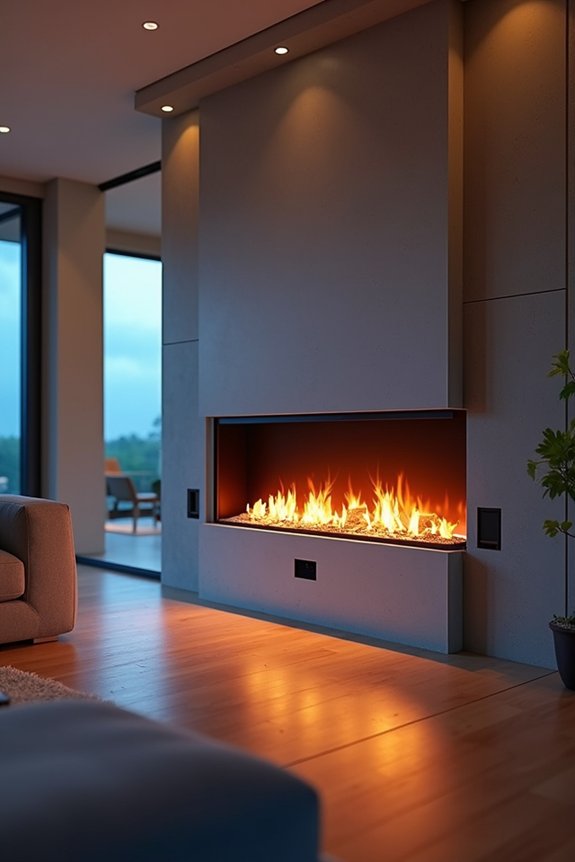
Electric fireplaces rely on a straightforward mechanism: an internal electric heater converts electrical energy into warmth, then a fan distributes that heated air into your room. The electric heater typically outputs up to 5,000 BTUs for standard 120V models, providing genuine heating capability. Meanwhile, the flame effect operates independently through LED lights that create artificial flames without producing actual heat. These LEDs mimic real fire through technologies like Chromalight, casting realistic flickering patterns across decorative logs or ember media. The blower/fan circulates warm air from the heating element throughout your space while the visual display remains purely aesthetic. Some models offer heating alone, while others combine both features. This separation means you control heat and ambiance independently, customizing your comfort level entirely.
Safety Benefits: Why Ventless Design Matters
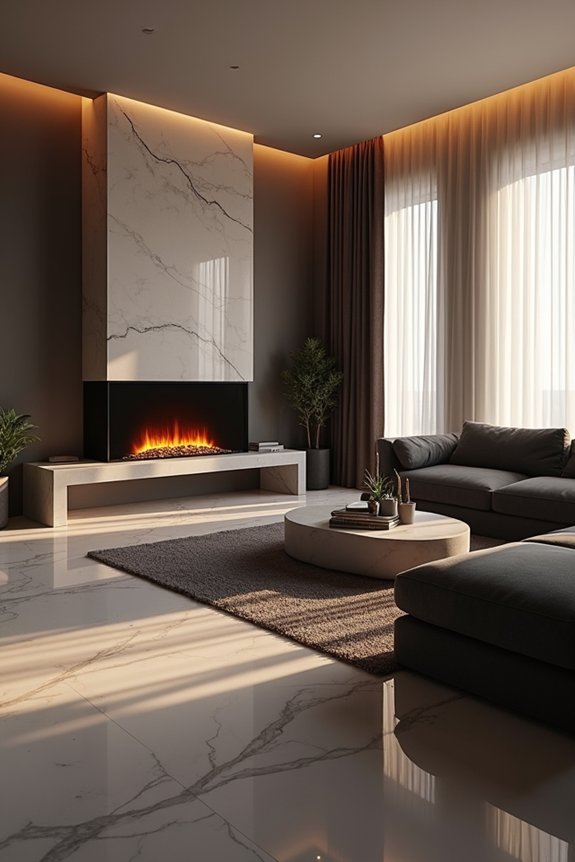
How does eliminating combustion change home safety fundamentally? Ventless electric fireplaces improve household safety by removing combustion entirely. Since they don’t burn fuel, there’s no risk of carbon monoxide emissions entering your living spaces. This ventless operation creates a safer environment for your family.
What matters most:
- No carbon monoxide poisoning risk from fuel combustion
- Zero smoky odors affecting indoor air quality
- LED flame effects eliminate traditional fire hazards
- Enclosed heater design prevents accidental contact burns
The ventless design also means you don’t need chimneys or flues, eliminating maintenance risks associated with traditional fireplaces. The LED technology creates realistic flames without actual heat exposure on the unit’s exterior. Safety extends beyond emissions prevention—it encompasses structural integrity and operational reliability throughout the fireplace’s lifespan.
Venting Differences: Electric vs. Gas Fireplaces
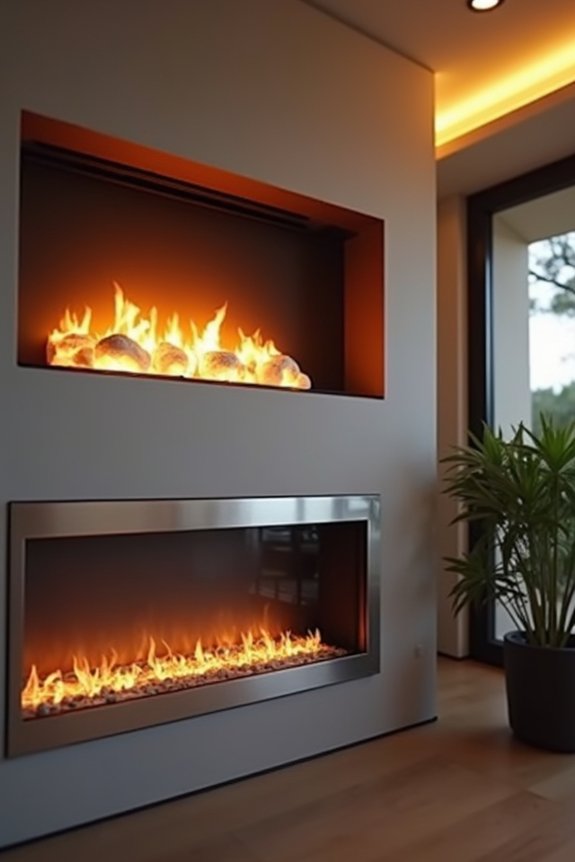
Why do gas and electric fireplaces demand such different installation approaches? The answer lies in their fundamental operating mechanisms. Gas fireplaces burn fuel, producing combustion byproducts and emissions that require venting through chimneys or dedicated exhaust systems. You’ll need to manage these harmful gases by installing proper ductwork and regular chimney maintenance.
Electric fireplaces operate differently. They use electric heaters and LED flame effects, eliminating combustion entirely. You don’t need venting because there are no emissions to expel. This vent-free design simplifies installation considerably.
The distinction matters when you’re planning your space. Gas models demand structural modifications and venting infrastructure. Electric units fit anywhere without exhaust requirements or duct installation. You’re choosing between two fundamentally different heating technologies with opposing installation demands.
Where You Can Install Electric Fireplaces
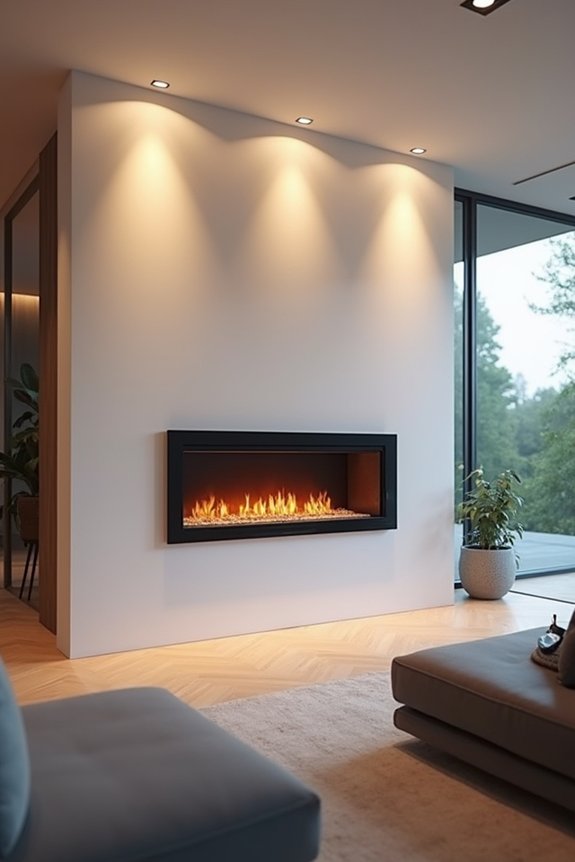
Because electric fireplaces require no venting system or chimney infrastructure, you can install them virtually anywhere in your home—built-in within wall cavities, recessed flush with existing surfaces, or mounted directly to walls. This flexibility means you’re not restricted by structural limitations, making electric fireplaces ideal for apartments, condos, and townhomes where traditional venting is prohibited or impossible. The absence of combustion byproducts eliminates regulatory compliance issues tied to ventilation codes, allowing you to focus installation decisions on layout and available wall space rather than building restrictions.
Flexible Installation Locations
One major advantage of electric fireplaces is their installation flexibility across diverse spaces and configurations. Since electric fireplaces don’t require venting or exhaust systems, you can position them throughout your home without structural limitations. The absence of combustion means no carbon monoxide emissions or chimney requirements. Consider these installation options:
- Built-in units framed directly into wall openings for seamless integration
- Recessed models set flush against walls for streamlined appearances
- Wall-mounted fireplaces positioned above obstructions and off floors
- Standalone designs offering maximum repositioning capability
This venting-free design makes electric fireplaces suitable for townhomes, apartments, and condos where traditional installations prove impossible. You’ll appreciate the installation flexibility that works with various room layouts. Whether you prefer a fully integrated aesthetic or a standalone unit, electric fireplace configurations adapt to your specific space requirements without compromising safety or performance standards.
Space-Saving Design Benefits
Where traditional fireplaces demand substantial structural modifications, electric fireplaces compress their footprint into walls, alcoves, and furniture arrangements. Built-in units install into framed openings, finishing flush with your wall for a seamless, integrated appearance. Recessed installations slide into wall cavities, offering full or partial recession that minimizes protrusion into your living space. Wall-mounted options provide flexible placement without requiring structural changes, maintaining a zero-clearance profile that doesn’t extend beyond wall surfaces. These design variations eliminate the need for bulky chimneys, venting systems, or combustion clearances. Whether you’re working with compact apartments or larger homes, electric fireplaces adapt to your available space while delivering a finished, professional look that complements your interior layout.
Regulatory Compliance Advantages
How much freedom do you want in placement decisions? Vent-free electric fireplaces offer significant regulatory compliance advantages.
Since they don’t produce combustion byproducts, they’re Ecodesign Compliant and meet strict energy consumption regulations. This means you can install them where traditional fireplaces aren’t permitted:
- Apartments with strata restrictions prohibiting gas or wood-burning units
- Commercial spaces where building codes restrict venting systems
- Residential areas with emissions management requirements
- Properties lacking chimney infrastructure or exterior vent pathways
The vent-free design eliminates compliance complications entirely. You’re not navigating emissions standards or chimney maintenance obligations. The Regency Skope line exemplifies this approach, enabling wall or alcove installation without vent pathways. This flexibility positions electric fireplaces as practical solutions for spaces where regulatory restrictions previously limited options, giving you installation capabilities others don’t possess.
Better Air Quality: The Ventless Fireplace Advantage
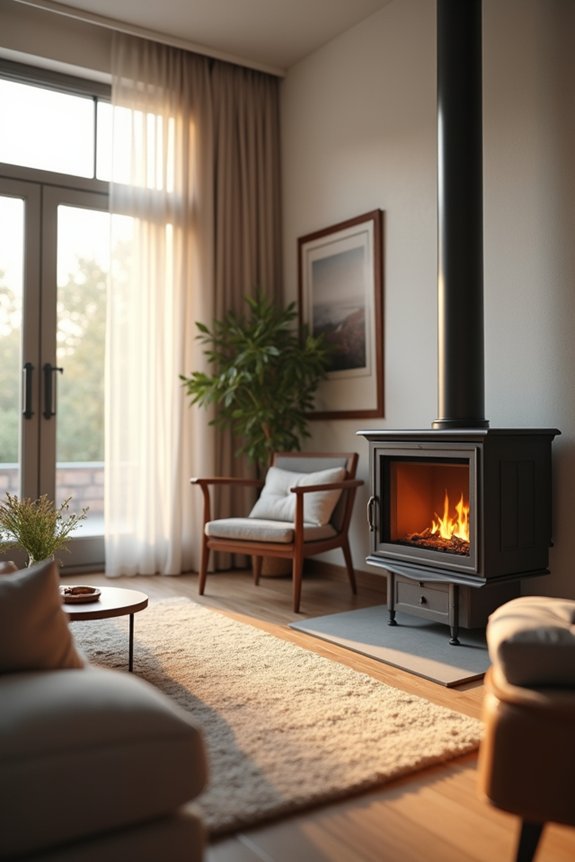
Since electric fireplaces don’t burn fuel or produce combustion byproducts, they eliminate the air quality concerns that plague traditional fireplaces. You’ll notice immediately that ventless operation means no emissions entering your living space. Traditional fireplaces and gas units release carbon monoxide, nitrogen dioxide, and particulate matter into your home. Electric models like Regency Skope units operate without these pollutants entirely.
Choosing a ventless fireplace protects your indoor environment substantially. There’s no exhaust to manage, no harmful gases accumulating in your rooms. Your air remains cleaner and healthier throughout daily use. This advantage proves particularly valuable for families with respiratory sensitivities or allergies. Electric fireplaces deliver aesthetic warmth while maintaining the air quality standards your household needs.
4 Venting Myths About Electric Fireplaces: Debunked
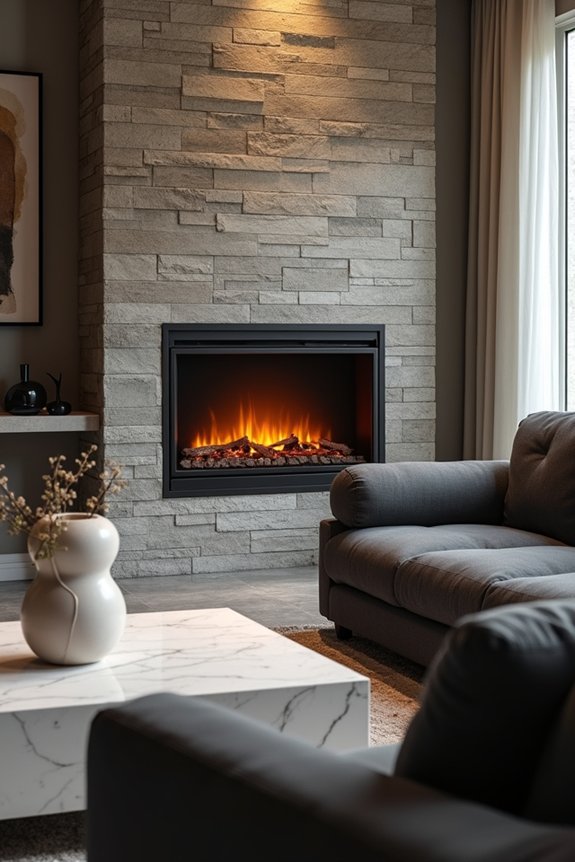
Now that you understand how electric fireplaces maintain superior indoor air quality, let’s address the misconceptions surrounding their venting requirements.
Electric fireplaces maintain superior indoor air quality while eliminating venting misconceptions tied to traditional combustion-based models.
I’ll debunk four persistent venting myths about electric units:
- Myth 1: Electric fireplaces require chimneys—false, they rely on LEDs and electricity, not combustion
- Myth 2: Venting improves heating efficiency—unnecessary, these units don’t produce exhaust requiring removal
- Myth 3: Building codes mandate venting—incorrect, vent-free installation meets all electrical safety standards
- Myth 4: Airflow restrictions demand venting—mistaken, proper indoor circulation suffices without external vents
These misconceptions stem from confusion with traditional fireplaces. Electric models eliminate combustion byproducts entirely. No real flame means no exhaust requiring ventilation systems. This design flexibility allows installation in spaces with venting restrictions. You maintain complete heating functionality while avoiding chimney maintenance altogether.
Electric Fireplaces in Apartments and Condos: No Venting Required
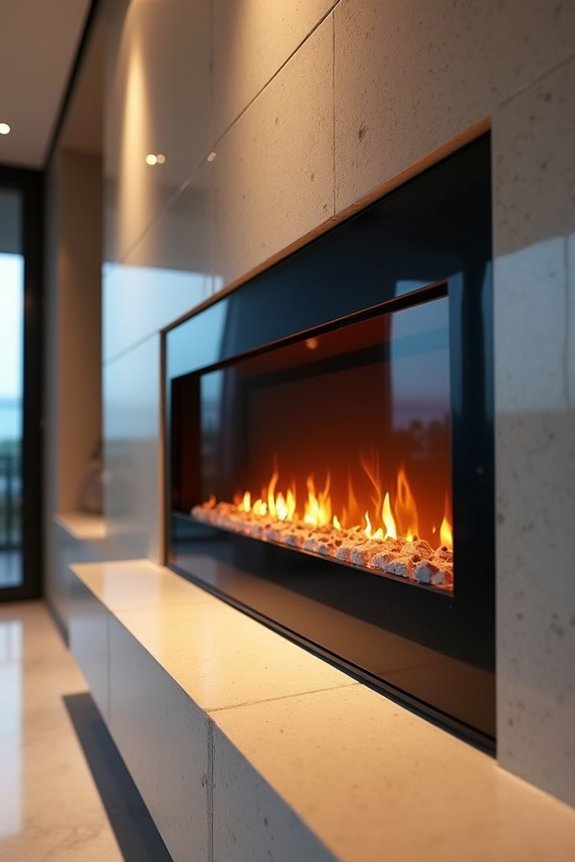
If you live in an apartment or condo with strict building codes, you’ll find that electric fireplaces eliminate venting complications entirely since they produce no combustion byproducts or exhaust. Strata regulations that prohibit traditional vented fireplaces pose no obstacle to ventless electric models, which operate through electric heating elements and LED flame effects without requiring chimney infrastructure or external ducting. Wall-mounted and built-in Regency Skope units install flush against surfaces, offering you compliance with residential restrictions while delivering genuine heating performance and visual appeal.
Strata Unit Compliance
Why do electric fireplaces succeed where gas and wood-burning units fail in multi-unit residential buildings? Strata compliance depends on eliminating combustion emissions entirely. Electric fireplaces meet this requirement.
Your building’s restrictions exist for safety reasons. Vent-free electric fireplaces deliver:
- No chimney installation required in shared walls
- Zero combustion emissions entering adjacent units
- Simplified maintenance across multiple properties
- Full compliance with strata bylaws and regulations
Electric fireplaces produce ambience and heat without gas lines or venting infrastructure. This absence of mechanical systems eliminates the complex approval processes that gas units demand. Your strata board won’t encounter compliance conflicts with energy regulations. Installation happens cleanly within individual units, respecting shared boundaries. Ecodesign standards reinforce their suitability for strict residential environments. You’re choosing a solution that aligns with community standards while maintaining personal comfort.
Ventless Installation Benefits
The compliance advantages we’ve covered become practical reality when you examine what ventless installation actually delivers in apartments and condos. You won’t need venting infrastructure or gas lines, which makes ventless installation straightforward in restricted spaces. When comparing vented vs ventless options, the latter requires no chimney maintenance, cleaning, or structural modifications to your unit. Electric fireplaces produce no combustion byproducts, so no vent required means you install them virtually anywhere—bedrooms, living rooms, even kitchens. Regency Skope models exemplify this flexibility; their LED-based Chromalight Technology generates flame effects and heat electronically without emissions. This approach eliminates installation delays and permits requirements that traditional fireplaces demand. You gain heating capability and visual appeal while maintaining full compliance with strata regulations and building codes.
Built-In and Recessed Fireplaces: Design Options That Don’t Require Venting
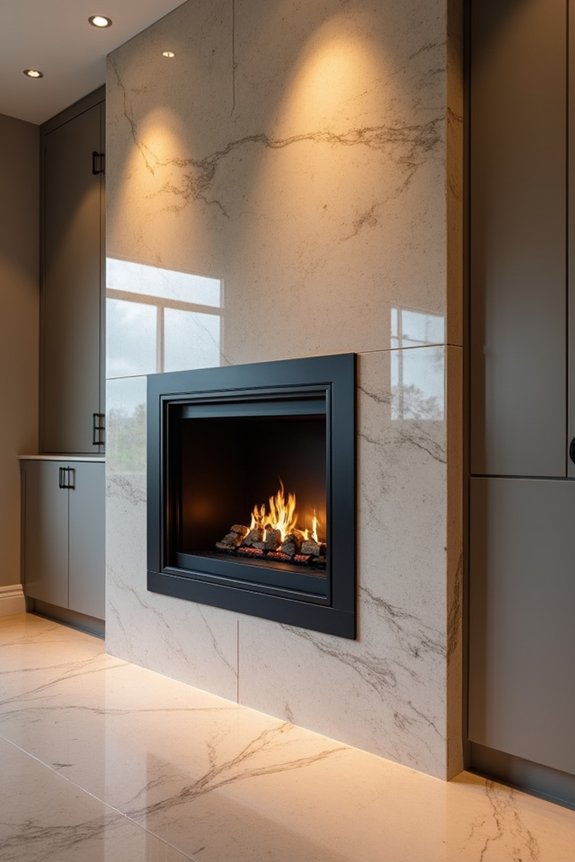
When you’re considering fireplace options for your home, built-in and recessed models eliminate venting concerns entirely. These vent-free designs integrate directly into your wall structure, creating a clean appearance without external exhaust pathways. Regency Skope built-in and recessed units exemplify this design approach through several key features:
Built-in and recessed fireplace models eliminate venting concerns, integrating seamlessly into your wall for a clean, polished appearance.
- LED flame effects powered by Chromalight Technology deliver realistic visual performance
- Integrated electric heaters provide supplemental warmth without combustion byproducts
- Flush wall installation creates a polished, integrated aesthetic
- No chimney or duct work required during setup
The recessed configuration positions the fireplace within wall cavities, maximizing space efficiency. Built-in models sit against walls with framing support. Both options suit apartments, condos, and townhomes where venting restrictions apply. This installation method delivers functionality alongside architectural integration, giving you design flexibility without ventilation complications.
What to Know Before Installing a Ventless Fireplace
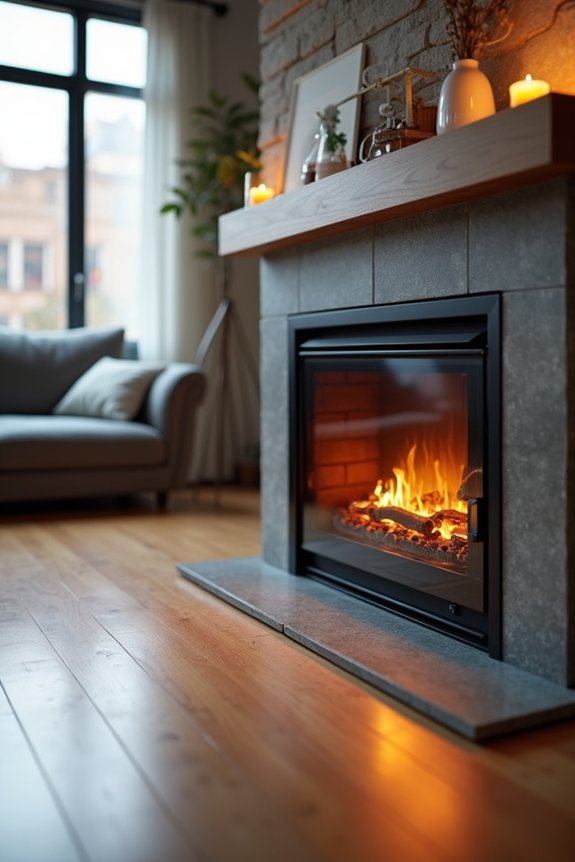
Before you commit to installing a ventless electric fireplace, understanding its operational mechanics and limitations is important. Electric ventless models generate heat through internal heating elements while LED technology creates the flame display—no actual combustion occurs. You’ll appreciate the installation flexibility these units offer since they don’t require chimneys, gas lines, or exterior venting systems. Consider your space’s electrical capacity, as the unit draws substantial power during operation. Ventless electric fireplaces work well in apartments and urban settings where traditional fireplaces face restrictions. Placement matters significantly; position the unit away from flammable materials and maintain adequate clearance around the installation area. Maintenance remains minimal compared to vented alternatives. Review manufacturer specifications for proper installation procedures and safety requirements before beginning your project.