Before you leave your gas fireplace running overnight, you’ll need three critical verifications: confirm your model permits continuous operation by reviewing manufacturer specifications, inspect your venting system to safely exhaust byproducts outdoors, and install functioning carbon monoxide detectors in sleeping areas and within ten feet of the unit.
Open a window partially for fresh air intake.
Test detectors monthly.
These foundational steps determine whether all-night operation is actually safe for your specific setup and home configuration.
Know What Can Go Wrong: The Three Core Risks
Why should you care about the risks before running your gas fireplace overnight? Understanding these hazards protects your household’s safety during all-night operation. Carbon monoxide, a colorless and odorless byproduct, accumulates when units malfunction or lack proper maintenance. This gas poses serious health risks that you can’t detect without operational detectors positioned strategically throughout your home. Oxygen depletion occurs during prolonged burning, particularly in poorly ventilated spaces or older models. Your indoor air quality deteriorates substantially without adequate ventilation systems functioning correctly. Vent-free fireplaces present exceptional danger because they lack exhaust ducts entirely, allowing combustion byproducts to remain inside living spaces. These three core risks—carbon monoxide accumulation, oxygen depletion, and compromised air quality—demand your attention before attempting extended overnight use.
Consult a Professional Before You Start
Before you leave your gas fireplace running overnight, consult your appliance’s manufacturer instructions and an authorized dealer or installer. Your unit’s specific design—whether vented gas fireplaces, direct-vent, or vent-free—determines safe operating parameters you can’t assume across models. The manufacturer instructions contain critical safety limits for continuous operation that directly address carbon monoxide risks and chimney performance. Professional guidance reveals whether your model permits all-night operation and what maintenance or sensor checks you’ll need beforehand. An authorized dealer inspects your installation’s venting integrity and can confirm your carbon monoxide detector placement meets safety standards. Don’t rely on assumptions about safety; your fireplace’s engineering, fuel type, and venting configuration require expert assessment before extended use.
Install and Verify a Carbon Monoxide Detector
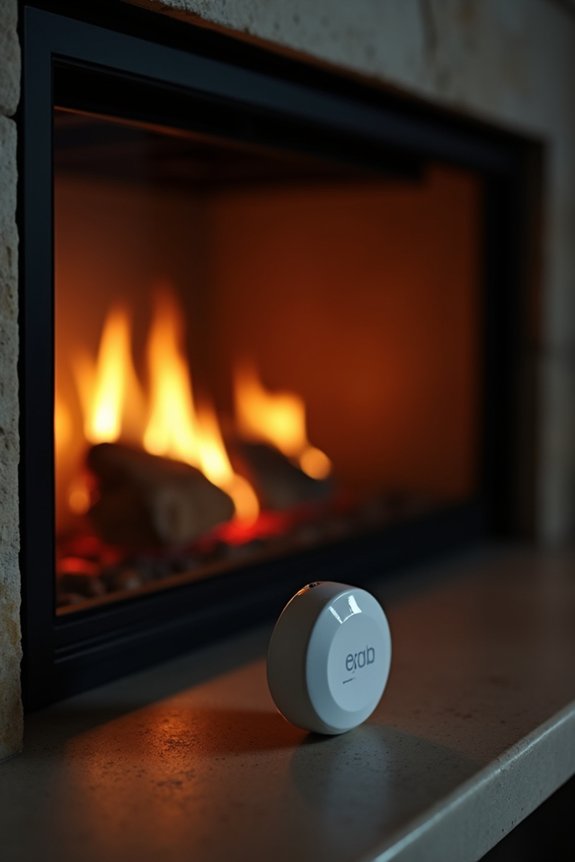
Once you’ve confirmed your fireplace model’s overnight operating capabilities with a professional, you’ll need to install carbon monoxide detection in your home. I recommend placing CO detectors in sleeping areas and within ten feet of your gas fireplace to catch any carbon monoxide presence early. Test your detectors monthly and verify their power sources work reliably for all-night operation. During extended use, these devices provide early warning by monitoring air quality continuously. If a detector activates, evacuate immediately and only return after it stops sounding and you’ve identified the problem. Installing multiple units creates redundancy, so you won’t miss dangerous CO levels. This safety guidelines approach protects everyone in your household during overnight fireplace use.
Check Your Venting Setup First
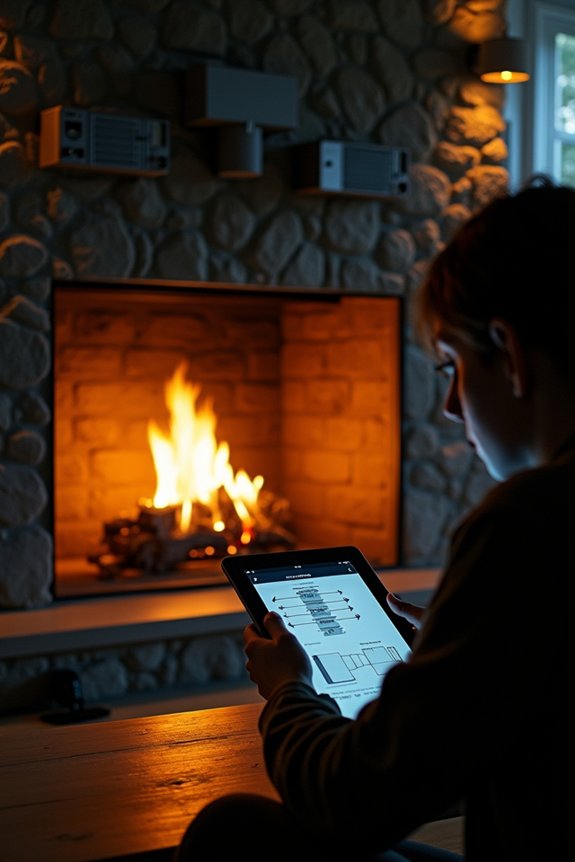
Your gas fireplace’s venting configuration determines whether all-night operation is safe for your home. I need to identify my unit’s type first, then verify its structural integrity.
| Venting Type | Exhaust Route | Safety for All-Night Use |
|---|---|---|
| Vented | Through chimney | Requires inspection |
| Vent-Free | Indoor air circulation | Check manufacturer limits |
| Direct-Vent | Sealed dual pipes | Safest continuous option |
I’ll examine my vent system integrity by checking for cracks, blockages, and proper connections. For direct-vent components, I verify both intake and exhaust pipes connect securely without obstructions. My glass front seal must remain complete, containing heat effectively. The safety barrier screen stays in place.
I’m consulting my manufacturer’s continuous use guidelines, as these specifications vary by model design. These steps prevent exhaust backup and support safe all-night operation throughout winter months.
Maintain Oxygen Levels With Strategic Ventilation
How can I guarantee my gas fireplace doesn’t deplete the oxygen in my home during all-night operation? Strategic ventilation directly addresses this concern by maintaining consistent air exchange throughout your space.
I recommend implementing these practices:
- Open a window partially to allow fresh air intake while your gas fireplace operates continuously overnight.
- Verify that mechanical vents or passive openings remain completely unobstructed during the entire heating cycle.
- Install safety sensors that monitor oxygen levels and carbon monoxide concentration, alerting you to hazardous conditions immediately.
Your ventilation approach should combine passive air exchange with active mechanical systems when available. Regular maintenance of vents keeps them functioning properly without obstruction. These measures work together to replace oxygen consumed by combustion, protecting your household during extended gas fireplace use.
Set Temperature Limits to Prevent Overheating
Controlling your fireplace’s heat output prevents the room from reaching dangerous temperatures during overnight operation. I recommend setting a maximum temperature limit on your gas fireplace’s thermostat, typically between 72-78°F, to maintain safe conditions. A programmable timer automatically cycles your fireplace off after a defined interval, eliminating manual oversight. Check your unit’s manual for manufacturer-specified safe operating temperatures and strict adherence requirements. Temperature limits work alongside safety sensors. Your oxygen depletion sensors and CO detectors remain active during overnight use, monitoring air quality as heat increases. Overheating can worsen indoor air conditions, making sensor functionality necessary. Establish these temperature parameters before extended use. This approach combines mechanical controls with active monitoring, creating a layered overheating prevention system that protects your home and family throughout the night.
Build Your Emergency Shutdown Plan
When your CO detector sounds or you notice unusual odors near the fireplace, you’ll need a documented shutdown procedure that everyone in your household understands.
- Immediately pause fireplace operation and evacuate if the CO alarm activates; call emergency services from outside your home.
- Open all windows for ventilation, then contact your qualified technician before re-entering to resume operation.
- Schedule annual professional inspections with your installer and maintain contact information readily accessible.
Position gas detectors in sleeping areas and adjacent to the fireplace for early warning. Document who monitors the fireplace during nighttime hours and establish specific conditions triggering emergency shutdown—extreme cold duration limits, unusual sounds, or performance changes warrant immediate professional inspection. This structured approach protects your household while allowing safe overnight operation during cold weather.