
No, a repo agent cannot legally enter your backyard without your explicit consent. Backyards qualify as enclosed spaces protected under repossession law. Agents can only access open driveways and visible exterior areas.
Entering locked gates, fenced enclosures, or garages constitutes unlawful entry and potential trespassing. If an agent breaches these boundaries, you can document the violation, contact law enforcement, and pursue legal remedies.
Understanding exactly where agents’ authority ends protects your rights substantially.
What Legal Rights Do You Have When Repo Agents Enter Your Property?

When a repo agent arrives at your property, you’re entitled to specific legal protections that limit where they can and cannot go. Repo agents can enter open driveways to repossess vehicles, but they cannot breach the peace or force entry into enclosed spaces like locked garages without your consent. You retain the right to refuse consent for entry into restricted areas on your property. If an agent violates these boundaries, you can document the incident and contact law enforcement or a lawyer to address the unlawful entry. Police won’t enforce private repossessions, so legal remedies fall on you to pursue. Knowing these protections helps you protect your rights during repossession attempts on your property.
Why Can’t You Hide Your Car in a Backyard?

How effective is concealing your vehicle in a backyard, really? I’ll tell you directly: it’s not a reliable strategy. Hiding a vehicle on your private property might seem protective, but it creates legal complications you’ll want to avoid.
First, intentional concealment can constitute bad faith in many states, potentially forfeiting your right to recover the vehicle later. Second, repo agents can enter private property to access vehicles without breaching the peace—meaning they can access your backyard if entry remains non-confrontational.
Third, if your vehicle sits behind a locked garage or enclosed space, lenders pursue alternative methods like replevin, obtaining court orders for vehicle recovery anyway. The outcome remains identical: you lose the car plus face legal judgments. Concealment delays resolution without preventing it.
What Can and Can’t Repo Agents Do on Your Property?
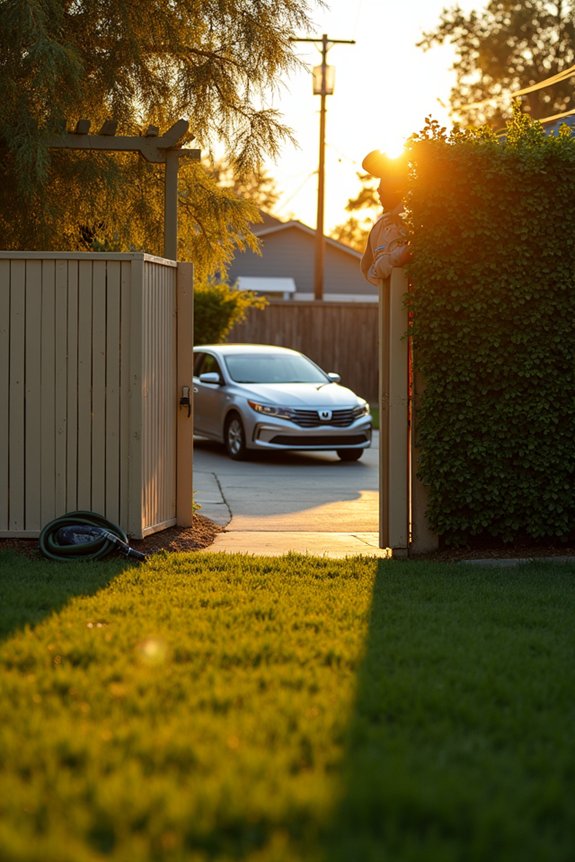
I need to understand the boundaries repo agents operate within on your property. Repo agents can access open driveways and yards, but they cannot breach locked garages, enclosed spaces, or break the peace through forceful entry. You retain the right to verbally ask them to leave, which stops the repossession process immediately on your property.
Entry Restrictions And Boundaries
Whether a repo agent can access your backyard depends entirely on property boundaries, physical barriers, and your explicit consent. I need to clarify the distinction between accessible and restricted areas on your private property. Open driveways permit vehicle access without additional permission. However, locked gates, fenced enclosures, and enclosed structures like garages demand your consent before entry occurs. Breaching these barriers constitutes trespassing and breach of peace, regardless of the vehicle’s location. “No Trespassing” signage reinforces your property rights but doesn’t legally prevent repo access to clearly visible vehicles in open areas. The controlling factor remains your ability to refuse consent at any time. Once you explicitly ask a repo agent to leave your property, they must comply immediately. Failure to stop creates legal liability and violates peace-keeping requirements.
Prohibited Actions During Repossession
Repo agents can’t simply do whatever they want once they’ve entered your property—there’s a specific legal framework governing their conduct. They cannot use force, damage property, or create a breach of the peace during repossession. Entering an enclosed space like a closed garage or locked shed isn’t permitted without your consent. They’re restricted from breaking locks, forcing doors, or damaging gates to access your vehicle on private property. If you tell them to leave, they must comply—refusing increases legal liability. Repo agents can access open exterior areas, but secured or restricted spaces remain off-limits. These prohibitions exist to protect your rights while allowing legitimate repossession under lawful conditions.
How Do Repo Companies Find Hidden Vehicles?
How Do Repo Companies Find Hidden Vehicles?
When you’re trying to keep your vehicle out of sight, you’re working against several modern tracking methods that creditors and repo agents regularly employ. I’ll explain how they locate hidden vehicles despite your efforts.
| Locating Method | How It Works | Privacy Impact |
|---|---|---|
| GPS Tracking Devices | Installed on vehicles to monitor real-time location data | Removes hiding effectiveness |
| Visual Surveillance | Repo agents monitor properties and neighboring areas | Intrudes on personal privacy zones |
| Database Cross-Referencing | Creditors access registration and address records | Identifies likely hiding locations |
Repo companies use GPS trackers mounted beneath vehicles, transmitting continuous location updates. They’ll search behind structures, on neighboring property, and throughout accessible areas. These technological tools make concealment increasingly difficult. Your privacy concerns matter, but deliberately hiding vehicles may constitute breach of peace or bad faith conduct in your state.
What Happens If You Deliberately Hide Your Car?
Deliberately concealing your vehicle once you’ve defaulted on a loan carries serious legal and financial consequences that vary substantially by state. When you hide your car in a garage, behind your house, or another location, you’re engaging in conduct that courts may view as bad faith. This deliberate hiding can result in losing your right to recover the vehicle later—a significant penalty. Some states permit creditors to deploy GPS trackers, undermining your concealment efforts entirely. Additionally, hiding your car may constitute illegal conduct depending on your jurisdiction’s specific statutes. Rather than risking these outcomes, communicating with your creditor about negotiating repayment terms or alternative arrangements proves far more advantageous. Open dialogue prevents escalation to costly legal proceedings and protects your long-term financial standing regarding the repossession process.
When Do Repo Agents Cross the Legal Line?

Legal boundaries for repossession exist to protect your property rights while allowing creditors to recover collateral. I need to clarify where repo agents cross into unlawful territory. Threatening language, physical force, or intimidation constitutes breach of peace—agents can’t use these tactics. Unlawful entry occurs when agents bypass locked doors, gates, or enclosed garage spaces without permission. Forcing locks or attempting to circumvent security mechanisms violates your privacy and legal protections. If you explicitly request the repossession stop or deny entry, agents must pause operations immediately. Continuing forward creates legal liability. Using police to enforce repossession isn’t permitted either. Documenting any aggressive behavior, trespassing, or forced entry protects you legally. Report violations to law enforcement promptly.
How Can You Stop Repossession Before It Reaches Your Home?
How’d you prevent repossession before agents arrive at your property? Contact your lender immediately regarding missed payments. Negotiating a loan modification, payment plan, or refinancing arrangement stops the repossession process entirely. Document all communication with your lender in writing. If you’re facing financial hardship, request a forbearance agreement that temporarily suspends payments. Consult a lawyer about your state’s specific repossession laws; some jurisdictions require notice periods before agents access private property. Pay outstanding balances plus fees to halt proceedings. Understanding breach of the peace protections helps you know your rights when agents appear. Consider selling your vehicle voluntarily to avoid repossession and its damaging credit impact. Act quickly—once repossession begins, stopping it becomes significantly more difficult and costly.
Can Bankruptcy Stop a Backyard Repossession?

While contacting your lender and negotiating payment arrangements can stop repossession before agents arrive, you might’ve already missed that window. Filing for bankruptcy offers you protection through an automatic stay. This legal mechanism halts most collection activities, including backyard repossession attempts. The automatic stay applies immediately upon filing and extends to your vehicle, preventing repo agents from entering your yard or accessing enclosed spaces like garages.
However, understand that bankruptcy doesn’t automatically return already seized vehicles. The automatic stay only stops future repossession actions and breach of the peace situations. Creditors can request relief from the stay, potentially allowing repossession to proceed later. You’ll need to work with your bankruptcy attorney to protect your vehicle through the filing process and subsequent proceedings.
What Should You Do If a Repo Agent Illegally Enters Your Property?
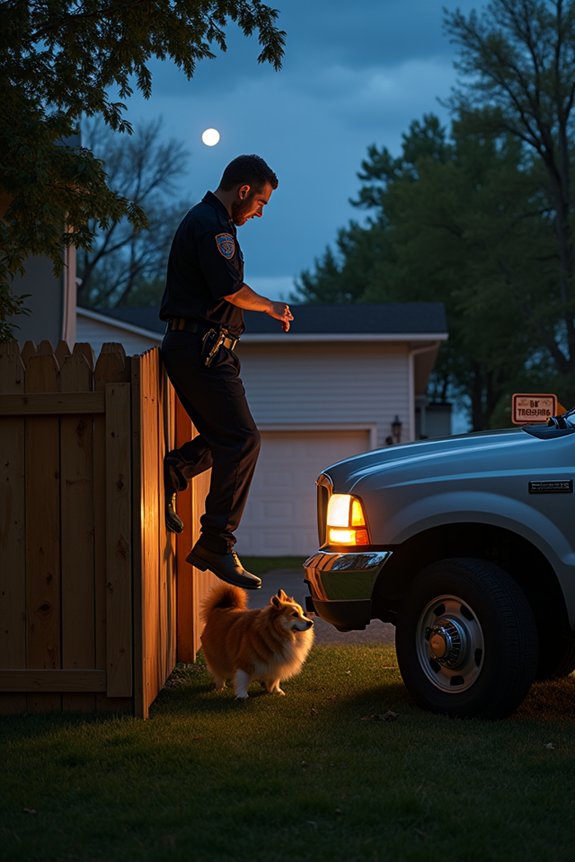
If a repo agent enters your property without legal authorization—crossing locked gates, breaking into enclosed garages, or ignoring explicit “no trespassing” signs—you should immediately document the violation through photographs, timestamps, and written descriptions of their actions. Contact law enforcement to file a trespassing report, then consult a lawyer about potential legal remedies, which may include civil lawsuits for damages, injunctions preventing future illegal entry, or counterclaims against the creditor. Your documented evidence becomes important when proving the agent breached the peace or exceeded their lawful repossession rights.
Document The Illegal Entry
When a repo agent enters your property without authorization, you’ll want to act methodically to preserve evidence of that violation. Document the breach of peace and unlawful entry by photographing the vehicle’s location, surrounding property, and any barriers present. Note the date, time, and exact entry point. Record witness names and contact information immediately. Photograph signage indicating “No Trespassing” or “Private Property” if posted. Capture images showing locked gates, closed garage doors, or fencing that prevented lawful access. Write detailed notes describing what occurred, including the agent’s vehicle description and license plate. This evidence documentation establishes whether the repo agent violated property boundaries. Preserve all physical evidence untouched. Contact an attorney promptly to evaluate whether the entry violated breach-of-peace regulations and determine your legal remedies.
Legal Action And Remedies
What remedies exist when a repo agent crosses into your backyard without permission? You have several options to protect yourself.
First, contact an attorney immediately to evaluate your unlawful entry claim. They’ll assess potential civil remedies, including damages for trespassing and property violations. Document everything: photograph the backyard entry point, note timestamps, and gather witness statements.
File a formal complaint with your state’s Department of Banking and Securities or equivalent regulatory body. This triggers enforcement actions against the repo company and creates an official record.
Send a cease-and-desist letter through your lawyer. This legally prohibits further backyard entry attempts. Consider filing a police report for criminal trespassing.
These legal remedies protect your property rights and may convince your lender to halt repossession efforts. Acting quickly strengthens your case.