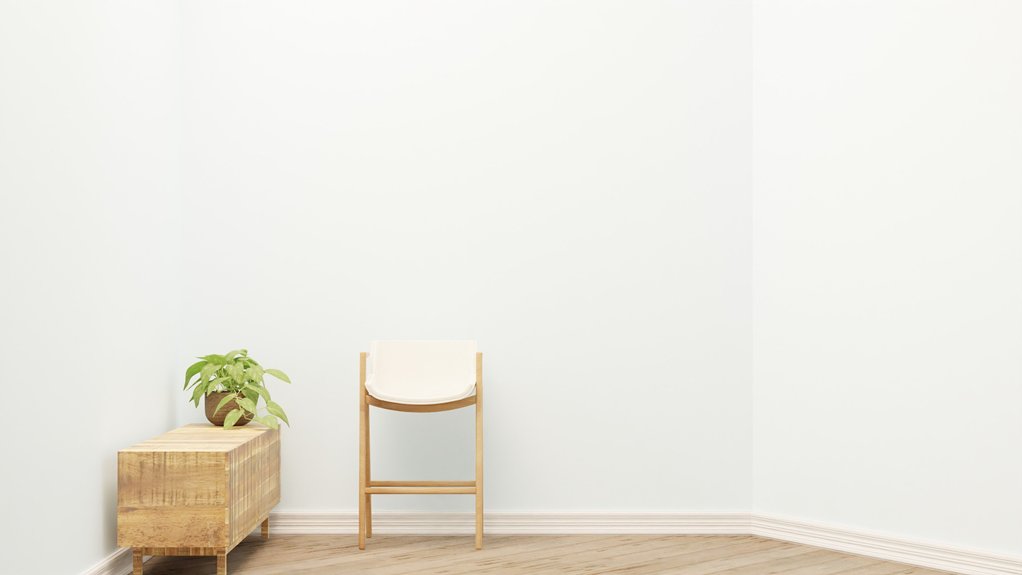
Rearrange furniture to define seating zones, then anchor each space with a statement chair, layered lighting, and vertical greenery at varying heights.
Add floating shelves for storage, incorporate a banquette with round table for efficient coffee zones, and use mirrors to brighten dim areas.
These strategies combine functional furniture, strategic lighting, and textural elements to activate every corner.
The specific dimensions, material selections, and placement techniques outlined create measurable results worth exploring further.
Rearrange Furniture First to Unlock Hidden Corner Opportunities
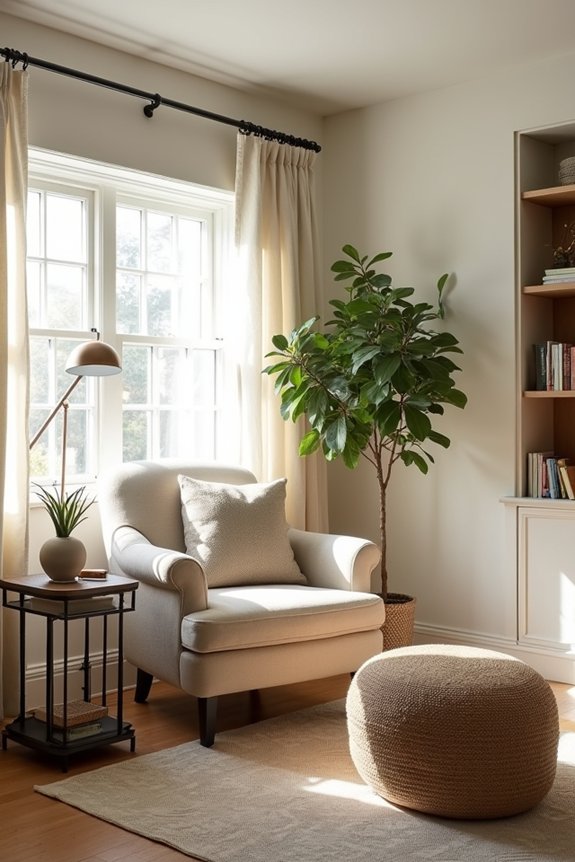
How often do you settle for a living room layout simply because it’s the easiest configuration? Rearranging furniture first reveals hidden corner opportunities you didn’t know existed.
Rearranging furniture reveals hidden corner opportunities you didn’t know existed in your living room.
Start by pulling sofas away from walls several feet. Bring chairs and tables closer together to create more intimate conversation areas. This simple shift changes your layout noticeably. Float your sectional and chairs to form defined seating zones oriented toward the fireplace as your focal point.
Test rug placement by moving it forward. Keep it aligned with your new arrangement and visible near the fireplace. After reorienting seating, group tables strategically to unify the space.
This unfolded space now shows what’s needed. You’ll see exactly where a corner reading nook or storage unit fits within your newly defined living room.
Create a Cozy Reading Nook With a Statement Chair and Lamp
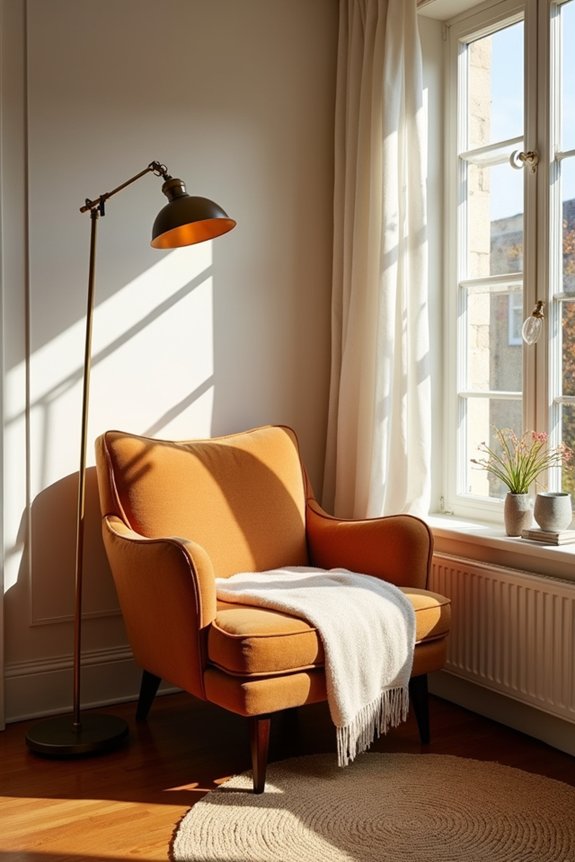
I’ll focus on three critical elements: selecting a statement chair that anchors your reading nook, implementing layered lighting through task and ambient fixtures, and positioning furniture to maximize comfort without wasting square footage. Your chair choice determines the nook’s functionality—look for accent chairs between 28 and 32 inches wide with supportive back heights around 30 inches, paired with cushioning rated for extended use. Strategic lamp placement, combining a focused task light for reading and softer ambient lighting for atmosphere, creates an inviting retreat that balances visual appeal with practical usability.
Statement Chair Selection Guide
When selecting a statement chair for your living room reading corner, choose a chair as your primary anchor point. Select a chair featuring distinctive fabric or texture that complements your existing décor. Consider options like Spoonflower re-covers that introduce visual interest without clashing with adjacent furniture.
The chair’s silhouette matters. Choose a design with clean lines or sculptural proportions that provides visual weight in the corner. Prioritize comfort features: adequate back support, seat depth between 18-22 inches, and armrests at elbow height.
Position your selection near a corner wall to maximize space efficiency. Pair it with a side table or ottoman for holding books and beverages. This combination creates an inviting, self-contained reading environment that enhances your entire living room layout.
Layered Lighting For Ambiance
Your statement chair anchors the reading corner visually, but proper lighting makes it functional for extended reading sessions. I recommend implementing layered lighting through three distinct sources: ambient lighting provides baseline illumination, a task lamp delivers focused brightness for reading, and an accent fixture adds depth.
Position an adjustable task lamp beside your chair with warm color temperature bulbs between 2700–3000K to reduce eye strain. Add a wall sconce or floor lamp opposite the chair to eliminate harsh shadows across your reading nook. Install dimmers on all fixtures to control intensity throughout the day.
This approach creates a cohesive ambient lighting system that adapts from daytime to evening use. Multiple light angles minimize contrast and deliver the functional, inviting environment your reading nook requires.
Nook Layout And Spacing
The spatial arrangement of your reading nook determines both comfort and functionality. I recommend positioning your accent chair in the corner to maximize wall usage and create an enclosed feeling. Place your side table within arm’s reach, with its height aligned to your chair’s armrest for convenient book and beverage access. A soft rug defines the space visually while adding texture and warmth beneath the seating area. Strategic spacing prevents the corner from feeling cramped or cluttered. Position your floor lamp beside the chair, directing light onto your reading surface. Consider adding floating shelves nearby for book storage without consuming floor space. This layout balances accessibility, visual clarity, and practical functionality within your designated corner, establishing an inviting reading environment that feels thoughtfully designed.
Layer In Lush Greenery to Add Life and Height to Your Corner
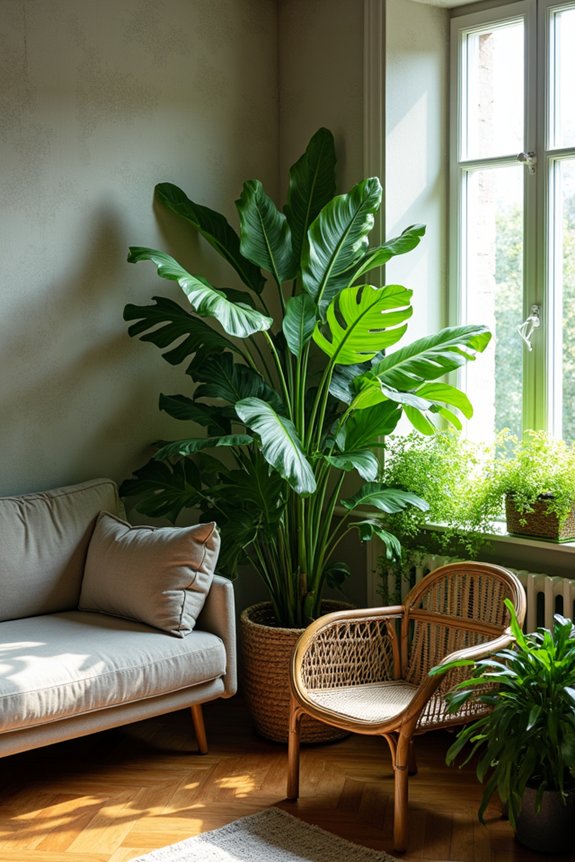
I can fill an empty corner by layering plants of varying heights—positioning a tall fiddle-leaf fig at the back, medium philodendrons in the middle, and trailing pothos cascading from hanging planters in front. This staggered arrangement creates visual depth and directs attention upward toward ceiling lines while maintaining open floor space around seating. I’ll select plants with contrasting leaf textures like soft ferns, glossy varieties, and variegated options to add richness and allow each plant to receive adequate natural light exposure.
Plant Height and Vertical Impact
Layering greenery at varying heights creates a corner with depth and visual interest by drawing the eye upward. Strategic plant placement maximizes your corner’s potential.
- Position a tall floor plant (4–6 feet) in the corner as your anchor, then add mid-height potted plants on stands to establish cascading depth and dimension throughout the space.
- Select plants with upright growth habits like fiddle-leaf figs or snake plants to maintain clean vertical lines without crowding tight corners.
- Combine floor-level greenery with hanging planters or wall-mounted arrangements to emphasize height and direct attention toward your ceiling.
Balance these placements strategically. Position taller varieties where natural light is strongest, or supplement with artificial lighting to sustain your vertical greenery year-round.
Greenery Selection For Corners
How do you build an empty corner into a layered, visually dynamic plant display? Start with one large statement plant—a fiddle-leaf fig or monstera—as your anchor. Combine it with smaller plants at varying heights using floor planters, pedestal pots, and hanging planters. This greenery selection draws your eye upward and maximizes visual impact throughout the space.
Vary your foliage by mixing leaf shapes: broad leaves paired with slender fronds in complementary green shades. This approach creates depth while maintaining corner decor cohesion. For halls or windowless areas, select low-light tolerant plants like ZZ plants, pothos, or sansevieria positioned near available natural light.
Layer textural elements—woven baskets and trailing vines on wall-mounted planters—to integrate plants with your room’s existing design while enhancing vertical presence.
Layering Foliage For Fullness
When you’re building depth in a corner, strategic plant placement makes a sparse area into a layered display that commands visual attention. I’ve found that layering greenery at multiple heights creates fullness while maintaining visual balance. Here’s how I approach corner decor with plants and foliage:
- Position tall floor plants toward the back, framing them with shorter specimens in front to establish natural vertical progression and depth
- Mix leaf textures—ruffled, glossy, and matte—across varying green shades to add dimension and prevent monotony
- Select lightweight planters in rattan, ceramic, and woven textures that enhance height without contributing bulk
Include trailing or cascading plants that spill over shelves and stands, softening harsh edges while drawing eyes upward. This strategic arrangement creates a botanical display in your corner that shows careful planning and consideration.
Create a Coffee Corner With Banquette and Round Table
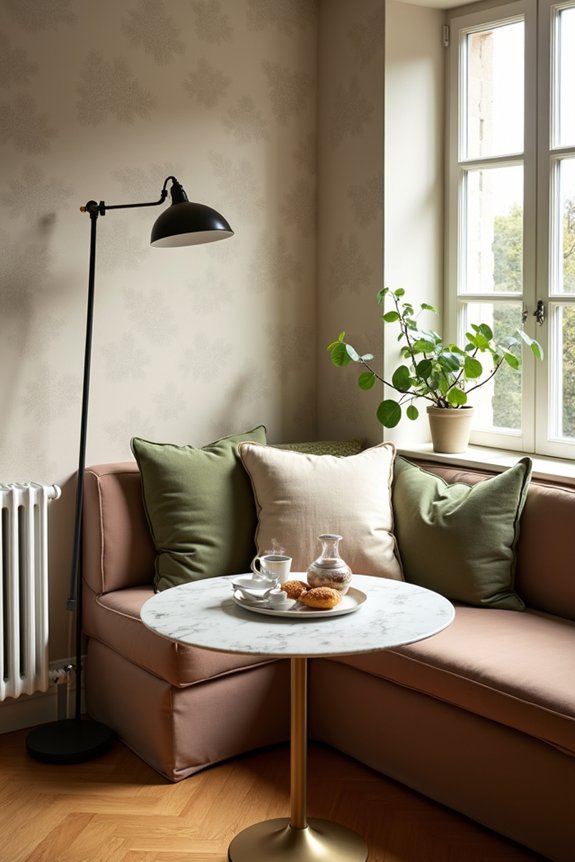
A corner banquette paired with a round table makes use of underutilized nooks as functional coffee spaces that organize conversation and morning routines. Position the banquette with green upholstery against two walls, wrapping seating around the table’s perimeter. The red-toned wood table complements this color scheme while providing a centered point of interest. Velvet bolster cushions maintain texture consistency with existing furniture pieces throughout your room.
For lighting, install a long arm sconce near the banquette, avoiding costly electrical work. This approach provides both visual interest and practical illumination without infrastructure modifications. Add throw pillows and a plug-in fixture to increase softness and functionality.
This corner banquette arrangement uses your available space efficiently, defines the nook with intention, and establishes an English cottage aesthetic suitable for daily use and comfortable gathering.
Install Floating Shelves in Your Corner for Display and Storage
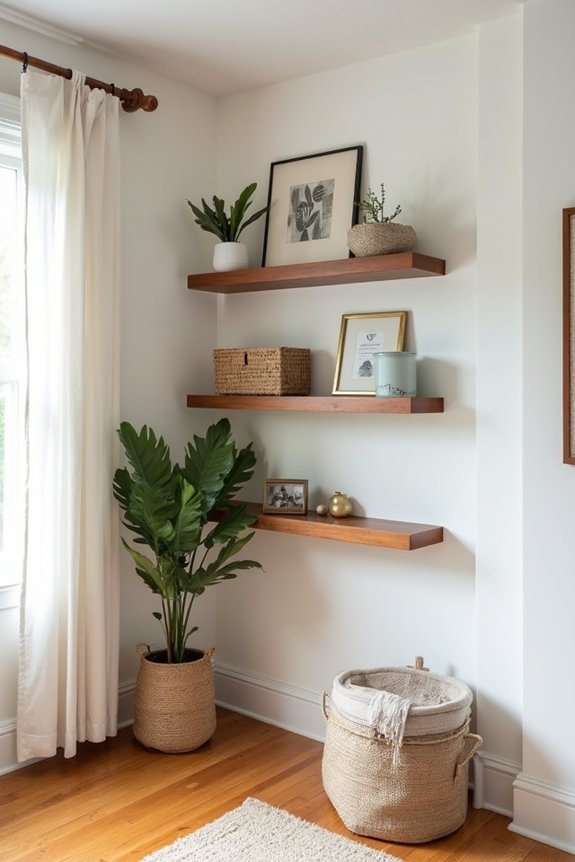
While your banquette anchors the corner for gathering and conversation, floating shelves add another layer of utility to that same nook, creating a vertical display zone. Wall storage solutions maximize unused space without consuming floor area needed for seating or plants.
Select shelves with slim profiles and substantial weight capacity. This combination supports books, decor, and storage baskets effectively. Plan your arrangement strategically:
- Vary shelf heights to create visual rhythm and accommodate items of different dimensions
- Pair shelves with a focal piece—sculpture or framed art—to anchor the corner composition
- Mix functional elements like bins with decorative items such as plants and vases
Mount shelves securely directly into wall studs for stability. Account for cable management if you’ll place chargers or lamps nearby. This corner decor approach delivers both functionality and visual appeal simultaneously.
Build an Under-Window Corner Seat With Hidden Storage
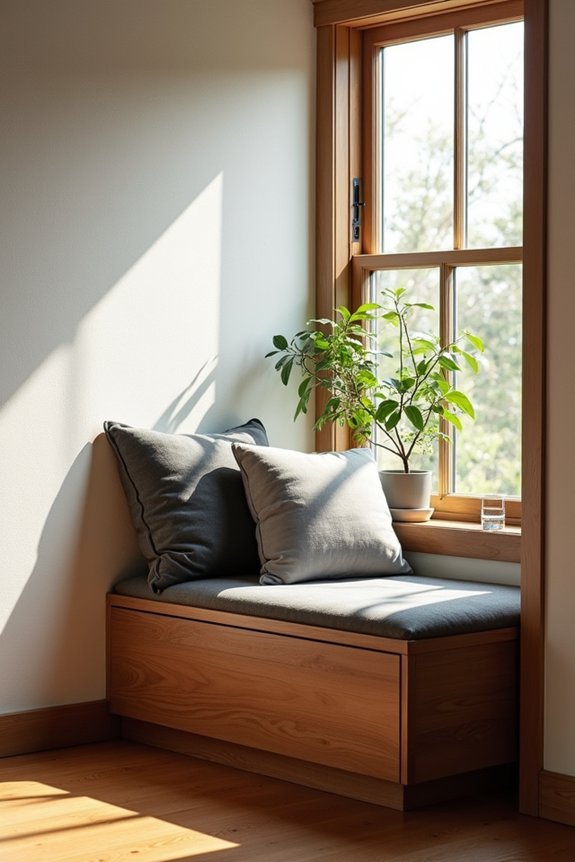
Maximizing your corner’s potential means constructing a functional under-window seat that combines seating comfort with concealed storage capacity. Measure your window opening precisely, then install a custom bench platform that fits snugly beneath the sill for seamless integration.
Your hidden storage solution should feature lift-up hinged lids or hinged drawers, accommodating blankets, books, or seasonal décor while maintaining visual cleanliness. Select durable, non-slip fabric for seat cushions, layering back cushions or rump-spring pillows to establish your inviting corner nook.
Install recessed hinge mechanisms to preserve a clean exterior profile and maximize floor accessibility. Pair your under-window seating with vertical elements—narrow shelves or window-trim styling positioned above—for display purposes and integrated lighting. This approach puts unused space to functional use, creating a living room area with visual cohesion.
Make Your Corner a Focal Point With a Sculptural Side Table and Art
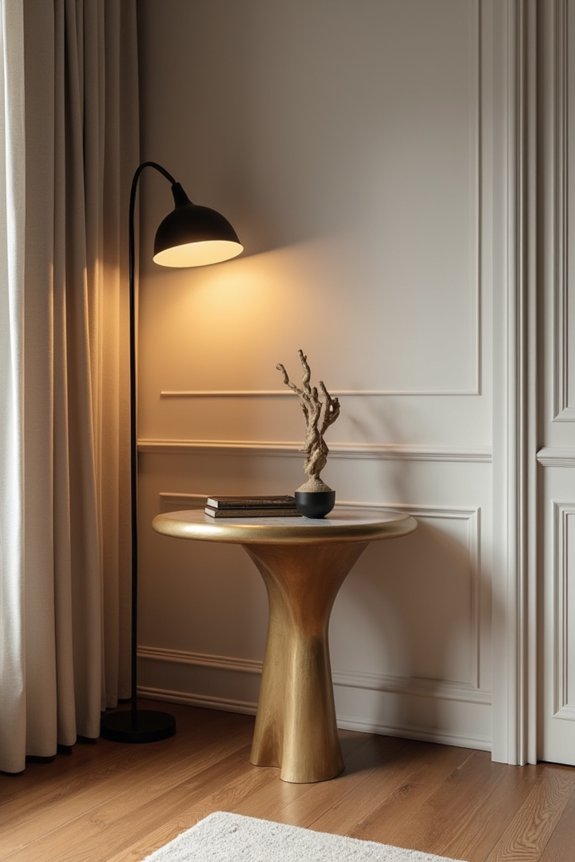
I recommend anchoring your corner with a sculptural side table—one featuring a distinctive material like blackened metal paired with a concrete or marble top—that commands visual attention through its form alone. Layering a complementary art piece, such as an abstract wall sculpture or framed installation, beside your table creates a composed arrangement where furniture and artwork reinforce each other’s impact. This dual-element approach converts an overlooked corner into a purposeful gallery space that draws the eye and establishes clear design intention throughout your living room.
Sculptural Pieces As Anchors
How do you activate an empty corner and anchor it as a designed space? Sculptural pieces serve as anchors that establish visual hierarchy and define otherwise neglected areas. Selecting the right focal point makes corner decor intentional design rather than leftover space.
Consider these elements when anchoring your corner:
- Choose a side table with asymmetrical legs or geometric forms that command attention through silhouette alone
- Pair the table with abstract wall art that echoes the table’s structural lines for visual continuity
- Position accessories—pillows and plants—around the sculptural pieces to create balanced negative space
The table itself functions as sculpture, drawing the eye through its form. This approach eliminates awkward emptiness while maintaining traffic flow. Your corner becomes a cohesive vignette rather than unused square footage.
Layering Art With Furniture
The real power of a corner lies in layering—combining a sculptural side table with wall art creates immediate visual authority in otherwise passive space. I pair a statement table featuring architectural lines with a striking piece positioned above it, establishing a clear focal point. Next, I introduce textiles: a velvet chair, textured throw, and small rug ground the ensemble while adding tactile dimension. For the curated vignette, I display a single sculpture, stacked art books, and delicate lamp—each element selected with purpose. This arrangement prevents clutter while demonstrating deliberate styling. Coordinating wood tones and color across the frame, table, and surrounding furniture achieves visual harmony. The sculptural table’s unusual silhouette complements artwork without competing for attention, turning an overlooked corner into a designed, purposeful space.
Use a Tall Bookcase to Define and Fill Your Corner Space
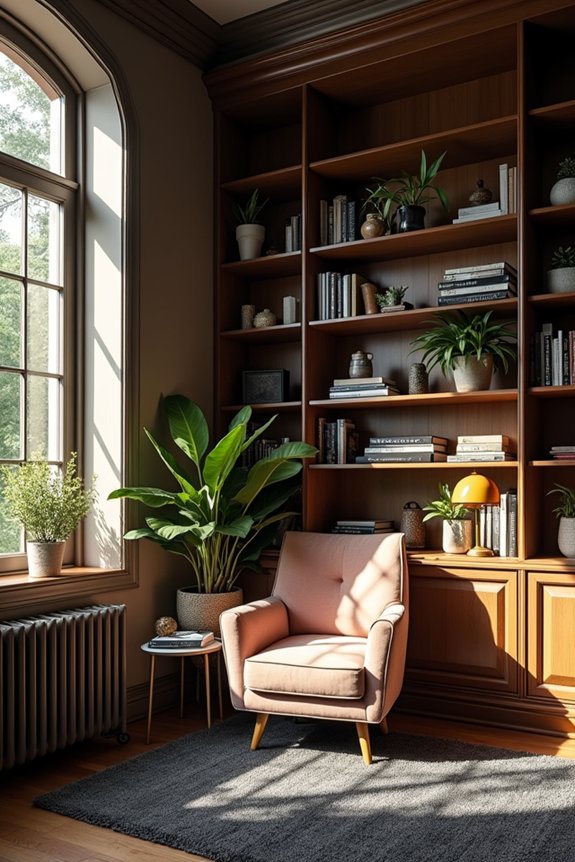
Why waste a corner when you can anchor it with purposeful storage? A tall bookcase puts unused corner space to work as functional display real estate. This furniture piece offers two key advantages: it maximizes vertical square footage while minimizing floor footprint.
A tall bookcase transforms overlooked corners into functional display real estate, maximizing vertical space while keeping your floor plan open and efficient.
Your tall bookcase performs best when configured strategically:
- Install closed cabinetry at the base for linens and books, then incorporate open shelving above for curated decor visibility
- Position adjacent lighting—a floor lamp or wall sconces—to enhance readability and highlight upper shelf items
- Align the wood tone and finish with surrounding furniture for cohesive style integration
Coordinate your bookcase material with existing pieces to maintain design continuity. Whether your aesthetic runs minimal, rustic, or modern, the right tall bookcase anchors your corner while delivering organized storage and display capability.
Make a Dark Corner Feel Bigger and Brighter With Mirrors and Light
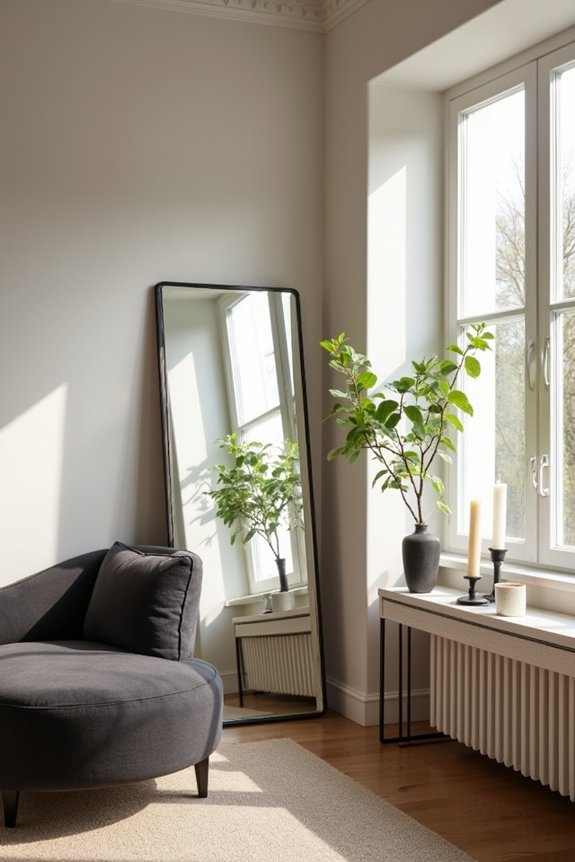
While a tall bookcase fills corner space with purpose, dark corners often absorb light rather than reflect it. I’ve found that strategically placed mirrors brighten shadowed areas by reflecting natural and artificial light sources. Positioning mirrors to face windows or lighted areas creates perceived vertical height and openness. Pairing mirrors with wall lamps or plug-in sconces amplifies ambient illumination, reducing shadows noticeably.
| Mirror Style | Frame Material | Light Pairing | Visual Effect |
|---|---|---|---|
| Paneled screen | Wood tones | Wall lamp | Focal point with depth |
| Large reflective | Metal accents | Sconce | Extended brightness |
| Decorative frame | Room-matching | Ambient source | Integrated enhancement |
| Tall leaner | Existing finishes | Positioned lamp | Expanded vertical space |
Selecting frames echoing your room’s existing wood or metal accents guarantees cohesive integration while maximizing the brightening effect throughout your corner space.
Maximize Your Corner Budget With Quick and Affordable Solutions
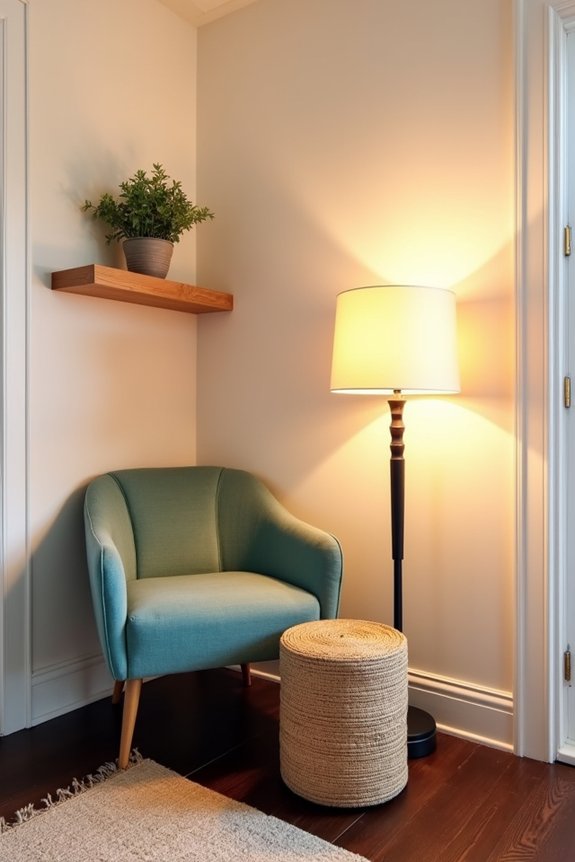
How can you maximize an unused corner while keeping costs minimal? Strategic, affordable additions create functional space without major renovation expenses.
- Invest in dual-purpose furniture: A compact armchair paired with a slim side table costs thirty to fifty dollars and serves both seating and surface needs.
- Add layered lighting solutions: A plug-in wall sconce or small table lamp ($20–40) eliminates shadows and makes the corner feel intentional without requiring electrical work.
- Implement vertical storage: Slim cabinets or open shelving units ($50–100) organize clutter while maximizing your corner’s footprint and providing display surfaces.
Anchor this space with budget textiles—a throw or cushion—that repeat existing room colors. A single tall plant introduces height as a design element. These accessible solutions turn overlooked corners into organized, inviting areas that improve your living room’s functionality.