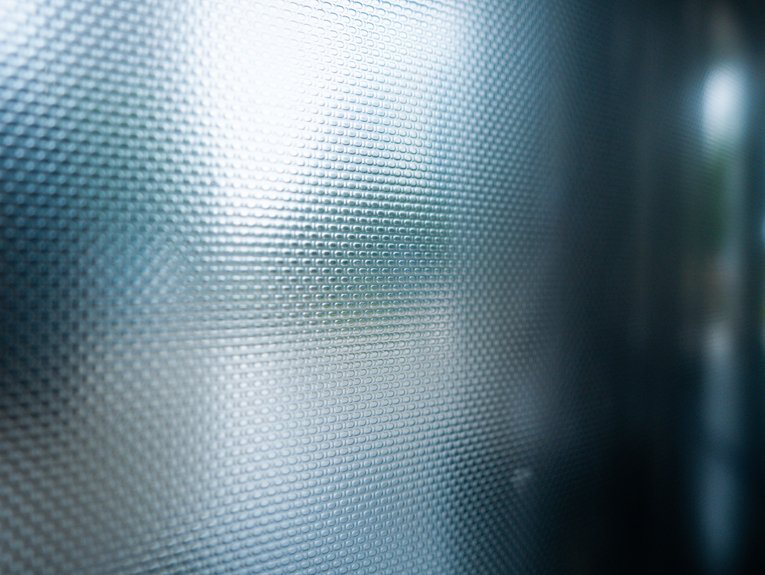
Frosted film obscures sightlines through glass partitions by scattering light across micro-textured surfaces, preventing straight-line visibility while maintaining 70–85% natural daylight transmission. The embedded particles and surface irregularities redirect incoming rays in multiple directions, eliminating sharp silhouettes and reducing clear outlines from both sides simultaneously.
This diffusion mechanism creates translucent barriers without sacrificing brightness or requiring blinds. It’s effective 24/7, costs less than etched glass, and works for renters—though selecting the right opacity level for your specific privacy needs requires careful consideration.
How Frosted Film Blocks Views Without Blocking Light
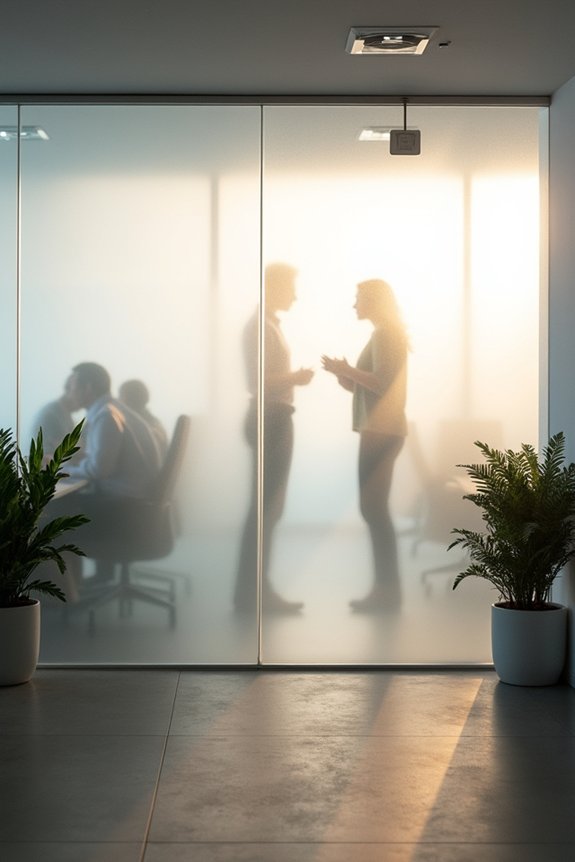
Frosted glass film works by diffusing light through micro-textured surfaces or embedded particles that scatter incoming rays rather than absorbing them entirely. This scattering mechanism creates a translucent barrier that obscures visibility while transmitting 70–85% of natural daylight into your workspace. The frosted film prevents direct sightlines from outside, so passersby can’t see distinctly into your office or conference room. You maintain privacy consistently throughout the day without sacrificing brightness. The micro-texture design controls how light behaves—bending and redirecting rays rather than blocking them outright. This approach preserves an open, airy feel in your space. By choosing frosted film, you’re selecting a solution that balances privacy with functional daylight transmission, keeping your office both confidential and well-lit.
Understanding Frosted Film’s Light-Diffusion Mechanism
Frosted glass film achieves privacy through light scattering, using micro-textured surfaces or embedded particles that redirect incoming light in multiple directions. This diffusion mechanism maintains 70–85% light transmission while obscuring shapes and silhouettes from both sides consistently. Understanding this technology reveals why frosted film delivers privacy without the darkness trade-off that traditional solutions create.
How Light Scattering Works
How does light bend and scatter when it hits a textured surface? When light encounters frosted film, it strikes micro-textured surfaces or embedded particles that redirect incoming rays in multiple directions. This scattering mechanism creates diffusion rather than transparency. Each textured element breaks the direct light path, dispersing photons unpredictably. The result: light transmits through at 70–85% efficiency while visibility becomes obscured.
This process provides practical benefits for workplace privacy. The frosted film’s translucent quality blocks clear sight lines from both sides simultaneously. You maintain daylight access without compromising confidentiality. The scattered light reduces sharp shadows and silhouettes that typically reveal movement or presence. This consistent diffusion creates a professional environment where privacy functions continuously, including evening meetings. The mechanism works identically regardless of external lighting conditions, providing reliable performance throughout your workday.
Micro-Textured Surface Technology
What makes light scatter instead of pass straight through? I’ll explain how micro-textured surfaces work.
Frosted film employs embedded particles or surface irregularities that redirect light rays. Here’s what happens:
- Microscopic peaks and valleys on the film’s surface interrupt straight light paths
- Light rays scatter in multiple directions rather than transmitting linearly through glass
- This diffusion creates a translucent barrier that obscures detail while maintaining brightness
The micro-textured surface technology achieves privacy without eliminating natural light. When light contacts these surface irregularities, it bounces unpredictably, preventing observers from seeing clear silhouettes or fine details. Light transmission ranges from 70% to 85% depending on frosting intensity.
This consistent light diffusion maintains privacy throughout the day. External lighting changes don’t compromise your confidential spaces. Conference rooms and private offices benefit from this technology because it preserves daylight while establishing the visual separation your team needs.
Privacy Without Darkness Trade-Off
The light-diffusion mechanism in frosted film addresses a fundamental office design challenge: achieving privacy and confidentiality without sacrificing natural light. Frosted glass film transmits 70–85% of available light while scattering it across micro-textured surfaces. This diffusion obscures sharp outlines and details from both sides while maintaining brightness. The micro-particles embedded throughout the film redirect incoming light rays in multiple directions, eliminating direct sight lines. You’ll notice reduced glare as a secondary benefit, since the scattered light softens harsh reflections. This balance between privacy and light transmission supports your team’s need for confidentiality during sensitive discussions while preserving the open, connected feeling that modern workspaces require. The professional aesthetic reinforces your office environment without compromising functionality.
Where Frosted Film Works Best (and Its Real Limitations)
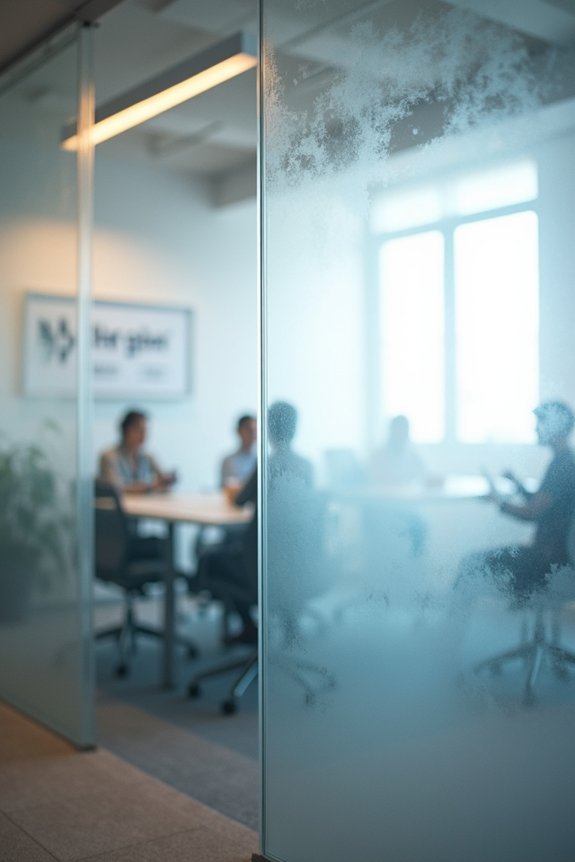
Frosted film excels in conference rooms and glass partitions where you need consistent 70–85% light transmission while blocking external visibility from both sides. You’ll find perimeter windows present real constraints, though—exterior frosted film struggles with weather exposure, UV degradation, and reduced glare control compared to dedicated solar films. Interior spaces like private offices work best when you understand that high-opacity applications sacrifice crisp detail visibility, and proper installation on smooth glass surfaces prevents adhesion failure and residue problems upon removal.
Conference Rooms and Partitions
Where does privacy meet functionality in modern office design? Frosted glass film delivers that balance in conference rooms and interior partitions. This solution addresses the core challenge: maintaining confidentiality while preserving an open atmosphere.
Consider these practical applications:
- Conference rooms benefit from light diffusion that obscures silhouettes without darkening spaces, keeping 70–85% light transmission intact for video calls and presentations.
- Interior partitions separate departments while maintaining visual connection to natural light sources throughout the floor plan.
- Customizable opacity levels—ranging from 90% VLT to 30% VLT—let you adjust privacy intensity based on specific departmental needs.
Unlike reflective alternatives, frosted glass film provides consistent 24/7 privacy regardless of interior lighting conditions. This reliability makes it the dependable choice for spaces requiring both confidentiality and brightness.
Perimeter Windows and Limitations
How do you know when frosted glass film reaches its practical limits? Perimeter windows present distinct challenges that interior office partitions don’t encounter. External glass receives direct sunlight, creating brightness levels that can overwhelm frosted film opacity levels. While standard frosted film maintains 70–85% privacy transmission, daylight but obscured view becomes compromised during peak sun hours. The film’s micro-textured surface diffuses incoming light effectively, yet intense exterior conditions reduce obscuring capability.
For optimal results, apply frosted film to north-facing perimeter windows where consistent, indirect light prevails. South and west exposures require higher opacity variants, sacrificing daylight penetration. East-facing installations fall between these parameters. Consider layering frosted film with interior blinds or shades on high-exposure perimeter windows. This hybrid approach preserves privacy transmission while controlling brightness variations throughout your workday.
Interior Spaces and Constraints
Unlike perimeter windows where external light intensity creates unpredictable opacity performance, interior office spaces offer controlled conditions where frosted film achieves consistent privacy transmission. You’ll find frosted film performs reliably in these environments:
- Executive offices and HR spaces maintain balanced daylighting while blocking sightlines through glass partitions
- Collaborative zones adjacent to corridors benefit from 70–85% light transmission without compromising privacy
- Conference rooms gain adaptable opacity levels, fine-tuning visibility for sensitive discussions
Interior spaces eliminate the variable of harsh outdoor light, allowing frosted film’s micro-textured surfaces to diffuse ambient interior lighting consistently across day and night shifts. This stability makes frosted film a practical choice for your office layout. The film’s 7–15 year lifespan and cost-effectiveness compared to etched glass create a sustainable privacy solution that preserves daylighting while protecting sensitive areas from unwanted visibility.
Frosted Film in Conference Rooms and Private Offices

Privacy concerns in professional spaces demand solutions that don’t compromise natural light or aesthetic appeal. Frosted film directly addresses this challenge in conference rooms and private offices where confidential discussions occur regularly. The film’s micro-textured surface scatters light while maintaining 70–85% light transmission, allowing natural daylight to penetrate without enabling clear vision from either side. This consistent 24/7 privacy works through diffusion technology that reduces visibility while minimizing artificial lighting dependency. Frosted film proves particularly effective for glass partitions separating sensitive workspace areas. Unlike etched glass alternatives, this film installs easily on existing surfaces, scales across large installations, and removes without permanent damage. The uniform appearance maintains professional aesthetics while protecting proprietary conversations and strategic planning sessions from external observation.
Frosted Film vs. Alternatives: Reflective Film, Blinds, and Etched Glass
While several privacy solutions exist for office glass surfaces, frosted film stands apart in delivering consistent performance across varying light conditions.
- Reflective film offers daytime privacy but loses effectiveness at night, whereas frosted film maintains 24/7 privacy through micro-textured surfaces that permanently obscure visibility.
- Blinds require regular dust removal and obstruct daylight transmission, while frosted film preserves 70–85% natural light and eliminates maintenance demands.
- Etched glass demands permanent installation and higher costs, whereas frosted film provides installation flexibility and affordability for renters and businesses.
Frosted film’s consistent daylight transmission creates bright, professional spaces without privacy compromises. Its renter-friendly application and lower cost position it as the practical alternative for offices prioritizing both privacy and open aesthetics.
Why Frosted Film Beats Blinds and Curtains for Modern Offices

How do you maintain privacy without sacrificing the visual openness that modern offices demand? Frosted film delivers what blinds and curtains cannot. Unlike traditional window treatments, frosted film transmits 70–85% of available light, preserving your office spaces’ brightness while obscuring visibility. Blinds require constant adjustment; curtains collect dust and demand frequent cleaning. Frosted film remains consistently effective around the clock, independent of interior lighting conditions or time of day. You’ll appreciate its low-maintenance design—simple soap and water keep it clean. The film integrates seamlessly into modern aesthetics without consuming wall space or requiring mechanical operation. For privacy that matches contemporary office culture, frosted film outperforms alternatives by combining persistent confidentiality with uncompromised light transmission and minimal upkeep demands.
How Frosted Film Reduces Glare and Visual Discomfort
I’ve noticed that frosted glass film’s micro-textured surface scatters incoming light, which directly reduces the sharp glare that typically bounces off standard glass surfaces onto your monitor or work materials. This light diffusion technology maintains roughly 70–85% natural light transmission while breaking up concentrated beams, lowering the contrast between bright windows and darker interior spaces that causes eye strain. You’ll find that the film’s consistent diffusion minimizes fluctuating brightness throughout the day, allowing you to work comfortably without squinting or adjusting screen brightness repeatedly.
Reducing Screen Glare
One of the most immediate benefits of frosted glass film is its ability to diminish the glare that typically plagues office environments. Screen visibility privacy improves considerably when you install privacy glass with proper light diffusion properties.
Frosted film reduces glare through these mechanisms:
- Scattering direct light across micro-textured surfaces, breaking concentrated beams that cause eye strain
- Diffusing harsh reflections from monitors and overhead lighting by 70–85% light transmission rates
- Eliminating line-of-sight to bright external sources while maintaining ambient brightness
Glare control reduces visual fatigue during extended screen work. The frosted film glare reduction occurs because light disperses evenly rather than concentrating as sharp reflections. You’ll notice improved comfort without sacrificing natural daylight or the open feel your office maintains.
Light Diffusion Technology
What makes frosted glass film effective at reducing visual discomfort comes down to its core mechanism: light scattering. The micro-textured surfaces embedded within frosted film diffuse incoming light across multiple angles rather than allowing direct transmission. This light diffusion technology prevents concentrated brightness from reaching your eyes and screens simultaneously.
When daylight enters through frosted film, it scatters instead of concentrating, reducing glare substantially. You’ll notice decreased visual strain at your desk and in conference rooms where screen reflection typically causes discomfort. The film maintains daylight transmission between 70% to 85%, preserving natural illumination while managing brightness intensity.
Frosted film achieves translucency through its particle-embedded design, creating consistent privacy without sacrificing luminosity. This balance between privacy and daylight transmission makes frosted film practical for professional environments requiring both visual comfort and confidentiality.
Eye Strain Prevention
Your eyes experience less strain when frosted glass film blocks direct glare transmission. This technology creates meaningful visual comfort in office environments where privacy matters.
The micro-textured surfaces scatter light rays, preventing harsh reflections that typically cause fatigue during extended work sessions. Consider these benefits:
- Daylight diffusion distributes natural light evenly across surfaces, eliminating concentrated bright spots that trigger discomfort
- Window film opacity options reduce glare intensity while maintaining the 70–85% light transmission needed for productivity
- Glare reduction mechanisms protect your eyes without requiring additional window coverings or artificial adjustments
This balanced approach to privacy and visual comfort means you’re not sacrificing eye health for confidentiality. The frosted film’s ability to maintain brightness while controlling light direction creates sustainable workspace conditions. Your team experiences reduced fatigue, improved focus, and enhanced privacy simultaneously—a practical combination that supports professional performance standards.
Nighttime Privacy: What Frosted Film Can and Cannot Deliver
Is frosted glass film truly protective for your office after hours? The answer depends on interior lighting conditions and your specific privacy needs.
Frosted film relies on diffusion rather than reflectivity. During evenings with low lighting, the film maintains consistent privacy because it scatters light through its micro-textured surface. However, high interior lighting creates a significant vulnerability: occupants inside can see silhouettes and movement clearly against backlit glass partitions.
| Lighting Condition | Privacy Level | Visibility |
|---|---|---|
| Low interior lighting | High | Minimal silhouettes |
| Moderate interior lighting | Medium | Partial outlines visible |
| Bright interior lighting | Low | Clear movement detected |
Nighttime privacy with frosted film works effectively when you control interior lighting strategically. The diffusion mechanism protects you during dim hours but requires supplementary measures—such as adjusted lighting or window treatments—when bright conditions exist.
DIY or Professional Installation: Which Route Works for You?
How you install frosted glass film determines both the final appearance and the longevity of your privacy solution. I’ll break down your options so you can choose what fits your situation.
Consider these installation routes:
- DIY installation works well for renters and small spaces, requiring basic tools and offering cost savings on labor
- Professional installation delivers bubble-free application and optimal privacy transmission across larger surface areas
- Hybrid approach lets you handle simple windows while professionals manage complex geometries or multiple panes
DIY frosted film installation demands patience and precision during application. Professional installers bring experience with various window film benefits, including proper tension and alignment that maximizes your privacy transmission levels. Weigh your budget, skill level, and space complexity before deciding. Both routes deliver effective window film benefits when executed correctly.
Durability and Maintenance: How Long Frosted Film Lasts
When you install frosted glass film correctly, it’ll typically last 10–15 years before visible degradation occurs. The frosted film durability depends on quality materials and proper application techniques that we’ve discussed previously.
Maintenance remains straightforward. You’ll clean the privacy glass surface using mild soap, water, and soft cloths—avoiding abrasive scrubbers that scratch the micro-textured finish. Regular cleaning preserves light transmission efficiency, keeping those 70–85% natural light levels consistent throughout your workspace.
The lifespan extends when you protect the film from direct impacts and extreme temperature fluctuations. UV exposure gradually affects adhesive bonds, though quality frosted film resists significant fading. Most degradation appears as edge lifting or slight cloudiness rather than complete failure.
Your investment in frosted film durability provides reliable privacy without ongoing structural modifications, making it cost-effective for long-term office solutions.
Cost: Frosted Film vs. Etched Glass and Permanent Solutions

When you’re evaluating privacy solutions for your office, you’ll find that frosted film costs considerably less than etched glass, which requires professional installation and permanent alteration to existing glazing. Etched glass typically runs $15–$25 per square foot installed, whereas frosted film averages $3–$8 per square foot with straightforward application. This upfront savings compounds when you factor in removal flexibility and reconfiguration costs across your workspace’s lifecycle.
Frosted Film Cost Advantages
Most organizations find that frosted glass film delivers substantial financial benefits when compared to etched glass and permanent privacy solutions. The frosted film cost advantage stems from three key factors:
- Material expenses run significantly lower—frosted film typically costs 60-70% less than etched glass treatments per square foot.
- Installation savings accumulate quickly since DIY window film application eliminates professional labor fees, reducing total project expenditure by up to 50%.
- Long-term value emerges through removability; you can relocate or update the film without replacing glass infrastructure.
Affordability extends beyond initial purchase. Unlike permanent etching, frosted film adapts to changing office layouts. You’re investing in flexible privacy solutions rather than irreversible modifications. This adaptability positions frosted film as the practical choice for organizations managing budgets strategically while maintaining professional aesthetics.
Etched Glass Installation Expenses
Why does etched glass command premium pricing compared to frosted film alternatives? Etched glass installation expenses typically run 3-5 times higher than frosted window film cost. The permanent etching process requires specialized equipment, skilled technicians, and involves glass modification that you can’t reverse or relocate. Installation expenses for etched glass demand professional contractors, extending labor costs considerably.
Frosted window film offers cost-effective privacy without permanent alteration. You’ll invest significantly less upfront while maintaining flexibility for future changes. The film’s maintenance and lifespan of 7-15 years provides reliable performance without replacement urgency.
Consider your long-term needs. Frosted film delivers comparable privacy outcomes at a lower cost than etched glass. This economical solution protects your budget while preserving office aesthetics and functionality across conference rooms and private spaces.
Long-Term Value Comparison
Beyond the installation cost difference, the real financial picture emerges over your office’s entire lifecycle. Frosted film durability extends 5-7 years with minimal maintenance, whereas etched glass remains permanent but inflexible. Consider these value factors:
- Renter-friendly removal: You’ll recoup investments through easy film installation and removal without property damage or lease penalties.
- Privacy level consistency: Frosted film maintains opacity across 90% to 30% VLT options without degradation, eliminating costly replacements.
- Daylight transmission efficiency: The film preserves natural light better than blinds, reducing artificial lighting expenses year-round.
Permanent etched glass requires significantly higher upfront costs with zero flexibility. Your cost savings compound when accounting for removal, reinstallation, or reconfiguration needs. Frosted film provides privacy as an adaptable investment rather than a permanent expense commitment.
Branded and Decorative Frosted Films for Professional Design
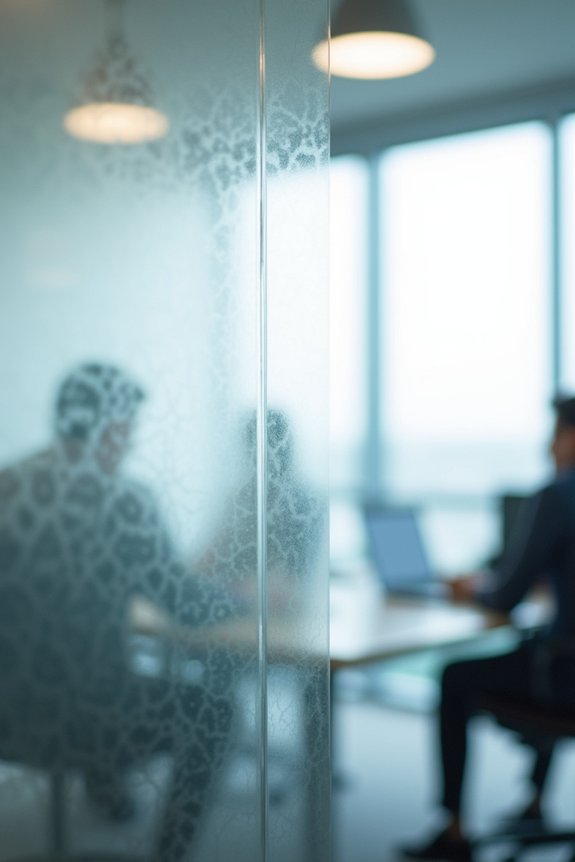
Branded and decorative frosted films represent a strategic enhancement to office privacy that doesn’t sacrifice visual identity or design cohesion. Branded frosted film integrates your company logo directly into glass partitions, creating cohesive privacy branding across conference rooms and workspaces. Decorative window film options range from geometric patterns to custom color overlays, allowing you to reinforce corporate aesthetics while maintaining the 24/7 privacy barrier.
Logo integration works through precise vinyl application, positioning your brand at eye level or across expansive glass surfaces without compromising the translucent effect. These privacy solutions offer opacity levels between 30% to 90% VLT, accommodating your specific visibility requirements. Aesthetic privacy becomes achievable when your frosted design reflects company values, converting functional barriers into branded design elements that strengthen professional identity and workspace cohesion.
Energy and UV Benefits From Frosted Film Protection
How does frosted glass film function as a thermal and UV management tool? I’ll explain the protective mechanisms that extend beyond privacy alone.
Frosted film delivers substantial energy efficiency benefits through light transmission control. Here’s what you gain:
- UV blocking reduces solar heat gain by filtering 99% of harmful ultraviolet rays, lowering cooling costs during peak seasons
- Light diffusion maintains 70-85% natural light transmission while minimizing glare and heat accumulation on interior surfaces
- Thermal regulation decreases HVAC demands as the micro-textured surface scatters rather than concentrates solar radiation
The embedded particles within frosted film scatter incoming light wavelengths, preventing concentrated heat buildup on desks and equipment. This dual functionality—simultaneous privacy and UV protection—means you’re investing in both comfort and operational savings. Energy efficiency improves measurably when your office maintains consistent interior temperatures without excessive air conditioning strain.
Removing Frosted Film Without Damaging Your Glass
While frosted film successfully manages thermal performance and UV exposure throughout your office’s operational life, you’ll eventually need to remove it—and doing so without compromising your glass surface requires specific techniques. Professional frosted film removal involves heating the adhesive layer to soften the bond, then peeling the material away gradually at low angles. You’ll apply heat using a commercial heat gun, maintaining temperatures around 140–160°F to prevent glass stress. For adhesive removal, rubbing alcohol or specialized adhesive solvents dissolve remaining residue without scratching. Installation removal becomes straightforward when you follow proper protocols: heat application, slow peeling, solvent treatment. No-damage removal protects your glass investment while enabling future film applications or maintaining clear transparency. This methodical approach keeps glass safe throughout the entire process.
Choosing the Right Frosted Film for Your Office Needs

Selecting the appropriate frosted film requires matching your privacy requirements with light transmission needs and aesthetic preferences. This guide examines key factors that align with your office environment.
Consider these essential elements:
- Frosted film opacity levels – Range from 70–85% light transmission; higher opacity delivers stronger concealment for sensitive spaces while lower opacity maintains brightness in collaborative areas.
- Privacy levels and glass surfaces – Assess whether you need complete visual obstruction or partial privacy, then evaluate existing window dimensions and glass conditions.
- Decorative options – Select patterns that complement your branding while maintaining professional appearance and functional privacy.
Matching these factors delivers both privacy and optimal workplace functionality tailored to your specific office requirements.