
You’ll want daily high-touch surface disinfection—doorknobs, light switches, shared equipment—combined with weekly deep cleaning of carpeted areas, hard floors, and baseboards. This combination reduces sick days by up to 46% while maintaining workspace presentation standards.
Monthly professional carpet extraction and quarterly HVAC deep cleaning address embedded allergens and grime that daily maintenance misses. Your specific schedule depends on office size, employee count, industry type, and seasonal conditions. Understanding how these five factors interact reveals the optimal cadence for your operation.
How Cleaning Frequency Drives Productivity and Health

Why does cleaning frequency matter so much for workplace performance? It’s the foundation of both health and productivity. When you establish a structured cleaning frequency, you’re directly reducing sick days. Cleaner workplaces lower employee illness absence by as much as 46%.
Daily high-traffic area cleaning combined with high-touch surface disinfection cuts germ transmission significantly. This consistency supports healthier, more focused work output. Weekly deeper cleaning maintains those gains, while monthly deep cleaning addresses accumulated buildup in less-visible zones.
Cleaning frequency drives health and morale simultaneously. A tidy office enhances concentration and task focus. Your team experiences better collaboration when their environment reflects care and organization. Productivity increases measurably when employees work in maintained spaces.
5 Factors That Shape Your Cleaning Schedule
Your office’s cleaning schedule isn’t one-size-fits-all; it depends on five specific operational factors. Office size and layout directly impact cleaning demands. Larger open-plan spaces require extended time and increased effort. Employee count and visitor volume raise contamination levels substantially. High foot traffic introduces more dirt and germs daily. Industry type shapes requirements considerably; healthcare and food service demand stricter hygiene standards. Work nature determines cleaning frequency accordingly. Environmental conditions influence scheduling decisions notably. Seasonal changes like snow, pollen, and flu season necessitate adjustments. These factors interact together, creating your unique office cleaning schedule. Understanding them helps you establish appropriate cleaning frequency. You’ll maintain both employee health and professional presentation effectively. Your specific environment demands tailored solutions, not generic approaches.
Daily Cleaning Essentials: High-Touch Surfaces, Restrooms, Break Rooms
I’ll focus on the daily cleaning essentials that directly impact your office’s health and functionality. High-touch surfaces—door handles, light switches, and shared equipment—need daily disinfection to interrupt germ transmission pathways. Your restrooms and break rooms require equally rigorous attention, with toilets, sinks, countertops, and appliances sanitized daily to maintain hygiene standards and prevent odor accumulation.
High-Touch Surface Disinfection
How much contamination accumulates on surfaces employees touch dozens of times daily? I’ll tell you: it’s substantial. Door handles, light switches, keyboards, and shared equipment harbor pathogens that spread illness throughout your office. Daily disinfection of these high-touch surfaces directly reduces germ transmission and keeps your team healthy.
You’ll notice improved productivity when sick days decrease. I recommend establishing a consistent sanitation schedule targeting surfaces employees contact frequently. Restrooms and break rooms demand special attention since they’re contamination hotspots. Your cleaning protocol should include wiping down countertops, sinks, and appliances with appropriate disinfectants.
This daily cleaning commitment demonstrates you value your team’s wellness. When employees feel protected, they’re more engaged and productive. Consistent high-touch surface disinfection is a requirement for maintaining workplace health and operational efficiency.
Restrooms And Break Rooms
Restrooms and break rooms require daily disinfection protocols because they’re contamination epicenters in high-traffic offices. You’ll maintain workplace standards by establishing consistent cleaning schedules that protect your team’s health and productivity.
- Disinfect high-touch surfaces daily—door handles, light switches, faucets, and soap dispensers—using EPA-approved antimicrobial solutions
- Clean toilets, sinks, mirrors, counters, and floors with appropriate disinfectants to eliminate odors and pathogens
- Wipe down break room countertops, appliances, tables, and sinks to prevent cross-contamination between staff members
- Remove trash daily from all areas to prevent odor accumulation and discourage pest attraction
These protocols create clean environments where your team feels confident and supported. Daily attention to restrooms and break rooms demonstrates your commitment to workplace wellness and shared responsibility.
Weekly Deep Cleaning: Tasks That Prevent Hidden Dirt Buildup
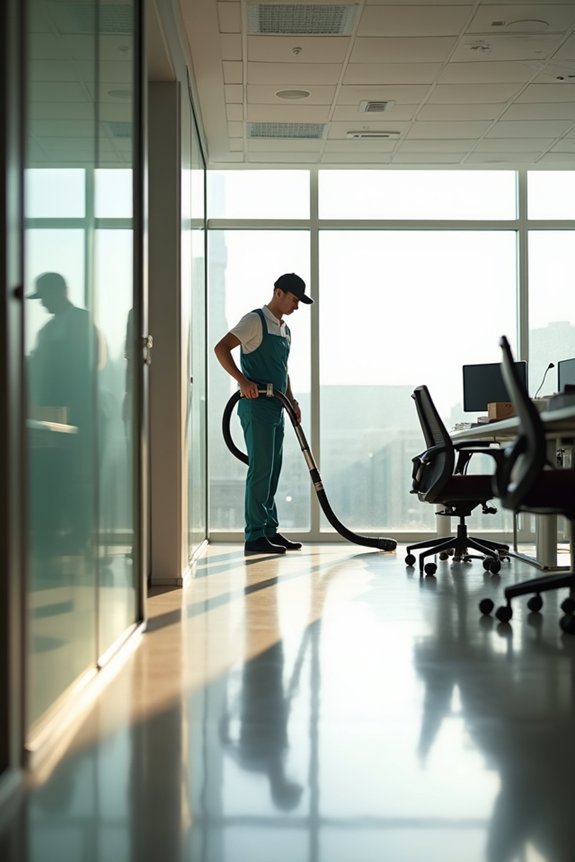
I’ve identified two critical areas where weekly deep cleaning makes a difference in your office environment. First, comprehensive floor care—including thorough vacuuming of carpeted surfaces and mopping hard floors—removes embedded dirt, allergens, and debris that daily sweeping misses. Second, high-touch surface sanitation through weekly glass cleaning and dusting of baseboards, vents, and ceiling fans prevents visible smudges while reducing allergen buildup that impacts both appearance and air quality.
Comprehensive Floor Care Strategies
Weekly deep cleaning tasks form the backbone of your office’s floor maintenance program, preventing dirt accumulation that daily sweeping and spot-cleaning can’t address. Comprehensive floor care directly impacts both your workspace’s appearance and asset longevity across the entire facility.
- Vacuum all carpeted areas thoroughly, including corners and beneath furniture where dust settles
- Mop hard floors with appropriate cleaning solutions to eliminate embedded dirt and residue
- Focus on high-traffic areas receiving increased foot traffic, which requires more intensive attention
- Sanitize baseboards and floor transitions where allergens and debris commonly accumulate
This office cleaning frequency creates a hybrid approach pairing daily maintenance with deeper weekly interventions. Consistent carpet cleaning and floor maintenance prevents premature wear patterns. You’re establishing standards that sustain hygiene while protecting your organization’s physical assets and workspace quality.
High-Touch Surface Sanitation
Where does bacterial buildup concentrate most in your office? High-touch surfaces harbor germs that compromise productivity. Your weekly deep cleaning targets door handles, light switches, keyboards, mice, and conference room tables systematically.
| Surface Type | Frequency | Disinfectant |
|---|---|---|
| Door handles | Weekly | EPA-approved solution |
| Keyboards/mice | Weekly | Alcohol-based spray |
| Elevator buttons | Weekly | Quaternary ammonium |
Sanitation prevents cross-contamination by rotating cleaning tools and solutions regularly. You’ll notice reduced microbial reservoirs when addressing reception desks, restroom touchpoints, and break room appliances consistently. Replace disinfectant weekly to maintain effectiveness. This touchpoint cleaning protocol establishes a defense against gradual germ accumulation, directly supporting team performance and workplace wellness standards.
Monthly and Quarterly Cleaning: When Professional Services Matter
Beyond your daily tidying routine, monthly and quarterly deep cleaning cycles form the backbone of a productive office environment. Schedule these professional services strategically to maintain both appearance and functionality.
- Monthly cleaning addresses carpet and upholstery in high-traffic areas, removing embedded dirt and allergens that accumulate quickly
- Ventilation cleaning on a monthly to quarterly schedule improves energy efficiency and reduces dust recirculation throughout your workspace
- Quarterly professional cleaning services include carpet extraction, floor stripping, waxing, and comprehensive HVAC deep cleaning for maximum impact
- Professional carpet extraction every three months extends carpet life while exterior window cleaning enhances your office’s visual presentation
This combined approach supports asset longevity, consistent appearance, and healthier indoor air quality. Professional cleaning services deliver results your in-house team cannot match.
Cleaning Schedules for Tech, Accounting, and Real Estate

Different industries require distinctly different cleaning protocols based on their specific operational demands and client expectations. Tech companies benefit from daily cleaning of high-touch areas like kitchens and restrooms, combined with weekly comprehensive floor and glass cleaning. Accounting firms prioritize daily cleaning in reception and client areas, then increase frequency during tax season for conference rooms. Real estate offices emphasize daily cleaning of reception, restrooms, and showing rooms with weekly deep cleaning sessions.
A hybrid cleaning approach works best across these sectors. Daily maintenance addresses immediate hygiene needs and maintains appearance. Weekly and monthly deep cleaning tackle accumulated debris and allergens. This office cleaning schedule strategy supports productivity by creating healthier workspaces. Understanding your industry-specific needs allows your hybrid approach to deliver results while optimizing resource allocation.
Adjust Your Cleaning Frequency by Season and Location
While industry-specific cleaning protocols establish your baseline routine, seasonal changes and geographic conditions demand that you modify your frequency throughout the year.
Greater Boston’s climate creates distinct seasonal demands:
- Winter requires increased floor maintenance and entryway cleaning to manage salt, sand, and moisture tracking that accelerates slipping hazards and grime accumulation.
- Spring necessitates enhanced high-touch surface disinfection and air-exchange protocols to reduce pollen exposure indoors through frequent wipe-downs.
- Fall demands reinforced housekeeping in lobbies and stairwells to prevent leaf debris and outdoor dirt transfer inside.
- Location-based adjustments account for urban pollutants and humidity levels specific to your geographic area.
These seasonal cleaning frequency modifications preserve both health standards and facility appearance. Your cleaning cadence directly responds to environmental conditions rather than remaining static year-round.
7 Warning Signs Your Office Needs More Frequent Cleaning

I’ll identify two critical indicators that signal your office needs increased cleaning frequency: health patterns and visible deterioration. When you notice upticks in employee absences due to respiratory infections, colds, or flu-related illnesses, your current cleaning schedule isn’t controlling airborne pathogens and surface contamination effectively. Simultaneously, you can’t ignore observable cleanliness failures—dust accumulation on baseboards, HVAC vents, and horizontal surfaces; carpet traffic patterns and stains; dull, scuffed flooring; or persistent odors from restrooms and kitchens—all pointing to inadequate sanitation intervals that require immediate adjustment.
Health and Illness Patterns
How’s your office’s health report looking lately?
Your illness patterns reveal insights about cleaning frequency and workplace wellness. CDC data shows regular cleaning reduces sick days by 46%. I’ve noticed that increased absences and allergy-like symptoms correlate directly with inadequate cleaning and poor indoor air quality.
Track these health indicators:
- Elevated sick day counts during flu season signal insufficient cleaning frequency
- Visible dust accumulation and odors indicate germs remain uncontrolled
- Employee complaints about allergies suggest indoor air quality degradation
- Seasonal spikes justify temporarily increasing cleaning frequency for illness prevention
Your office’s illness patterns function as measurable warning signs. Monitor employee health trends quarterly. When absences spike, evaluate your current cleaning protocol immediately. Addressing germ transmission through enhanced cleaning frequency directly impacts productivity and team wellness. Illness prevention requires proactive assessment and adjustment.
Visible Cleanliness Deterioration
Your office’s visible condition directly communicates its actual cleanliness level. I’ve observed that dust accumulating on surfaces, baseboards, and HVAC vents signals allergen recirculation throughout your workspace. This visible cleanliness deterioration demands attention because it affects both health and perception.
When you notice carpet stains, traffic patterns, or scuffed flooring, standard cleaning cycles aren’t addressing embedded dirt adequately. Persistent odors from restrooms and kitchens indicate insufficient sanitation frequency. These signs warrant attention.
Employee complaints about dusty workspaces or dirty restrooms provide practical data for adjusting your cleaning schedule. I recommend increasing frequency when you observe these deterioration markers. Addressing visible cleanliness issues proactively prevents deeper problems and maintains the professional environment your team needs.
In-House vs. Professional Cleaning: What Costs Less?
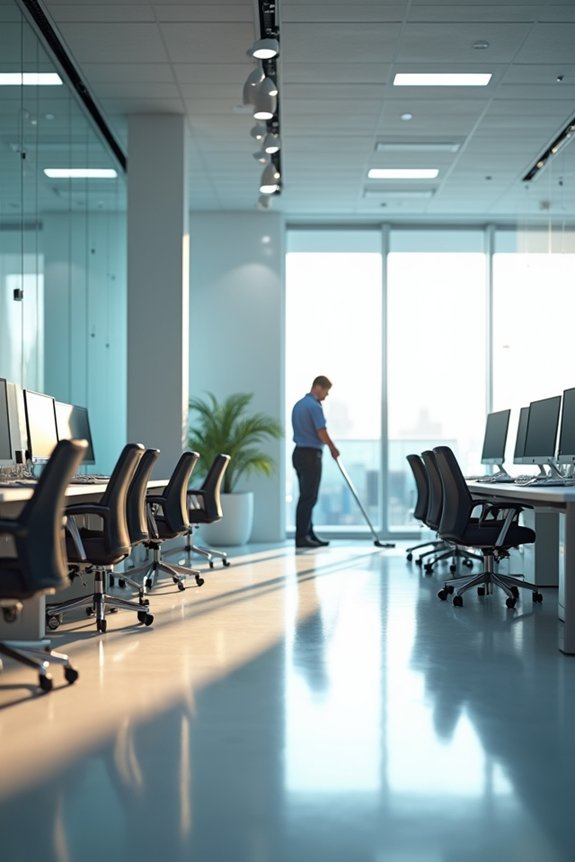
When you’re weighing cleaning options for your office, the cost comparison isn’t straightforward. In-house cleaning appears budget-friendly initially, yet hidden costs accumulate quickly through labor time, supplies, and equipment maintenance. Professional services offer scalability that grows with your business without proportional expense increases.
- In-house cleaning works for micro-offices under 1,000 sq ft with minimal staff
- Professional cleaning reduces long-term total costs by extending asset lifespan and preventing wear
- Hidden costs in in-house approaches include training, equipment purchases, and productivity loss
- Hybrid models combine daily in-house maintenance with periodic professional deep cleaning for optimal results
Professional teams deploy specialized equipment and techniques that in-house staff cannot sustain consistently. They tailor schedules to your peak business periods, maximizing efficiency. For larger environments, professional cleaning delivers superior sanitation per square foot than in-house approaches, protecting your investment while maintaining productivity standards your team expects.
Combining In-House and Professional Cleaning
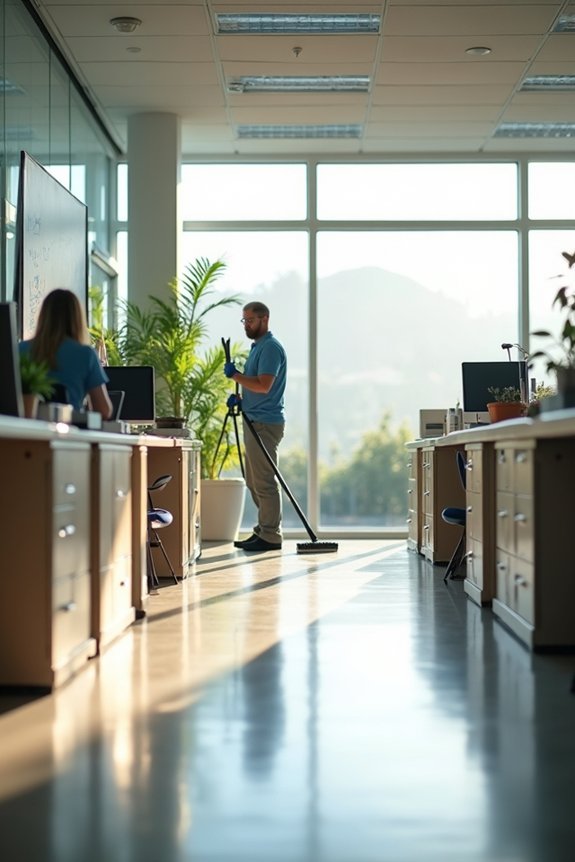
The most effective office sanitation strategy pairs daily in-house maintenance with scheduled professional deep cleaning. You’ll establish consistency through routine in-house cleaning while gaining specialized results from periodic professional services.
| Cleaning Type | Frequency | Focus Areas | Expected Outcome |
|---|---|---|---|
| In-house cleaning | Daily | High-traffic areas, restrooms, trash removal | Immediate hygiene, presentable spaces |
| Professional cleaning | Monthly | Carpets, upholstery, vents, high-level surfaces | Embedded dirt removal, allergen reduction |
| Daily tasks | Ongoing | Disinfection, surface sanitization | Germ spread reduction |
| Deep cleaning | Quarterly | Comprehensive floor care, glass, dusting | Professional appearance, longevity |
This combined approach maintains consistent daily standards while professional crews address accumulated debris and allergens. You’ll notice improved air quality and reduced illness-related absences among staff members. The investment balances immediate presentability with long-term facility preservation and employee wellness outcomes.
Design a Cleaning Schedule for Your Specific Office
Because office environments vary considerably in layout, foot traffic patterns, and operational demands, this guide helps you construct a tailored cleaning schedule that addresses your facility’s specific needs.
- Daily disinfection targets high-traffic areas, restrooms, and break rooms to curb germ spread and maintain presentation standards consistently.
- Weekly tasks include thorough vacuuming of carpeted areas, mopping hard floors, dusting top to bottom, and cleaning interior glass to reduce visible grime accumulation.
- Monthly deep cleaning expands to carpet and upholstery cleaning, vent and filter cleaning, and light fixture cleaning for improved air quality and appearance.
- Quarterly deep cleaning encompasses professional carpet extraction, floor stripping and waxing, exterior window cleaning, and HVAC deep cleaning to extend asset life and efficiency.
For client-facing spaces like conference rooms, implement after-each-use cleaning. Your maintenance plan adapts to your facility’s unique operational demands.
Sustain Clean Spaces Between Professional Services
How do you maintain cleanliness momentum between your quarterly deep cleans and professional services? I establish a daily upkeep routine that prevents dirt accumulation and supports your productivity environment. Each morning, I empty trash receptacles and wipe high-touch surfaces—doorknobs, light switches, conference table edges—using hospital-grade disinfectant. This office cleaning cadence reduces germ buildup significantly.
I implement a weekly deep-clean cadence for high-traffic areas: lobbies, break rooms, and conference spaces. These zones require targeted attention to prevent grime embedding into carpet fibers and upholstery.
I monitor interim maintenance indicators carefully. Rising sick days, persistent odors, or visible dust signal adjustment needs. I align my schedule with seasonal changes—pollen in spring, salt residue in winter—to maintain consistent cleanliness and health standards.
Execute Your Cleaning Schedule: Next Steps to Implementation
Implementing a structured cleaning cadence requires you to establish three distinct frequency tiers tailored to your office’s specific usage patterns. Here’s a practical approach:
- Map high-traffic areas in your office layout, identifying restrooms, entryways, and reception zones requiring daily attention
- Schedule weekly deep cleaning for workstations, hallways, and glass surfaces to eliminate accumulated dust
- Plan monthly deep cleaning tasks including carpet extraction and vent sanitization to address embedded debris
- Set measurable benchmarks by tracking sick days, client feedback, and dust levels quarterly
This tiered strategy maintains consistent maintenance without excessive expense. Your cleaning schedule adapts seasonally—intensify frequency during flu season and periods with environmental debris. Monitor outcomes regularly, adjusting intervals based on visible cleanliness indicators and productivity metrics.