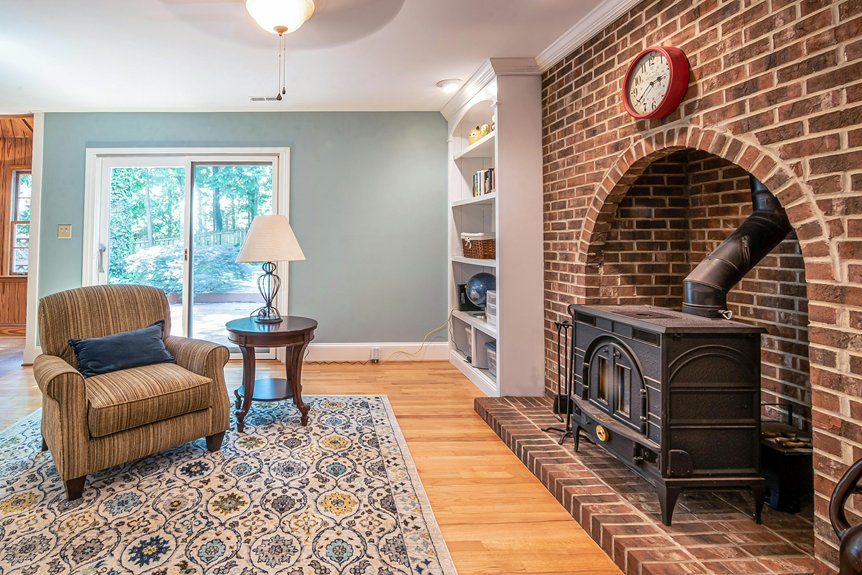
Converting your gas fireplace to wood-burning requires professional chimney inspection, local building permits, and flue upgrades. You’ll need a Gas Safe engineer to disconnect the gas line and cap it properly. Install a 316-grade stainless steel flue liner rated for wood combustion. Verify your chimney’s brick condition, mortar integrity, and structural support. Add permanent ventilation based on heat output calculations. Costs range from hundreds to thousands depending on masonry work needed. Understanding each conversion step reveals important safety requirements and realistic timelines.
Can Your Gas Fireplace Actually Be Converted?
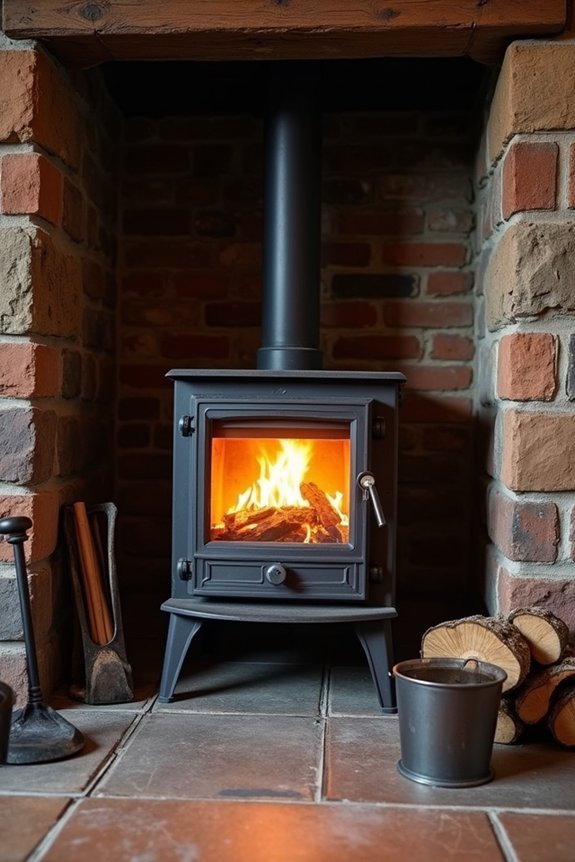
Converting your gas fireplace to a wood-burning stove isn’t always possible—it depends on your existing setup’s compatibility with wood-burning requirements. Many gas fireplaces use flueless or balanced flue systems that can’t support wood combustion safely. You’ll need a conventional flue, which not all installations provide. A professional chimney inspection reveals critical details: brick and mortar condition, flue liner integrity, damper functionality, crown, and cap status. The inspector performs a coring ball test to measure flue size and identify obstructions. If your existing flue can’t withstand high wood-burning temperatures, you’ll need a 316-grade flue liner installation. Gas line removal by a Gas Safe registered engineer is mandatory. Your fireplace design—zero-clearance versus masonry—determines conversion feasibility significantly.
Check Your Local Codes (Before You Spend Money)
Before you purchase a wood-burning stove or schedule installation work, you’ll need to verify three critical regulatory requirements. Since 2010, chimney modifications fall under building control regulations, requiring local authority sign-off, and your area may fall within smoke control zones that restrict certain fuels or appliances. Contact your local authority or a qualified installer to confirm which codes apply to your gas-to-wood conversion and obtain necessary permits before proceeding.
Building Regulations and Permits
Since 2010, chimney work and new chimney installation fall under building control regulation, requiring official sign-off upon completion. You’ll need permits and inspections before converting your gas fireplace to a wood-burning stove. Your local authority determines which building regulations apply to your specific project.
I recommend scheduling a chimney inspection first. The inspector evaluates brick condition, mortar integrity, flue liner status, damper function, crown condition, and cap security. This assessment reveals whether you need a new chimney or can use your existing structure.
If conversion requires disconnecting your gas line and installing a new flue liner, you’re triggering new chimney permits. Full fireplace replacement might become necessary, demanding additional inspections. Contact your local building department before spending money. They’ll clarify exact requirements for your conversion project.
Smoke Control Area Restrictions
Your local authority may designate your region as a smoke control area, which restricts the types of appliances and fuels you’re permitted to burn. Before converting your gas fireplace, check whether your area has these restrictions. If it does, you’ll need a DEFRA-compliant, approved appliance to legally operate a wood-burning stove. You may need exemptions or specific installation requirements from your local authority.
Schedule a professional chimney inspection to verify your flue meets smoke control standards. A HETAS-registered installer can confirm compliance and handle installation properly. Non-compliance carries serious consequences: fines, enforcement actions, and voided warranties or insurance coverage. Checking local codes upfront prevents expensive mistakes and legal complications down the road. Your installation success depends on understanding these regulations first.
Local Authority Verification Process
Now that you’ve identified smoke control restrictions in your area, the next logical step is contacting your local building control office to discuss your gas conversion project and chimney inspection requirements. They’ll clarify which permits you need before starting work. Since 2010, chimney modifications fall under building control regulation and require official sign-off upon completion. Your local authority will specify inspection standards for brick condition, mortar integrity, flue liner, damper, crown, and cap. Request documentation outlining compliance expectations. They’ll confirm whether your existing chimney suits a wood-burning installation. Obtaining permits upfront prevents future warranty issues and safety complications. This verification step protects your investment and confirms your conversion meets all applicable building codes.
Inspect Your Chimney Before You Commit
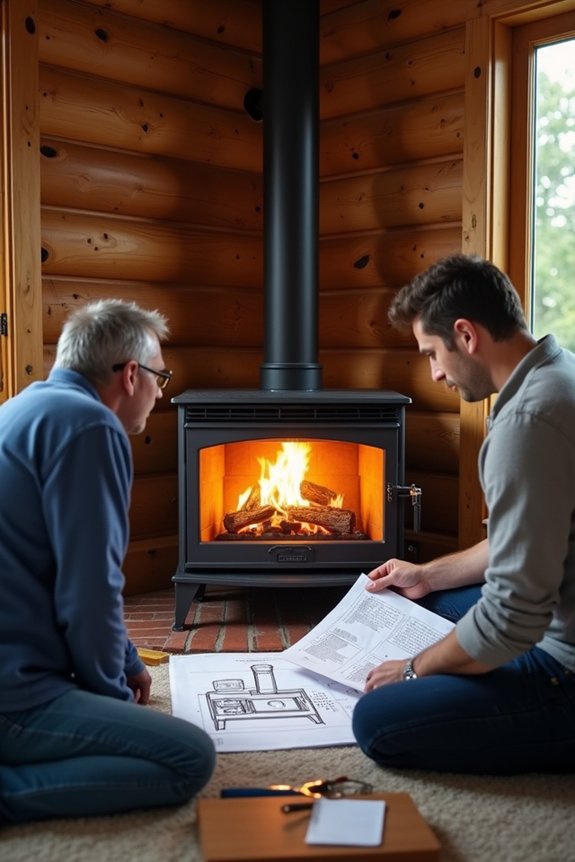
Before you proceed with converting your gas fireplace to a wood-burning stove, a thorough chimney inspection is necessary. I recommend having a professional assess brick and mortar condition, flue liner integrity, damper functionality, crown quality, and cap status. A coring ball test determines exact flue size and reveals obstructions that could compromise wood-burning operation. This inspection establishes compatibility between your existing chimney and a wood-burning system. I’ve found that damaged flues, deteriorated mortar joints, or undersized passages often require repairs before conversion proceeds. In some cases, complete chimney rebuilds or new flue designs become necessary. The inspection scope and associated costs depend entirely on what that assessment reveals about your chimney condition. This upfront evaluation prevents costly complications later.
Remove Your Gas Supply and Upgrade the Flue
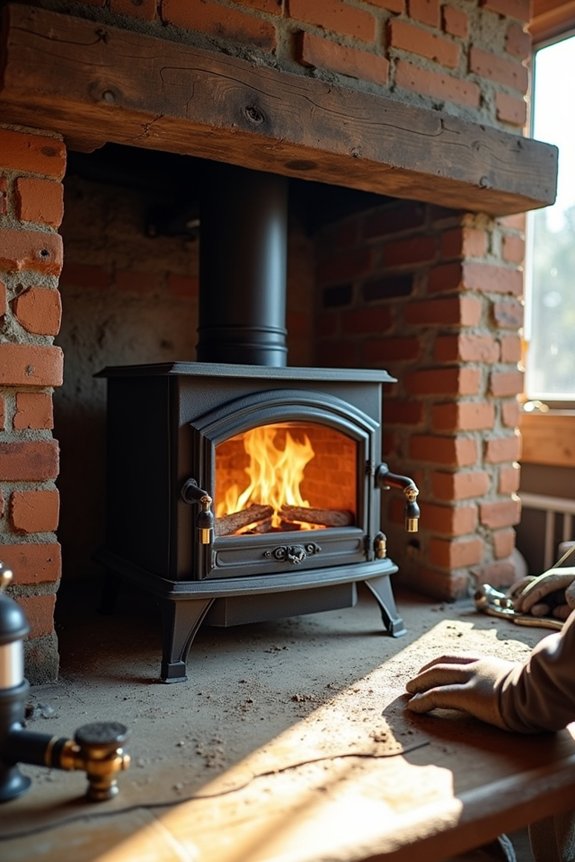
You’ll need to hire a Gas Safe registered engineer to disconnect and cap your gas line, preventing leaks and accidental ignition risks. Next, install a 316-grade stainless steel flue liner specifically rated for seasoned wood combustion, as standard gas flues cannot withstand the higher temperatures wood-burning stoves produce. Remove or seal the old gas flue entirely—leaving it in place creates dangerous heat paths that allow hot air to descend into your chimney cavity.
Gas Line Removal Process
Why does the gas supply require professional intervention before you begin any conversion work? Gas lines pose serious safety risks without proper handling. You’ll need professional expertise to protect your home and family.
A Gas Safe registered engineer must complete these steps:
- Shut off the gas supply at the meter and cap all connection points to prevent dangerous leaks
- Remove the existing gas log kit entirely or convert it to a gas log lighter for future ignition
- Cap the gas line at the source with sealed connections throughout the system
Professional gas modifications help your venting changes comply with local codes. Coordinate this gas line removal process with your chimney flue liner installation and inspection requirements. This integrated approach guarantees your wood-burning conversion meets all safety standards and regulatory approvals before operation.
Flue Liner Upgrade Standards
Once your gas supply’s been removed by a Gas Safe registered engineer, upgrading your flue liner becomes the next step. Your existing gas flue cannot withstand the higher temperatures a wood-burning stove produces. Installing a 316-grade stainless steel liner channels combustibles safely while providing necessary heat resistance for seasoned wood. This flue liner upgrade represents required chimney safety work.
Don’t simply remove the old gas flue and vent directly into your existing chimney. Heat and debris transfer into cold cavities, creating operational problems. A HETAS-certified installer verifies your gas supply isolation complies with building codes and your new flue system functions properly. The stainless steel liner, paired with proper gas supply isolation, protects your home from ignition risks and structural damage during wood-burning operation.
Masonry vs. Zero-Clearance Stove: Which Is Right for You?
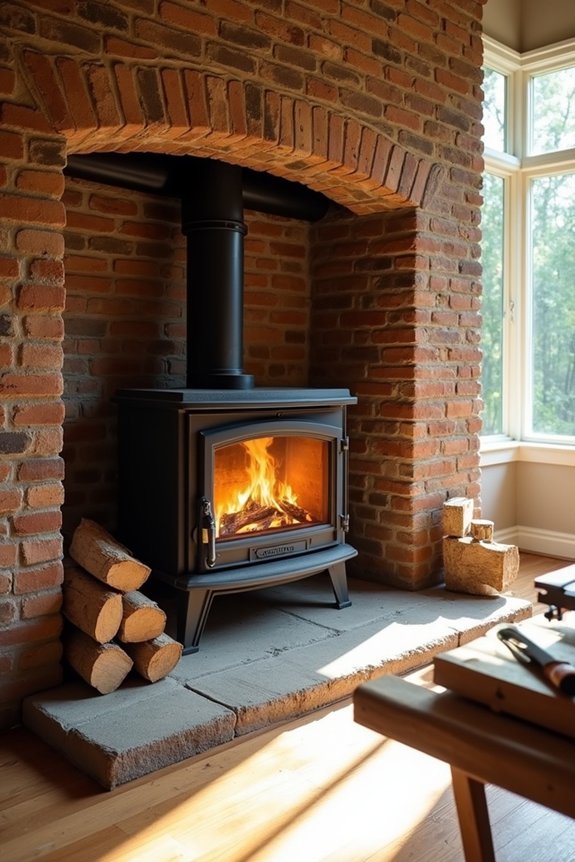
When converting a gas fireplace to wood-burning, the choice between masonry and zero-clearance installation fundamentally shapes your project’s scope, timeline, and budget.
Your retrofit feasibility depends on several factors:
- Existing chimney condition – Masonry requires proper foundation, new chimney construction, and updated flue design; zero-clearance units integrate with minimal structural changes
- Cost and scope considerations – Masonry involves extensive brick work and construction time; zero-clearance installation reduces labor and invasiveness markedly
- Flue design requirements – Masonry conversions typically need new chimney liners or custom venting; zero-clearance systems often accommodate existing spaces
Reusing your current chimney is unlikely during masonry conversion, necessitating a complete flue liner upgrade. Zero-clearance high-efficiency fireplaces offer viable alternatives for limited spaces without extensive masonry work. Your decision hinges on current brick backing integrity and whether your existing structure supports either installation method effectively.
Add Ventilation and Safety Hardware
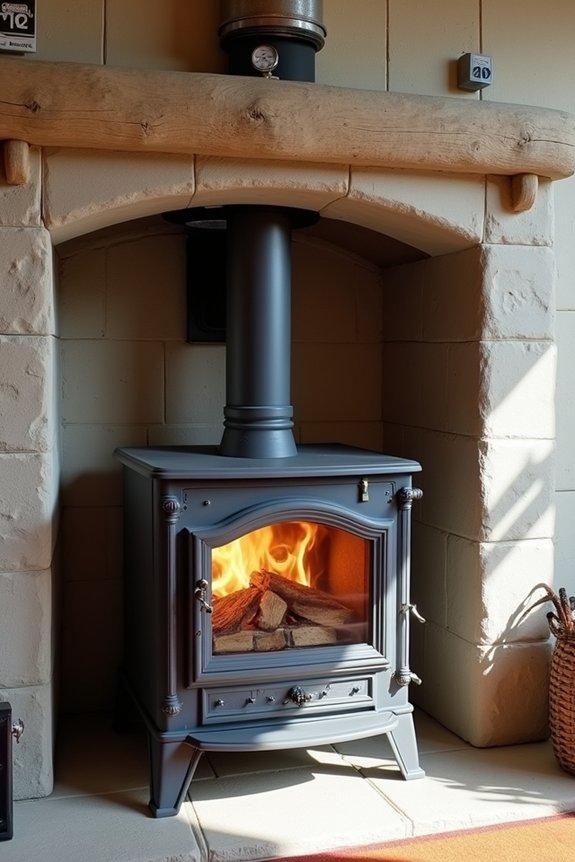
You’ve settled on your installation method—now the safety systems that protect your home demand equal attention. Install a carbon monoxide meter near your stove to detect dangerous gas accumulation continuously. Calculate your ventilation requirements based on heat output: you’ll need 550 mm² of permanent ventilation for each kilowatt exceeding 5 kW. Hire a HETAS installer who certifies proper chimney lining and installation compliance. A Gas Safe registered engineer must cap or remove your existing gas supply to eliminate leak risks. Verify combustion clearances to all combustibles—walls, furniture, and trim require specific distances. Post a compliance notice plate documenting warranty requirements and safety certifications. Adequate air circulation prevents overheating and supports efficient combustion. These safety hardware components work together, creating the protected environment your conversion requires.
Realistic Conversion Costs
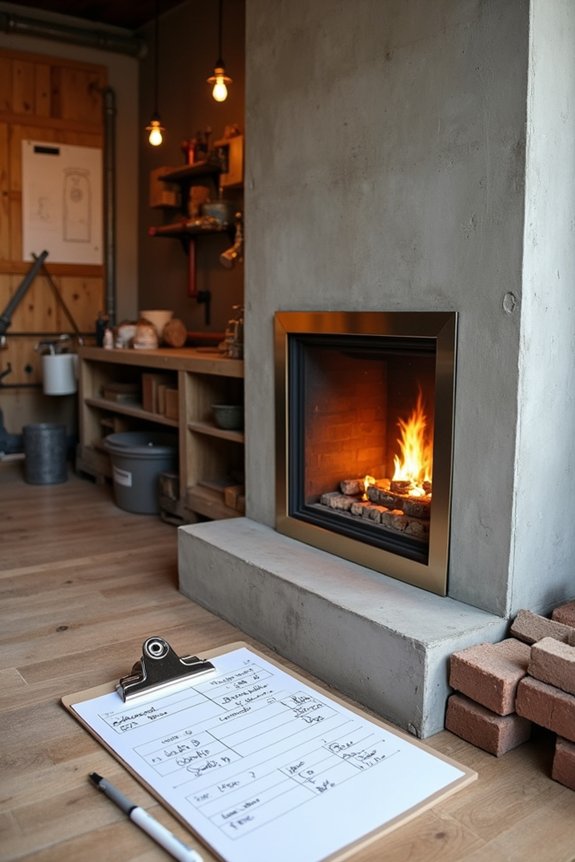
What’s the actual price tag for converting your gas fireplace to a wood-burning stove? You’re looking at variable expenses based on your specific situation.
- Labor costs range from hundreds to thousands of dollars depending on chimney condition and required modifications
- A 316-grade flue liner installation adds significant expense but withstands seasoned wood combustion properly
- Masonry work, foundation repairs, and permitting requirements multiply costs substantially for full replacements
Your conversion costs depend on what your chimney inspection reveals. Water damage or previous chimney fires necessitate reinforced clearances and upgraded liners. If you need extensive masonry reconstruction or complete chimney replacement, foundation and framing work drive expenses upward considerably. The scope of your gas to wood burning conversion determines your final investment. Understanding these factors helps you budget realistically for this significant home modification.