
Backyard dog burial legality varies considerably by state and county jurisdiction. Most states permit home burial if you meet specific requirements: typically three feet of soil depth, fifty to three hundred feet distance from water sources, and biodegradable containment. California, Washington, Missouri, Georgia, and Illinois allow it under defined conditions. However, local ordinances often override state permissions, so you’ll need written confirmation from your county animal control or zoning department before proceeding. Understanding your exact location’s restrictions determines whether this option remains viable.
Why Pet Burial Laws Differ by State and County
Why do pet burial regulations differ so dramatically across the United States? The answer lies in how environmental and public health concerns get addressed differently at each governance level. State laws establish baseline frameworks, but local ordinances often impose stricter requirements that override state permissions. Your county or city may prohibit backyard burial entirely, even if your state permits it. Common variations include burial depth requirements ranging from two to four feet, distance from water specifications preventing groundwater contamination, and environmental impact assessments. Private pet burial permits, where available, typically mandate biodegradable containment and specific property setbacks. These layered regulations exist because each jurisdiction weighs soil composition, water table depth, and population density differently. Understanding your exact location’s requirements—state laws plus local ordinances—is necessary before proceeding with any backyard burial plan.
State-by-State Breakdown: Where Backyard Burial Is Allowed
Several states permit backyard pet burial, though each enforces specific depth requirements, soil coverage specifications, and distance parameters from property boundaries and water sources. California mandates at least 3 feet of soil cover with biodegradable wrapping, while Washington requires 3 feet depth plus 100 feet separation from water sources. Missouri and Georgia allow home burial under stricter guidelines—Missouri demands 50 feet from property lines and 300 feet from water, whereas Georgia prioritizes disease-free remains and considers cremation as a preferable alternative.
States Permitting Home Burial
Where can you legally bury your dog in your backyard? Several states permit home burial under specific conditions. Illinois allows at-home pet burial through the Dead Animal Disposal Act, though local ordinances may impose additional requirements. Georgia permits backyard dog burial if it doesn’t create health hazards or nuisances. California authorizes pet disposal with conditions: three feet of soil depth and biodegradable wrapping, but county rules can override state laws. Washington requires pet graves covered with three feet of soil, positioned at least 100 feet from water sources. Missouri restricts backyard burials significantly, enforcing distance requirements from property lines and water source proximity. State laws provide baseline frameworks; local ordinances and health regulations often determine actual feasibility for your specific location.
Regional Restrictions and Requirements
Understanding what your state and local jurisdiction permit is necessary before you proceed with a backyard burial. State laws governing pet cemetery rules vary significantly across regions. Illinois explicitly permits at-home pet burial under its Dead Animal Disposal Act, though local ordinances apply. California allows burial with specific conditions: three feet of soil cover, biodegradable wrapping, and distance from water sources. Washington mandates three feet of soil depth and one hundred feet from water. Missouri enforces stricter requirements, demanding fifty feet from property lines and three hundred feet from water. These depth requirements and distance from water regulations differ across jurisdictions. Before selecting your burial site, consult your local ordinances to comply with pet cemetery rules specific to your area.
Pros and Cons of Backyard Dog Burial
Deciding whether to bury your dog at home requires weighing practical advantages against genuine limitations. Backyard burial offers convenience and emotional closure within familiar surroundings. You maintain direct control over the process and avoid cremation costs.
However, backyard burial regulations present significant challenges. State and local laws create regulatory variability that complicates planning. Depth and distance requirements—typically three feet deep with two feet of soil above—demand substantial physical effort. You must verify health and environmental safety standards, including water source distances ranging from 100 to 300 feet.
Pet disposal options like cremation or pet cemeteries eliminate these concerns entirely. Biodegradable containers add expenses. Ultimately, understanding your jurisdiction’s specific requirements determines whether backyard burial aligns with your circumstances or alternative approaches prove more practical.
Why Backyard Pet Burials Are Restricted (And What You Need to Know)
Regulatory restrictions on backyard pet burials exist for concrete reasons rooted in public health and environmental protection. You’ll encounter state and local laws that mandate specific backyard burial depth requirements, typically around three feet, to prevent soil contamination from decomposition byproducts and chemical residues. Water source proximity matters significantly; most jurisdictions require distance buffers between graves and wells or groundwater supplies. Private property restrictions vary widely—some areas prohibit backyard burials altogether or limit the number of animals per site annually. Scavengers can disturb shallow graves, creating additional health hazards. When backyard burial isn’t feasible, pet cemetery alternatives and cremation services offer compliant options. Understanding these regulations protects your community’s environmental integrity while honoring your dog with respect.
Key Requirements for Legal Backyard Pet Burial

Before you proceed with a backyard burial, you’ll need to verify the specific legal requirements for your state and local jurisdiction—because regulations differ considerably across regions and no nationwide standard exists. Most state laws and local ordinances mandate burial depth of at least three feet of soil cover above your dog’s body. Distance requirements typically specify placement at least 200 feet away from nearby residences, streams, wells, and potable water sources to prevent contamination. You’ll need to consult both state laws and your city or county ordinances, as local regulations often impose stricter pet disposal standards. Illinois allows at-home backyard burial under its Dead Animal Disposal Act, provided you satisfy all applicable distance and depth requirements. Verify these legal requirements before selecting your burial site.
How to Verify Backyard Burial Is Legal in Your Area
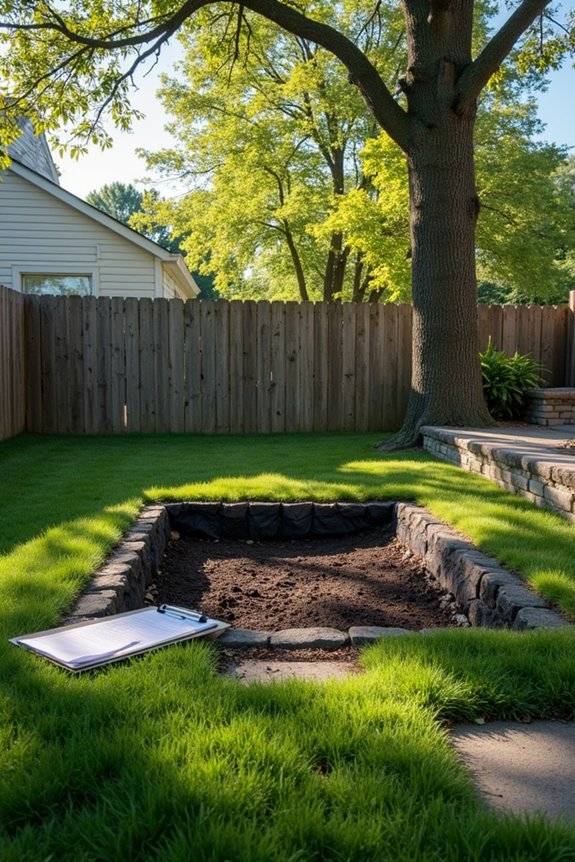
Before you dig, I’d recommend contacting your local animal control office or zoning department to confirm current regulations. These agencies maintain specific ordinances governing burial depth, distance from water sources, and permit requirements that vary considerably by jurisdiction. Researching your county’s written guidelines helps you comply with all applicable restrictions before proceeding with backyard burial.
Contact Local Animal Control
Your local animal control department holds the definitive answer to whether you can legally bury your dog on your property. I recommend calling them directly to clarify backyard burial regulations in your jurisdiction. Ask about required permits, acceptable burial depth specifications, and property setbacks from wells and neighboring residences. Inquire whether local ordinances restrict placement near streams or floodplains. Request details on environmental guidelines, including soil cover requirements and approved container materials. Some jurisdictions mandate cremation instead. Document their response with a reference number, official name, and date for your records. This written confirmation protects you against future compliance issues. Since regulations vary significantly by location and change periodically, this direct contact helps you follow current rules and avoid violations.
Research County Ordinances
How do you verify that backyard dog burial actually complies with local regulations in your specific area? You’ll need to research your county ordinances directly through official channels for legal pet disposal.
- Access your jurisdiction’s official website or code database for specific ordinance sections
- Verify definitions, permissible locations, and required permits or notifications
- Confirm burial depth requirements and distance specifications from wells or water sources
- Review annual or site-specific limits on animal weight and burial numbers
- Document all rulings in writing for compliance records
Contact your local government office to obtain the exact county ordinances governing backyard burial on private property. Request written confirmation of burial depth, distance from residences, and any permits or notifications you’ll need. This documentation protects you legally and clarifies what’s permissible for your specific property location.
Alternatives When Backyard Burial Isn’t Permitted
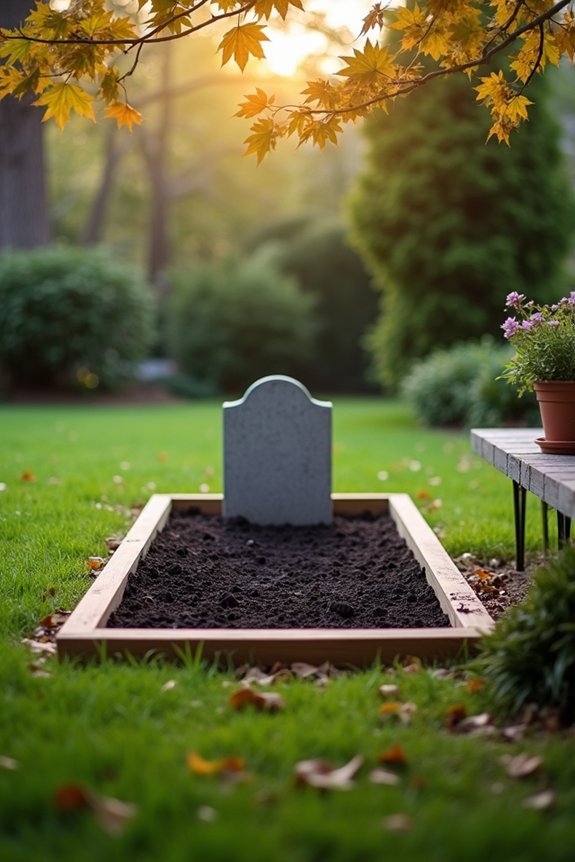
When local zoning regulations or soil conditions prohibit backyard burial, you’ll need to explore compliant alternatives that satisfy state and municipal requirements. Pet cremation offers a practical solution, allowing you to retain your dog’s ashes in an urn or scatter them where state laws permit. Local veterinary clinics and animal services provide both communal and individual cremation options, handling disposal guidelines specific to your region.
Pet cemeteries present another established pathway, offering designated burial space with professional management and memorial features. Some jurisdictions permit human-pet co-burial through special cemetery programs, though eligibility varies by location.
For emergency situations or unusual circumstances, contact your state’s environmental or agricultural agencies. They authorize on-site burial alternatives, rendering services, or permitted landfilling depending on your specific regulatory guidelines and local conditions.