I’ve found three strategic placements that work in compact spaces. Position a slim tree in your window corner for natural daylight and concealed visibility from outside.
Behind your sofa, an 18–22 inch narrow footprint preserves foot traffic while maintaining sightlines.
Your entryway console displays the tree vertically without obstructing coat closet access. Each placement maximizes visual impact while protecting functional floor space. Each option carries specific stability and lighting considerations worth exploring further.
Window Corners: Visibility Without Clutter
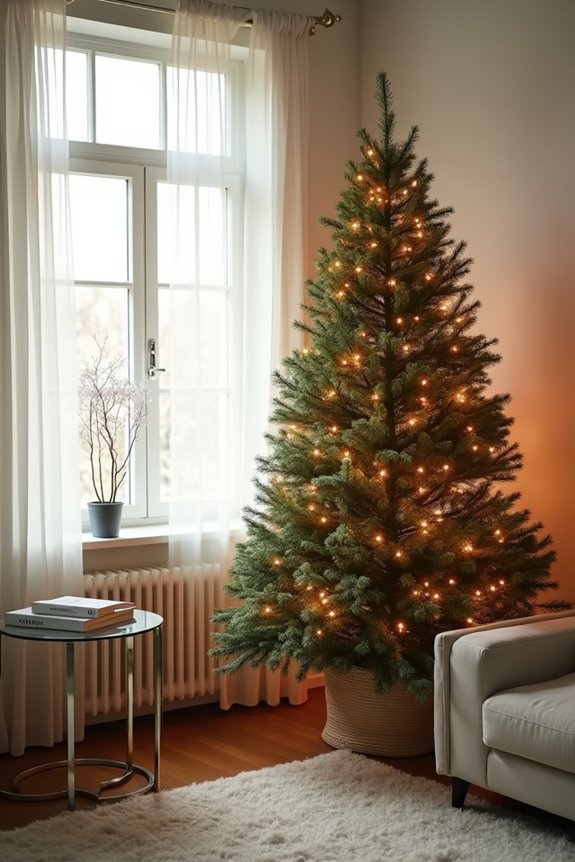
Why settle for a Christmas tree that dominates your small living room’s central floor space when a window corner placement offers both visibility and spatial efficiency? Positioning your tree in a corner by the window keeps it largely hidden from outside view while creating a festive focal point inside. A slim tree or artificial tree works best for this space-saving decor placement, reducing visual bulk without sacrificing impact. Natural daylight enhances the tree’s brightness throughout the day. From your couch or recliner, you’ll enjoy excellent sightlines for viewing. Tuck cords and presents behind the tree to minimize clutter. This strategic corner location makes an awkward space functional and attractive holiday decor placement that respects your room’s square footage limitations.
Behind Your Sofa: Hidden, But In View

How can you use unused space behind your sofa as a functional holiday focal point? A slim tree with an 18–22 inch narrow footprint fits perfectly behind the sofa, preserving foot traffic flow while maintaining visibility from multiple angles throughout your living room.
| Placement Strategy | Key Benefit |
|---|---|
| Console or end table base | Stability in high-traffic zones |
| Tabletop positioning | Enhanced visibility from entryways |
| Lightweight ornaments | Reduced tipping risk |
| Integrated lighting | Visibility without obstructing sightlines |
Position your behind-the-sofa tree on a stable base to prevent movement. Keep clearance for sofa adjustment and doorway access. Use cable management along the wall, masking cords for a tidy appearance. This floor space optimization technique delivers seasonal impact while maintaining your room’s functionality and flow.
Your Entryway: Make the Statement
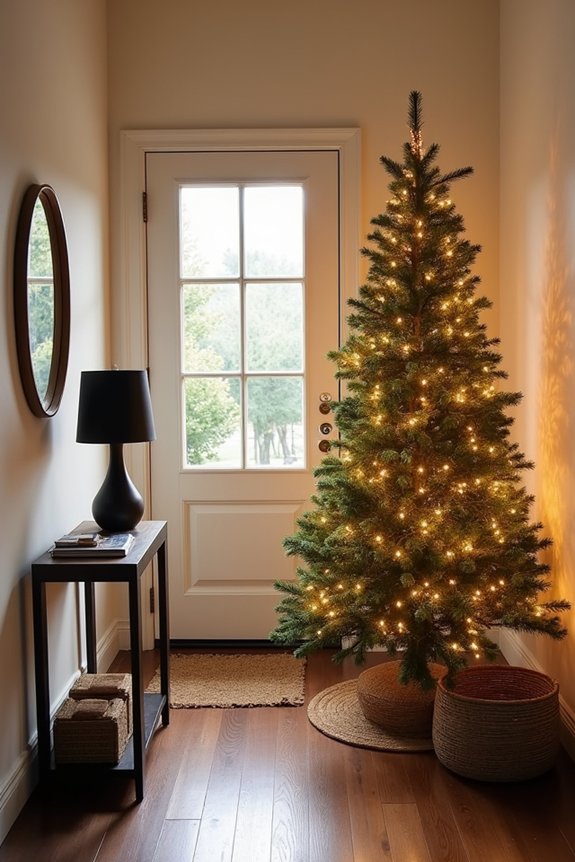
Your entryway’s first impression depends on strategic tree placement that balances visual impact with functional accessibility. I recommend positioning a slim tree on a console or pedestal adjacent to your doorway flow. This console placement keeps your foyer feeling open while using vertical space efficiently. A slim tree near the wall preserves coat closet access and maintains traffic patterns through your small living room’s entry.
Position the tree slightly off-center from the doorway itself. This placement allows you to display seasonal decor on nearby surfaces without crowding the space. Warm lighting around the tree creates a welcoming first impression for visitors. Your entryway serves a practical purpose while remaining visually interesting, demonstrating thoughtful design choices in your compact living area.