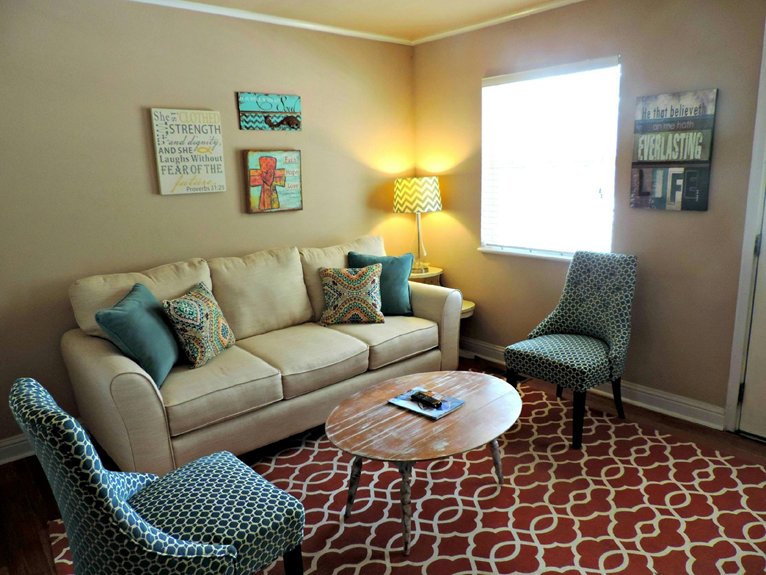
The term “living room” emerged in 1920s America as a deliberate shift away from the parlor—a formal, death-associated space. Edward Bok’s Ladies’ Home Journal championed this rename to emphasize active daily use and vitality rather than mourning. Mass production made comfortable, multifunctional furniture affordable for middle-class homes. The name reflected broader public health improvements and cultural priorities toward everyday social gathering over rigid formality. Understanding this change reveals how domestic spaces evolved across generations.
Before the Living Room: Parlors and Drawing Rooms
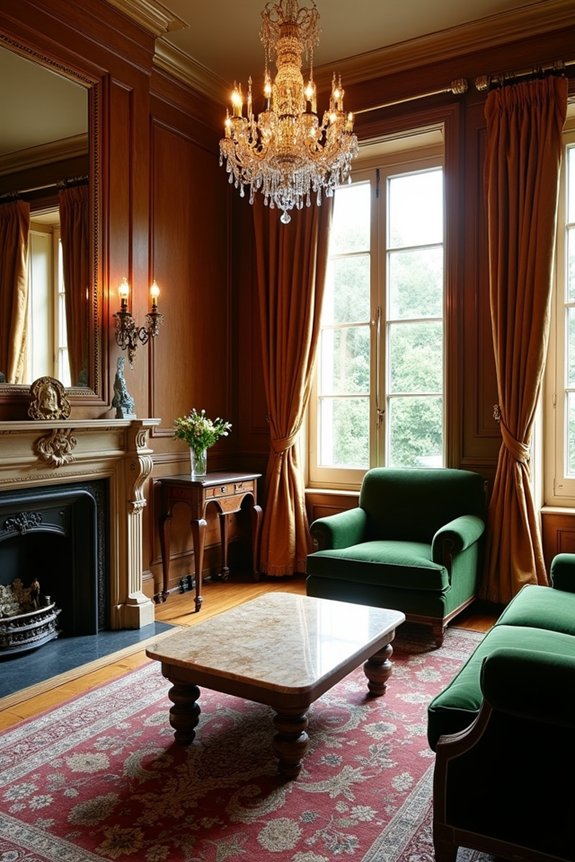
How’d people actually use their homes before the living room became standard? The parlor and drawing room served distinct purposes in earlier homes. The parlor derived from French parler, meaning “to speak,” functioning as a formal entertaining space for private conversations with visitors. The drawing room originated as a withdrawing room, providing post-dinner privacy before evolving into a formal reception area. Both spaces displayed wealth through luxurious furniture and decor, signaling status to guests. These rooms remained separate from everyday living areas, reserved exclusively for occasions requiring formality. The shift toward living rooms marked a fundamental change. Homes transitioned from compartmentalized formal spaces to multifunctional areas supporting daily activities. This evolution reflected changing social values and domestic priorities during the late nineteenth and early twentieth centuries. Your modern living room emerged directly from this practical reimagining of residential space.
From “Death Room” to Living Room: The 1918 Shift
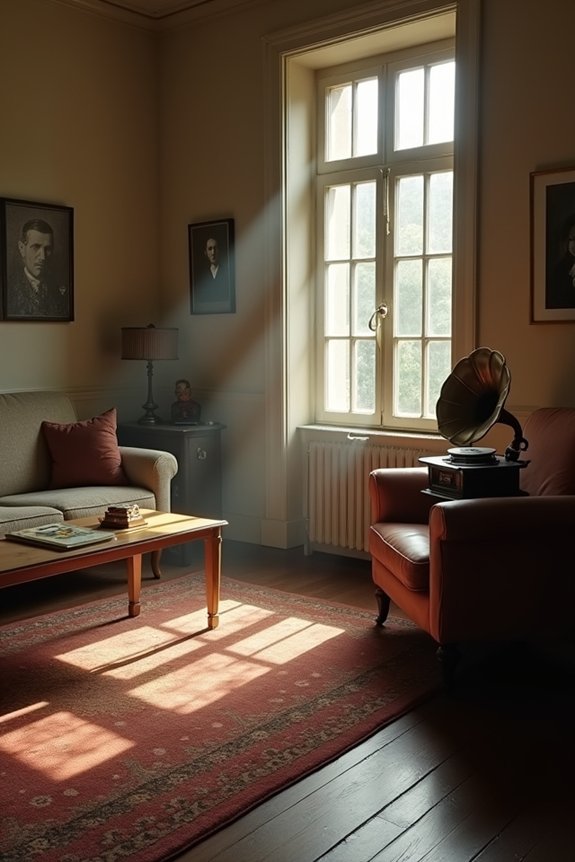
The 1918 influenza pandemic accelerated mortality rates in American homes, as front rooms served as temporary morgues and became known as “Death Rooms.” This association prompted the Ladies’ Home Journal and design professionals to advocate for a functional rename: the Living Room, emphasizing active inhabitation and everyday social gathering. This semantic shift reflected genuine changes in funeral practices and public health standards, allowing families to reclaim the front room’s purpose beyond its association with death and mourning rituals.
The Influenza Crisis Impact
During the 1918 influenza pandemic, American households fundamentally altered how they used their domestic spaces. The crisis forced families to confront mortality directly, turning the front room into a “death room” where bodies were kept for mourning rituals. This practice created an unavoidable association between the space and grief.
| Aspect | Before 1918 | After 1918 |
|---|---|---|
| Primary Function | Formal mourning, body preparation | Social gathering, entertainment |
| Cultural Association | Death, illness, loss | Living, activity, happiness |
| Design Purpose | Somber, reverent atmosphere | Multipurpose, livelier environment |
As death rates declined and public health improved, the post-epidemic shift accelerated dramatically. Families rejected the “death room” label entirely. The Ladies’ Home Journal championed renaming it the “living room,” emphasizing multipurpose spaces aligned with modern domestic values. This linguistic shift reflected genuine change in how households conceptualized their homes, moving from mortality-centered to activity-centered spaces.
Renaming for Living’s Sake
By the early 1920s, households across America recognized that keeping bodies in the front room no longer aligned with their daily lives. Public health improvements and declining home deaths prompted a cultural reckoning. The Ladies’ Home Journal championed renaming the Death Room to reflect its evolving function. This renaming acknowledged a fundamental shift: the space needed to serve multipurpose activities beyond mourning rituals. The new terminology—Living Room—deliberately emphasized vitality, social activity, and everyday engagement rather than mortality.
This historical transition represented more than semantic change. It reflected how you and your family could reclaim domestic space for connection, relaxation, and entertainment. The redesignated Living Room became central to modern household identity, embodying the cultural move toward flexible, adaptable spaces that prioritized living fully. The renaming solidified this shift in American domestic architecture and social practice.
Edward Bok and the Living Room Revolution
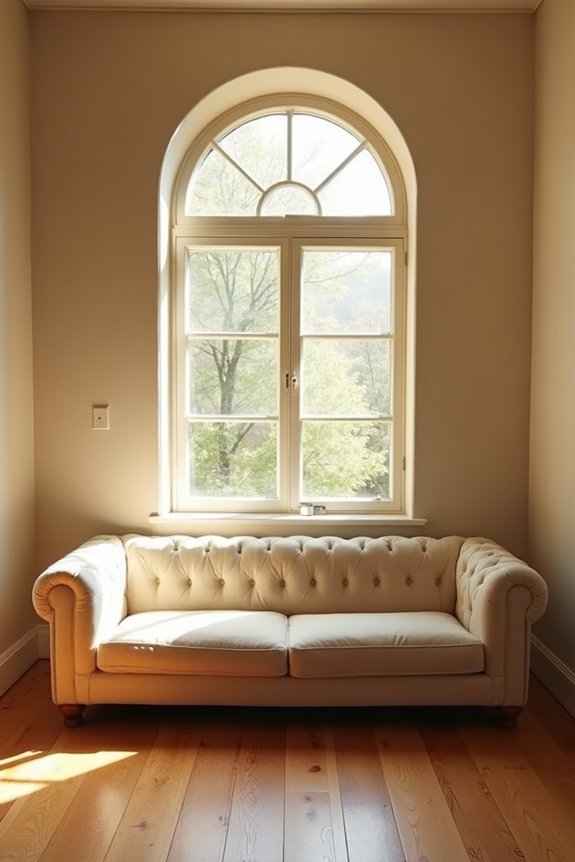
How’d we end up calling it a “living room” instead of a parlor? Edward Bok’s influence shaped this terminology shift fundamentally. As editor of Ladies’ Home Journal, Bok championed the rename to emphasize daily use and accessibility. He recognized that Victorian conventions confined the parlor to formal entertaining, limiting its functionality for middle-class households. Bok’s modernization strategy reframed the space as multifunctional—designed for socializing, relaxing, and everyday activities simultaneously. The term “living room” itself communicated liveliness and communal living rather than formality or mourning associations. Through strategic advocacy in his magazine, Bok normalized this language among readers seeking practical home design. His campaign successfully standardized the living room concept, aligning domestic interiors with broader social changes and mass-produced furnishings accessible to ordinary families.
How the Industrial Revolution Made Living Rooms Accessible
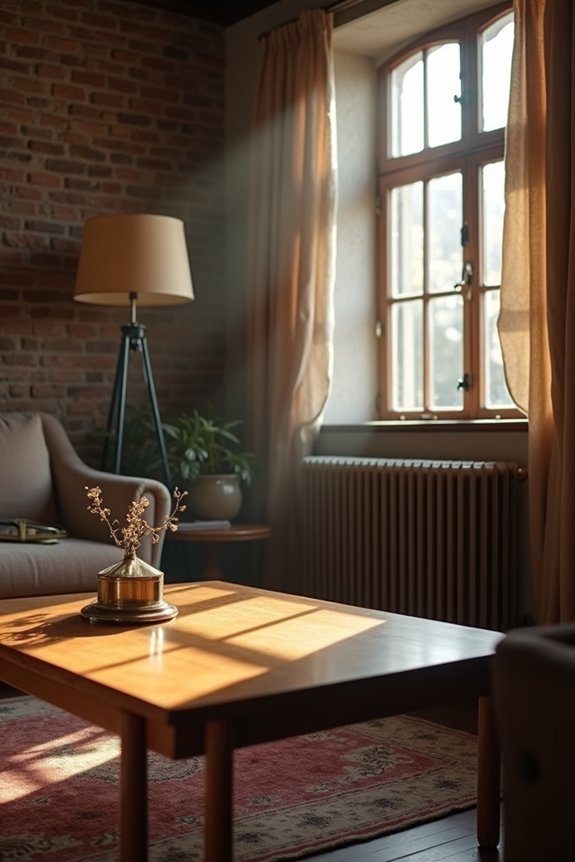
Before the Industrial Revolution, you couldn’t afford a furnished living room unless you had substantial wealth; factories changed that equation entirely. Mass production reduced furniture costs dramatically—standardized sofas, wooden frames, and machine-made textiles became available to middle-class urban households through rail networks and retail distribution. I’d argue that mechanization didn’t just lower prices; it fundamentally altered the living room from an exclusive luxury into an everyday space you could actually inhabit and enjoy.
Mass Production Expands Accessibility
The Industrial Revolution fundamentally changed how families furnished their homes and organized their living spaces. Mass production techniques reduced manufacturing costs significantly, making furniture previously reserved for wealthy households accessible to middle-class families. Factory-standardized components enabled manufacturers to produce sofas, chairs, and tables quickly and affordably. Mid-19th century furniture catalogs democratized consumer choice, allowing households to browse and order ready-made pieces through mail-order sources. This accessibility shift expanded the living room’s role beyond formal entertainment. Standardized production meant consistent quality and lower price points. Urbanization coincided with rising middle-class purchasing power, intensifying demand for informal gathering spaces. Mass-produced furnishings directly enabled the living room’s emergence as a multifunctional family space, replacing rigid, single-purpose parlor arrangements with flexible, everyday-use environments that reflected shifting domestic priorities.
Affordability Democratizes Home Furnishings
What made the living room suddenly attainable for ordinary families? The Industrial Revolution changed furniture from luxury items into accessible goods. Mass production techniques lowered costs considerably, allowing the middle class to furnish homes affordably.
Consider these key developments:
- Standardized manufacturing produced uniform seating and tables ready for immediate use, eliminating custom-crafting delays
- Mail-order catalogs distributed multipurpose furniture designs through publications like Ladies’ Home Journal, reaching households nationwide
- Cost reduction made functional living room sets affordable for wage-earning families previously unable to purchase bespoke pieces
- Rising wages and urbanization expanded home ownership, increasing consumer purchasing power across broader demographics
This affordability shift redefined living room history. The space transitioned from exclusive parlor reserved for display into everyday functional rooms for ordinary families. Mass-produced, versatile furnishings gave ordinary people access to comfortable domestic spaces, establishing the living room as a standard household feature rather than a status symbol.
Why Americans and Brits Call It Different Things
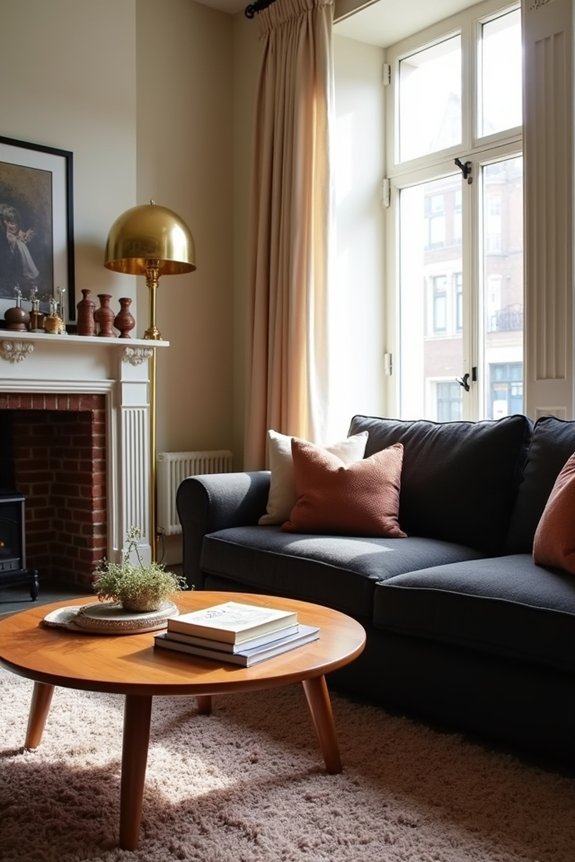
Why’d Americans abandon the parlor while Brits held onto their drawing rooms? The terminology divergence reflects distinct cultural shifts. After World War I, Americans embraced “living room”—a term signaling active, everyday use rather than formal reception. British traditions retained “drawing room” for entertaining guests, preserving historical formality. Meanwhile, “sitting room” emerged as the private counterpart across Commonwealth nations.
| Aspect | American Usage | British Usage |
|---|---|---|
| Primary Term | Living room | Drawing room |
| Function | Family-oriented, public-facing | Formal guest reception |
| Formality Level | Casual, multifunctional | Traditional, formal |
| Secondary Term | Rarely used | Sitting room |
| Historical Evolution | Post-WWI shift | Maintained Victorian roots |
Regional preferences persist today. Americans gravitated toward “living room” through Ladies’ Home Journal advocacy promoting livelier domestic spaces. Brits maintained their terminology conventions, embedding social hierarchy within room nomenclature. This historical evolution demonstrates how terminology reflects cultural values and domestic priorities across different nations.
How Modern Living Rooms Are Evolving
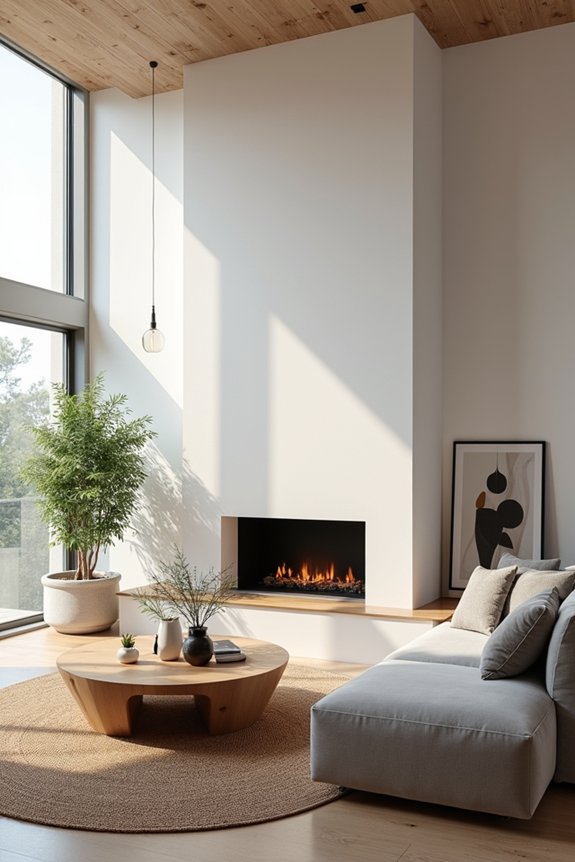
Today’s living rooms bear little resemblance to their Victorian predecessors, abandoning rigid formality for adaptable, multifunctional spaces. Contemporary design reshapes domestic life through practical innovation:
- Open layouts eliminate walls between spaces, enabling movement and sightlines across interconnected zones
- Flexible furniture like modular sofas reconfigure for different occasions without permanent placement constraints
- Tech integration incorporates televisions and streaming setups as functional design elements rather than afterthoughts
- Informal gatherings replace rigid entertaining protocols with comfortable, everyday socializing
Modern living rooms preserve drawing room heritage through symmetrical seating and central conversation zones, yet prioritize comfort over ceremony. Many households maintain formal spaces near entrances while creating casual family rooms deeper within homes. This dual approach accommodates both traditional entertaining and daily lounging. Designers balance elegance with practicality, selecting versatile decor that supports reconfiguration. The result reflects how people actually inhabit spaces—flexibly, informally, and with genuine regard for how rooms function in daily life.