Not all gas fireplaces require a traditional flue. Direct-vent units use sealed coaxial systems that exhaust through exterior walls or roofs, eliminating chimney needs. Natural-vent fireplaces rely on existing masonry chimneys for venting combustion byproducts upward. Ventless models operate without external venting entirely, burning gas indoors with safety sensors.
Your venting choice depends on your home’s structure, local building codes, and installation costs.
Understanding each system’s specific requirements reveals which option best suits your fireplace needs.
Do All Gas Fireplaces Require a Flue?
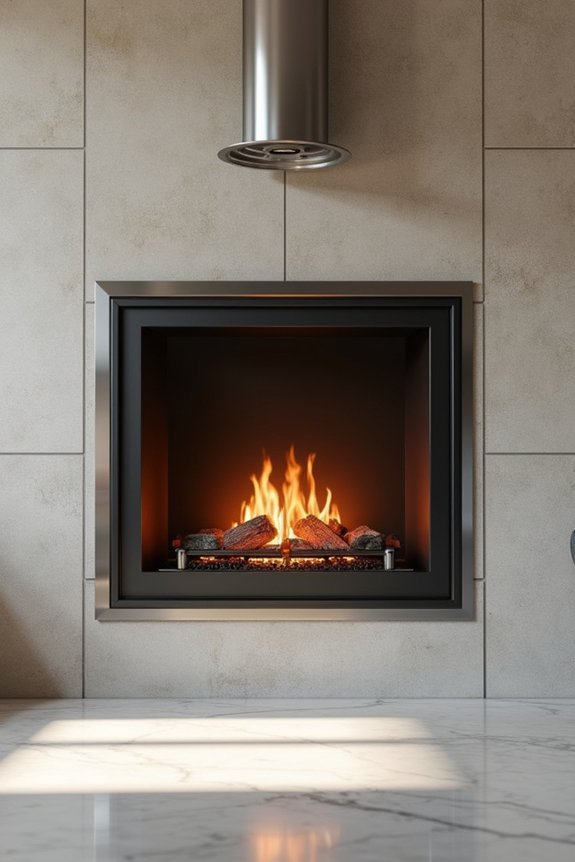
Not all gas fireplaces require a traditional flue or chimney. The three main venting types offer different options based on your needs.
Direct vent models use a sealed coaxial vent system, eliminating the need for existing flues. They exhaust combustion byproducts directly outside through the wall or roof. Natural vent fireplaces, however, do require a flue or chimney to safely remove gases outdoors. Vent-free units operate differently—they don’t need any external venting since they burn gas using indoor air and release emissions directly into your living space.
Your choice depends on your home’s infrastructure and safety priorities. Direct vent offers flexibility without structural modifications. Natural vent works with existing chimneys. Vent-free requires no venting but demands proper ventilation throughout your home.
Natural Vent Gas Fireplaces: How B-Vent Systems Work
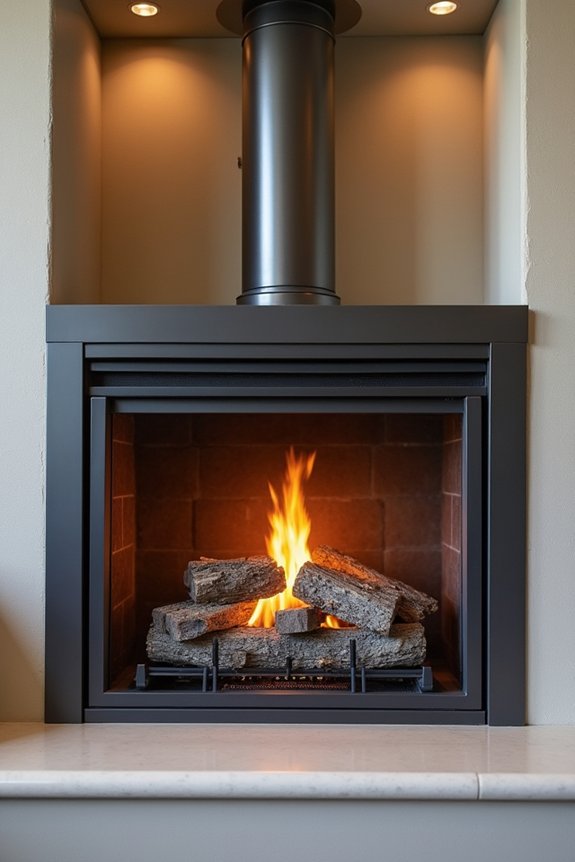
How do B-vent gas fireplaces move combustion gases safely outdoors? B-vent systems rely on vertical flues that naturally draft combustion byproducts through dedicated chimney or vent pipes to the roof. These fireplaces draw combustion air directly from your room, creating an open system that doesn’t seal internal air from the heating process. You’ll find B-vent units compatible with existing masonry fireplaces, utilizing established chimney structures for venting efficiency. The vertical vent path proves necessary for proper draft performance and safe byproduct removal. Installation demands careful planning since venting challenges can increase costs significantly. Unlike sealed alternatives, B-vent fireplaces allow some heat and combustion byproducts to interact with your living space, making them practical for homes with suitable chimney infrastructure already present.
Direct-Vent Gas Fireplaces: Sealed Combustion Without a Chimney
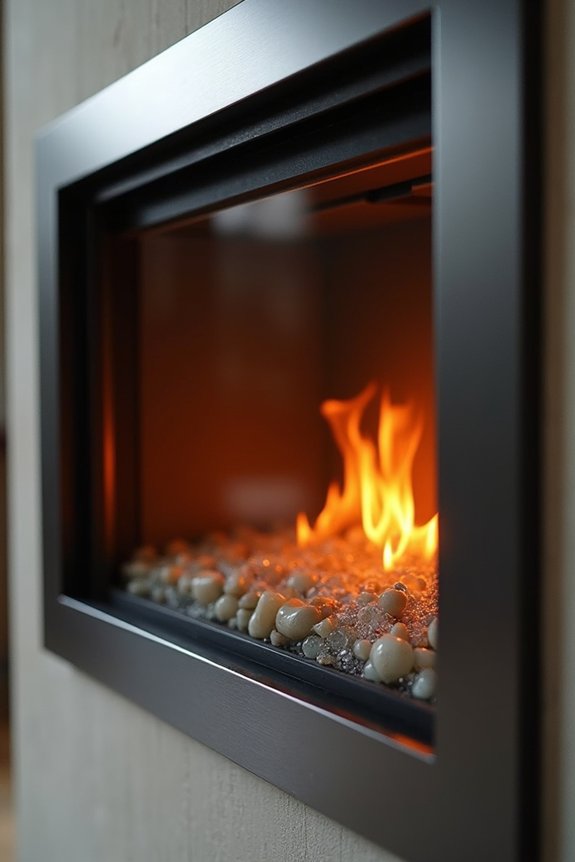
If you’re considering a gas fireplace but lack an existing chimney, direct-vent technology eliminates that requirement entirely. Here’s how sealed combustion works in these systems.
Direct-vent fireplaces use a sealed combustion chamber that draws outside air through an outer pipe while expelling exhaust through an inner pipe. This coaxial vent system routes through your exterior wall horizontally or vertically, requiring no traditional chimney. Because the unit seals from indoor air, you maintain approximately 70% of heat inside your home while the system operates independently.
Installation proves straightforward in retrofit applications. You’ll need only exterior wall access—no existing vents required. This chimney-free design makes direct-vent technology the hearth industry’s largest market segment, prioritizing safety and efficiency through sealed combustion principles.
Ventless Gas Fireplaces: No Flue, But Safety Requirements Apply
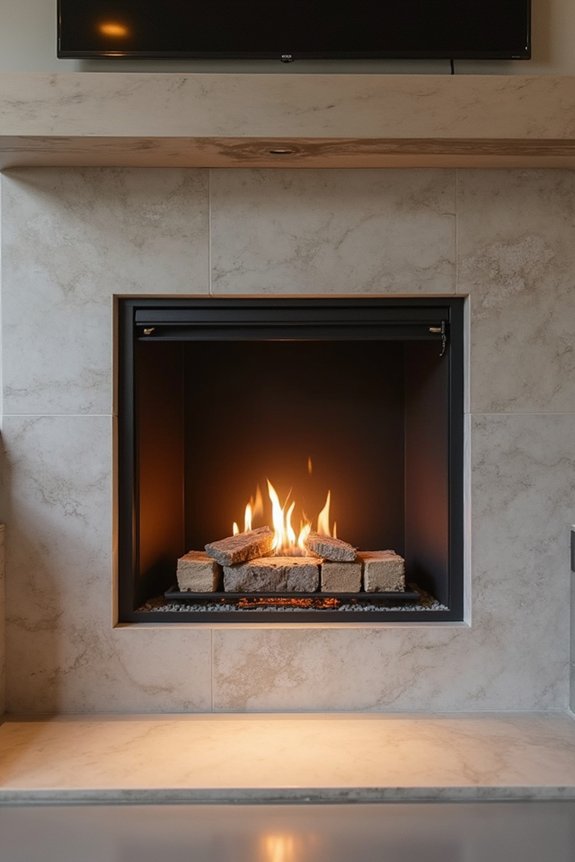
Ventless gas fireplaces eliminate the need for a traditional flue, operating instead through efficient fuel combustion within an enclosed firebox. Manufacturers integrate safety mechanisms like oxygen depletion sensors and carbon monoxide detectors to protect your indoor air quality. However, local building codes and regulations substantially restrict or ban ventless units in many jurisdictions due to combustion byproduct concerns.
Safety Features And Regulations
Although they eliminate the need for venting systems, ventless gas fireplaces don’t bypass safety requirements. Federal testing and approval are mandatory before these units reach consumers, verifying emissions and safety performance meet regulatory benchmarks. You’ll find that most ventless models include oxygen depletion sensors (ODS) and carbon monoxide detectors that automatically shut off the unit when oxygen drops or CO becomes unsafe. Local restrictions often apply to ventless installations, so checking your area’s codes is necessary. Professional installation by certified technicians maintains compliance and safety standards. Manufacturer guidelines must be followed precisely during setup and operation. These regulations exist because ventless fireplaces produce combustion byproducts that remain inside your room, affecting humidity and indoor air quality. Understanding these safety features and regulations helps you make informed decisions about your heating options.
Operating Without Traditional Venting
One key distinction separates ventless gas fireplaces from their vented counterparts: they operate as open combustion systems entirely within your living space. Unlike traditional models, ventless units don’t require external flues or ductwork. Instead, they burn gas directly in your room, which means combustion byproducts—including moisture and carbon dioxide—remain indoors. This approach demands reliable safety mechanisms. Oxygen detectors monitor air quality continuously, triggering automatic shutoff if oxygen levels drop dangerously. CO detectors provide additional protection against carbon monoxide accumulation. These integrated systems work together to maintain safe indoor air quality during operation. While ventless fireplaces eliminate installation complexity associated with venting, they still require professional setup and regular maintenance inspections. Your understanding of these operational differences supports responsible fireplace ownership and household safety.
Gas Fireplace Installation Costs and Venting Considerations
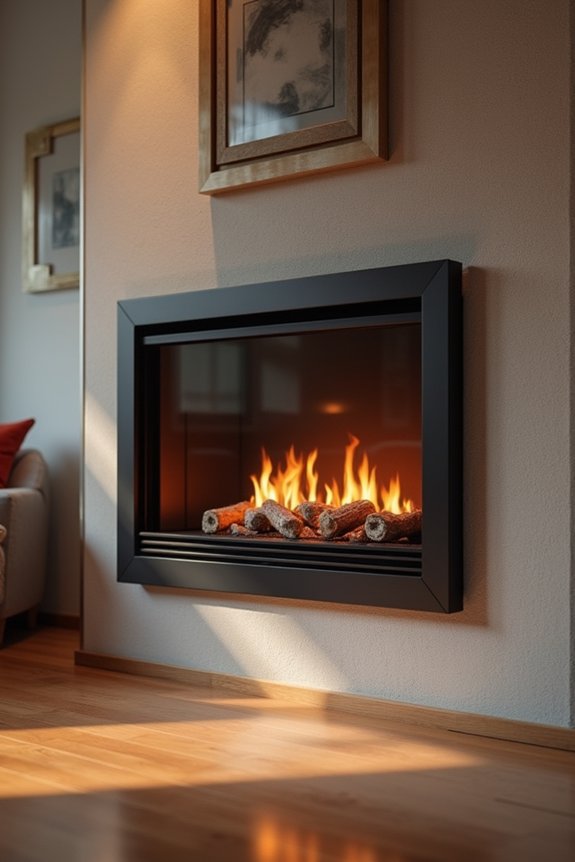
How you choose to vent your gas fireplace directly shapes both your budget and installation timeline. Direct-vent systems cost more initially but eliminate chimney requirements, using coaxial vents routed through exterior walls. B-vent fireplaces depend on existing chimneys, potentially increasing venting expenses if you lack suitable infrastructure. Vent-free models offer the lowest installation cost, though local codes may restrict them. Your venting configuration matters—horizontal wall penetration typically costs less than vertical roof installation. Direct-vent placement flexibility reduces overall expenses compared to B-vent setups requiring chimney alignment. Consider your home’s current structure when evaluating installation costs. Each venting type presents distinct trade-offs between upfront expense, installation complexity, and long-term functionality.
Why Annual Inspections Protect Your Investment
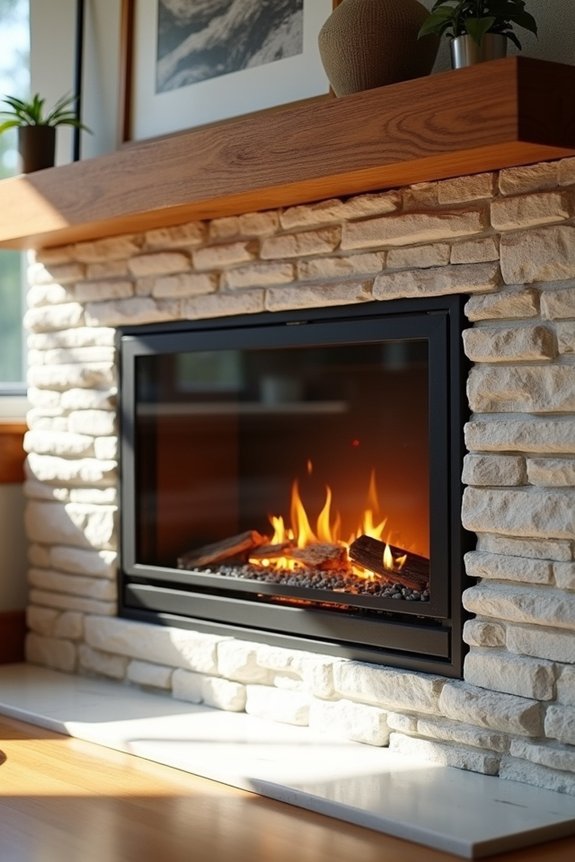
I schedule annual inspections to catch critical safety issues before they compromise your home—carbon monoxide leaks, blocked vents, and faulty ignition systems pose genuine hazards. You’ll protect your investment by having a professional verify that your burners, pilot assemblies, and oxygen sensors operate within manufacturer specifications. Regular maintenance also extends your fireplace’s functional lifespan by addressing component wear early, which prevents expensive repairs down the road.
Safety Issues And Prevention
Because gas fireplaces rely on combustion and venting systems to operate safely, annual professional inspections are necessary to protecting both your investment and your home’s occupants. I recommend scheduling yearly assessments where certified professionals inspect gas lines, ignition systems, and venting pathways for leaks or blockages. They’ll verify that safety devices—carbon monoxide detectors and oxygen depletion sensors—function properly to alert you to hazardous emissions. Between inspections, I clean dust and soot buildup regularly to maintain efficiency. Keeping vents clear of debris and animal nests prevents combustion byproduct accumulation inside your home. These preventative measures maintain adequate airflow, reduce malfunction risks, and protect everyone’s health. Professional maintenance isn’t optional; it’s your primary defense against dangerous gas fireplace failures.
Maintenance Extends Fireplace Lifespan
Regular maintenance directly extends your gas fireplace’s operational lifespan by identifying wear before it compounds into costly repairs. I recommend annual inspections that verify gas lines, ignition systems, and venting remain intact and leak-free. These checks catch clogged flues, obstructed burners, or worn burn bars before efficiency loss occurs. Professional service confirms your CO detector and oxygen safety device function properly, protecting indoor air quality during combustion cycles. Technicians clean dust, glass residue, and vent blockages that degrade performance over time. By addressing these components yearly, you’ll preserve consistent heat output and avoid emergency repairs. This preventative approach saves money while keeping your fireplace operating safely for years ahead. You’re investing in reliability and peace of mind.