
Back tab curtains feature hidden tabs sewn into the header, creating seamless pleats when you thread a rod through them. They work best with lightweight fabrics like linen blends and cotton, which drape smoothly without snagging.
Measure your panel length from the tab top to your desired endpoint, then multiply rod width by 1.5 to 2 for proper fullness.
Installation requires threading the rod evenly through each tab, spacing them uniformly, then securing brackets firmly.
Weekly dusting and immediate spot-cleaning preserve functionality.
Understanding fabric weight and maintenance demands is necessary for optimal performance.
Back Tab Curtains: When They Work and When They Don’t
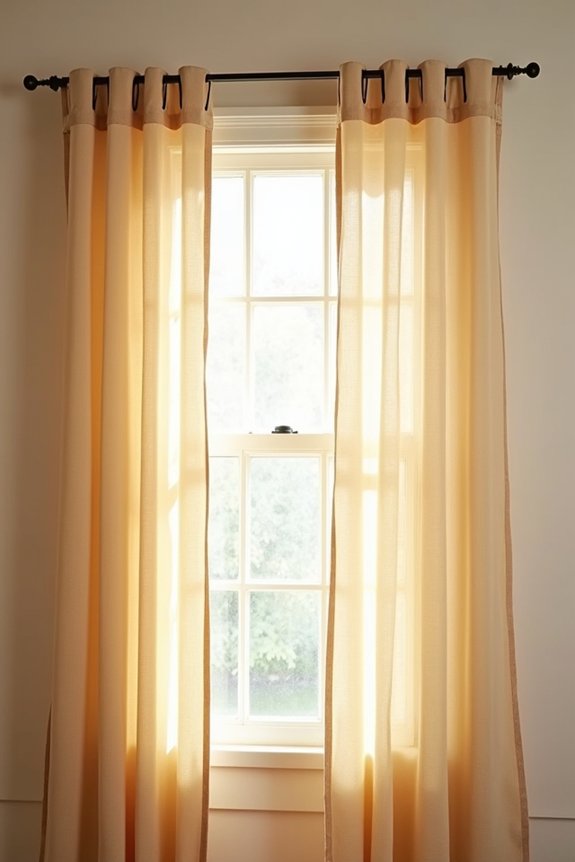
When you’re selecting a curtain style, back tab curtains offer a distinctive aesthetic that sets them apart from conventional hanging systems. The hidden back tab design creates a seamless front appearance that appeals to those seeking polished, tailored interiors. However, they work best with lightweight fabrics and infrequent opening cycles. The tabs don’t glide smoothly across curtain rods like rings or grommets do, making them unsuitable for high-traffic situations. Installation requires sliding the rod through back tabs and spacing them evenly to form uniform pinch pleats. You’ll calculate fullness using 1.5× to 2× rod width for your curtain panels. This header style pairs exclusively with poles, never tracks. Understanding these limitations helps you determine whether back tab curtains match your functional needs and lifestyle.
Measure for the Perfect Fit: Fullness and Length Calculations
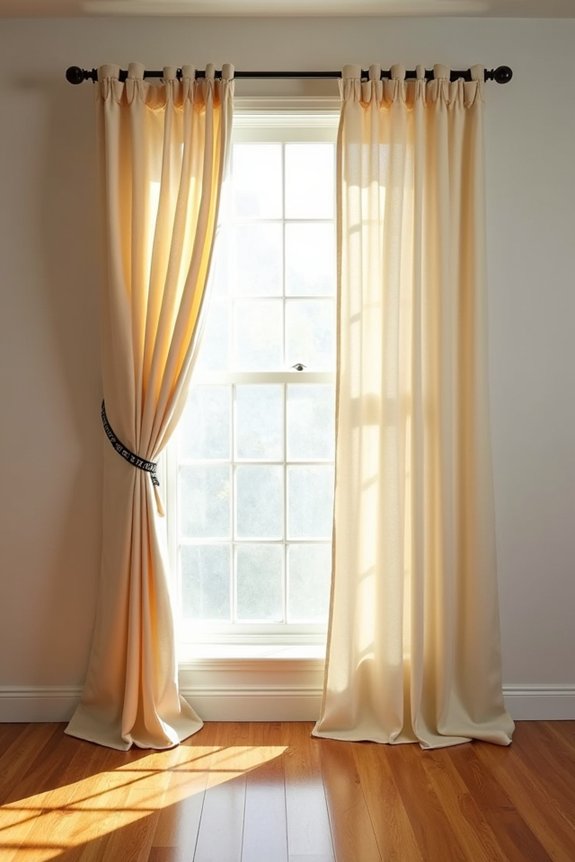
How do you guarantee your back tab curtains hang with the proper proportions and coverage? Accurate drapery measurement determines your success. Measure panel length from the back tab top to your desired endpoint—sill, apron, or floor. For width fullness, multiply your rod width by 1.5 for standard gathering or 2 for luxurious effects. Avoid exceeding 2× rod width; excess fabric prevents even gathering at the curtain header. A 36-inch rod typically requires two 36-inch-wide panels for rich fullness. Pair panels consistently to maintain uniform appearance across your installation. This measurement approach provides your back tab curtains with the proper fit. Proper fullness and panel length create professional results that improve any window.
Install Back Tab Curtains in 4 Easy Steps
Installation guides your measured panels into finished window treatments through straightforward mechanical steps. Follow this process for hanging your back tab curtains with precision and confidence.
- Thread the curtain rod through each hidden tab sewn behind the back tab top, ensuring complete passage through every opening
- Space your tabs evenly along the rod to create uniform pleats and soft architectural folds across the entire panel width
- Slide the assembled rod onto wall brackets and secure them firmly, positioning your panel to hang straight with concealed hardware
- Adjust tab spacing after mounting to refine pleats and achieve consistent gathered appearance; verify fabric drapes smoothly without catching
This curtain installation method delivers professional results. Your pleated curtains will display clean lines and polished styling for any room.
Fabric Weight and Selection: The Back Tab Critical Factor
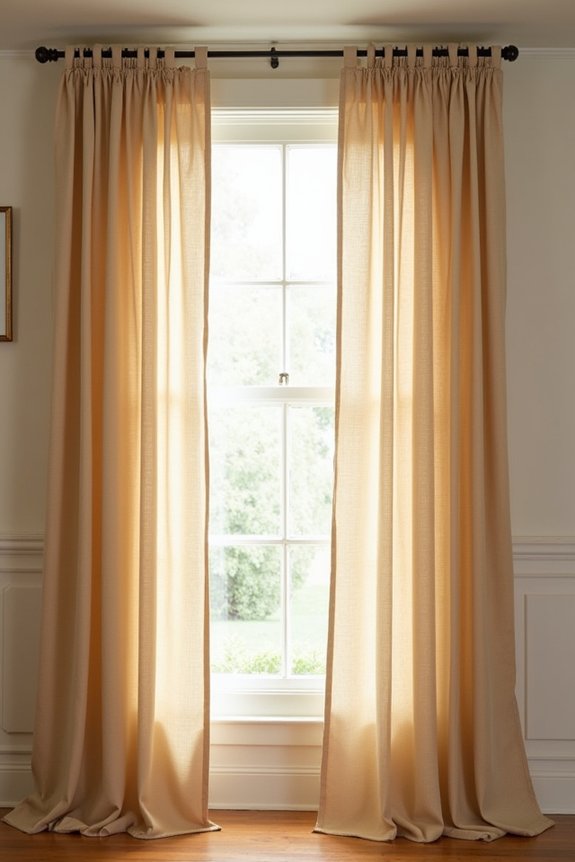
Your fabric choice fundamentally determines whether back tab curtains hang with crisp pleats or sag into formless bunches. Lightweight fabrics—linen blends, cotton, and poly-cotton—enable smooth tab movement and consistent header gathering. These materials allow hidden tabs to function properly without strain.
Heavier fabrics like thick velvet create problems. They weigh down the tabs, restricting proper tab movement and preventing even pleats. This excess weight compromises the floating aesthetic you’re targeting.
Fabric drape matters significantly. Materials with soft, fluid falls create the most flattering, uniform pleats behind concealed tabs. Sheers and lightweight layers pair exceptionally well, offering layered styling without bulky hardware visibility.
Avoid extra-heavy blackout fabrics entirely. They hinder even pleats and reduce curtain functionality. Your fabric selection directly impacts both performance and visual outcome.
Caring for Your Back Tab Curtains Between Cleanings

Between full cleanings, consistent maintenance preserves both the fabric integrity and the tab functionality that defines back tab curtains. You’ll want to establish a routine that keeps your panels looking fresh while protecting the tabs and loops from unnecessary strain.
- Gently dust panels weekly using a soft brush or microfiber cloth to prevent dust accumulation on lightweight fabrics
- Spot-clean stains immediately with mild soap and water, working carefully around the tabs and loops
- Avoid heavy scrubbing, which can damage fabric glides and weaken the stitching securing the tabs
- Test any cleaning solution on hidden fabric sections before applying to visible areas
This fabric maintenance approach keeps your back tab curtains retaining their smooth folds and clean appearance. Regular dusting and prompt spot-cleaning between full fabric care sessions protect your investment while maintaining optimal functionality of those critical tabs.