You’ll need between 6 and 18 rings per panel, depending on your rod length and fabric weight. Divide your rod length in inches by 8 for minimum spacing (wider gaps) or by 4 for maximum spacing (tighter support).
A 48-inch rod requires 6 to 12 rings; a 72-inch rod needs 9 to 18.
Heavy fabrics demand closer spacing around 4 inches apart, while lightweight panels can stretch to 6-inch intervals. Your pleat style and fullness preference will determine your exact count.
The Basic Formula for Rings Per Panel
How do you calculate the exact number of curtain rings you’ll need for each panel? I’ll walk you through the fundamental approach. Divide your rod length in inches by three for standard fullness or by four for full fullness. This division yields your curtain rings per panel estimate. Industry guidance suggests approximately three to four rings per foot of panel width, though fullness and pleat style ultimately determine your final count. For standard fullness, multiply your panel width in inches by 1.5 to 2. For full fullness, multiply by 2.5 to 3. These multipliers establish total fabric width needed. Add one ring per pleat if your panel includes a return, or add two rings if no return exists. These specifications support proper spacing and drape quality.
Minimum vs. Maximum: Understanding the 4-to-8-Inch Rule
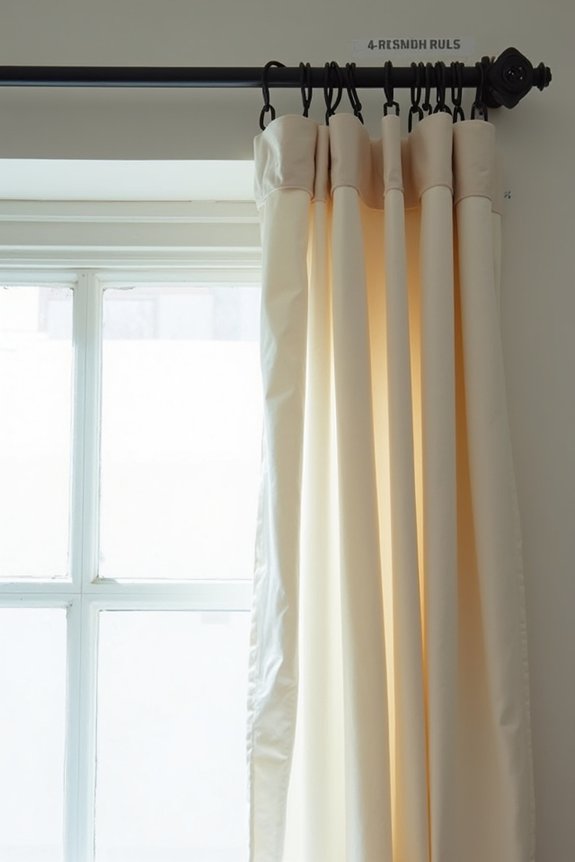
I’ll guide you through spacing your curtain rings using two practical standards. The 4-inch spacing creates a maximum ring count, while 8-inch spacing establishes your minimum—you’ll find the ideal number by dividing your rod length in inches by these measurements. Understanding this calculation method lets you customize ring placement based on your panel’s weight, fabric type, and desired visual appearance.
The 4-Inch Spacing Standard
When you’re determining curtain ring placement, the 4-to-8-inch spacing rule provides your foundational calculation method. I find that the 4-inch standard represents the maximum ring density you’d typically employ. This closer spacing creates fuller, more pronounced pleats between rings. You’ll divide your rod length by 4 to determine how many rings you’ll need at this tighter interval.
For a 48-inch rod, that calculation yields 12 rings maximum. The 4-inch standard works particularly well for heavier fabrics requiring substantial support. It also accommodates decorative ring styles where visual impact matters. However, I’d recommend adjusting based on your specific fabric weight and pleat preference. Denser ring placement demands more rings but delivers better control over fabric drape and pleat formation along your panel.
The 8-Inch Spacing Standard
At the wider end of the spectrum, 8-inch spacing represents your minimum ring density for most applications. This measurement works well when you want fuller, more gathered fabric without excessive bunching. You’ll calculate minimum rings per panel by dividing your rod length in inches by 8. For instance, a 48-inch rod requires roughly 6 rings, while a 72-inch rod needs approximately 9 rings.
| Rod Length | Calculation | Minimum Rings | Visual Result |
|---|---|---|---|
| 4 feet (48″) | 48 ÷ 8 | 6 rings | Fuller gathers |
| 5 feet (60″) | 60 ÷ 8 | 7-8 rings | Moderate volume |
| 6 feet (72″) | 72 ÷ 8 | 9 rings | Generous folds |
| 8 feet (96″) | 96 ÷ 8 | 12 rings | Maximum fullness |
This spacing standard delivers balanced aesthetics with noticeable fabric movement.
Rod Length Calculation Method
The 8-inch spacing standard gives you a solid starting point, but you’ll want to understand the full range available before finalizing your ring count. I can help you calculate minimum and maximum ring quantities using a straightforward formula based on your rod length.
Here’s how the calculation works:
- Minimum rings: Divide your rod length in inches by 8
- Maximum rings: Divide your rod length in inches by 4
- Example application: A 72-inch rod requires between 9 and 18 rings
For a 48-inch rod, you’re looking at 6 to 12 rings. For a 72-inch rod, expect 9 to 18 rings. This range accounts for different spacing preferences and allows flexibility in your design choices. Remember, this method provides a baseline—you’ll adjust based on your specific fullness category and panel construction preferences afterward.
Pinch-Pleat vs. Knife-Pleat: Which Determines Your Ring Count?
The pleat style you choose—pinch or knife—directly determines your ring count per panel because each style distributes fabric differently across the rod. Pinch pleats typically require 51.5 rings for single-width panels and 102.5 rings for double-width panels, while knife pleats correlate their ring count to the actual number of pleats, ranging from 81.5 widths for single to 162.5 for double configurations. Understanding this distinction matters because selecting the wrong pleat style calculation will leave you with either insufficient rings for proper pleat formation or excess hardware that disrupts your curtain’s visual symmetry.
Pinch Pleat Ring Count
How will your pleat style affect your ring calculation?
Pinch-pleat rings depend directly on your pleat configuration and panel width, not a standardized per-foot rule. Here’s what determines your exact count.
- Count one ring per pleat or pleat pair based on your specific pinch-pleat setup and spacing requirements
- Add one ring per pleat when returns exist, or two rings without returns to accommodate edge spacing
- Reference panel width standards: single-width panels equal 51.5 widths, double-width panels equal 102.5 widths for estimation purposes
Your fullness category—standard versus full—directly affects how rings divide across your rod length. Single-width pinch-pleat panels typically require fewer rings than double-width configurations. Calculate your total pinch-pleat rings by analyzing pleat style first, then adjusting for returns and panel dimensions to maintain proper drape and functionality.
Knife Pleat Specifications
While pinch pleats rely on your pleat configuration and spacing to determine ring placement, knife pleats operate under a simpler, more direct system. Each knife pleat requires one ring for secure hanging. This straightforward approach removes guesswork from your installation process.
| Panel Width | Ring Count |
|---|---|
| Single Width | 8 rings |
| Double Width | 16 rings |
| Triple Width | 24 rings |
The knife pleat’s design creates uniform, vertical folds that stack consistently across your curtain panel. One ring anchors each pleat at its top, distributing weight evenly along your rod. This method works reliably for both lightweight and heavier fabrics. The knife pleat’s systematic ring distribution provides balanced panel movement and professional appearance without complicated calculations or adjustments.
Pleat Style Comparison
Your pleat style fundamentally determines how many rings you’ll need per panel. Here are the key differences between pinch pleats and knife pleats for your curtains.
Pinch pleats and knife pleats require notably different ring quantities due to their structural designs:
- Knife pleats use approximately 8 rings for single-width panels and 24 rings for triple-width configurations
- Pinch pleats demand roughly 51.5 rings on single-width panels and 102.5 rings on double-width panels
- Width multiples directly influence ring counts, with wider panels requiring proportionally more rings
The distinction matters because pinch pleats create deeper, more structured folds requiring additional support. Knife pleats form sharper, more uniform creases needing fewer rings per pleat. Your panel width multiplies these base requirements, making width selection important to achieving proper pleat definition and fabric hang.
Ring Count for Pinch-Pleat Curtains
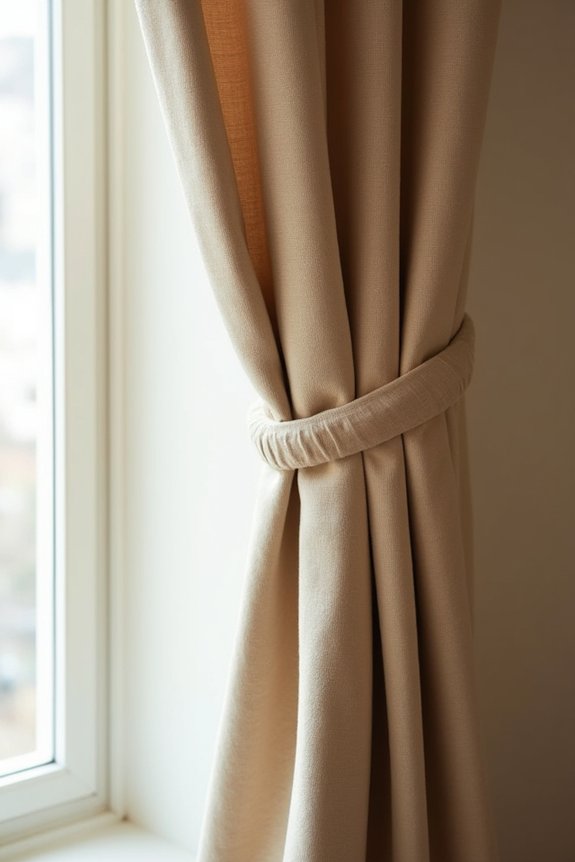
Pinch-pleat curtains require a specific ring calculation that differs from standard panels. Rings per panel depend directly on pleat count and panel width. Single-width panels typically need 51.5 rings, while double-width panels require 102.5 rings—demonstrating how width increases ring demand proportionally.
The industry guideline suggests 3 to 4 rings per foot of panel width, though your actual design specifications should guide final counts. A panel featuring seven pleats and a return generates eight total rings. This calculation shows how each pleat demands one ring, plus one additional ring for the return.
When you add decorative trim, you’ll need one extra ring per panel. Remember that a pair of panels doubles your total ring count, affecting your overall hardware investment significantly.
Ring Count for Knife-Pleat Curtains
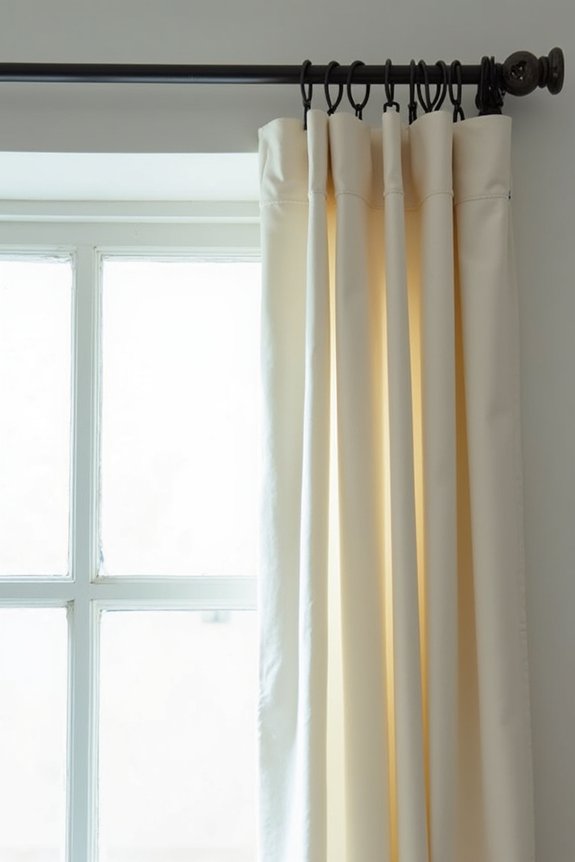
How does knife-pleat construction change your ring requirements?
Knife-pleat panels demand specific ring counts based on panel width. Calculate the exact number you need for your installation using these guidelines.
Knife-pleat panels demand specific ring counts based on panel width. Calculate your exact installation needs using these guidelines.
Ring Count Guidelines by Panel Width:
- Single-width panels require 81.5 rings per panel
- Double-width panels need 162.5 rings per panel
- Triple-width panels require 24 rings per panel
The scaling pattern shows that ring clips must accommodate each pleat’s depth and spacing. If your panel includes decorative trim, add one ring per panel. Paired panels double your total ring count. Returns secured to walls don’t require additional rings beyond your calculated base number. Industry standards suggest 3–4 rings per foot, though your desired fullness ultimately determines final placement. Standard fullness versus full fullness affects spacing between ring clips on your rod.
Don’t Forget Returns and Decorative Trim
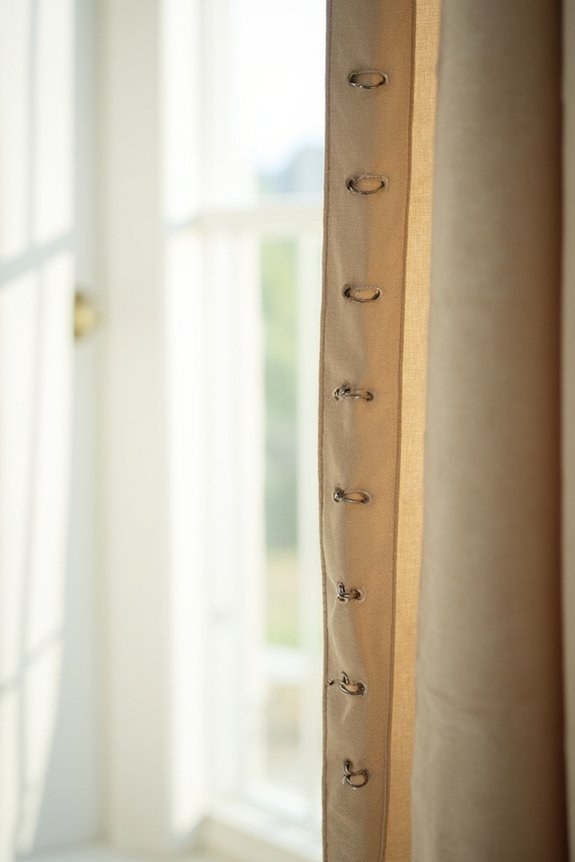
When your curtain panels have returns—the fabric sections that fold toward the wall—you won’t need extra rings beyond your pleat count since the return itself handles spacing. If your panels lack returns, you’ll add two rings to prevent the panel from sitting flush against the wall or window frame. Decorative trim on leading edges requires one additional ring per panel, so factor this into your total count alongside any returns or spacing adjustments.
Returns Conceal Wall Gaps
Returns—the fabric extensions that fold perpendicular to your wall—serve a practical function beyond aesthetics. When you secure a return to the wall, it conceals the gap between your panel and the wall surface. This eliminates unsightly spacing that would otherwise expose your wall behind the curtains.
What you need to know about returns and ring placement:
- A secured return requires no additional rings beyond your standard pleat count
- For a panel with seven pleats and a return, you’ll need exactly eight rings total
- The return itself doesn’t demand extra hardware when properly fastened to the wall
Understanding this relationship helps you calculate your ring needs accurately. You’re investing in both function and finished appearance. A properly secured return creates a polished look while reducing your overall ring requirements, making your installation more efficient and cost-effective.
Decorative Trim Adds Rings
While returns handle wall gaps efficiently, decorative trim introduces a different hardware consideration. I’m adding one ring per panel when decorative trim appears on the leading edge. This calculation happens separately from pleat and width requirements, preventing undercounting of hardware needs.
| Panel Configuration | Base Rings | Trim Addition | Total Rings |
|---|---|---|---|
| Single panel, no trim | 8 | 0 | 8 |
| Single panel, with trim | 8 | 1 | 9 |
| Paired panels, no trim | 16 | 0 | 16 |
| Paired panels, with trim | 16 | 2 | 18 |
When I pair two panels together, I’m doubling the decorative trim impact because each panel receives its own ring addition. The eyelets included in my packaging deserve attention too—I keep them since they influence final ring placement with decorative trim applications. This precision prevents installation complications later.
Accounting For Panel Edges
How do returns and decorative trim alter your ring calculations at panel edges?
Returns—the fabric extensions securing panels to walls—require one additional curtain ring per panel. Wall-secured returns eliminate the need for extra rings, streamlining your installation. Decorative trim on leading edges demands one ring per panel, increasing your total count considerably.
Consider these edge factors:
- Returns without wall attachment: Add one curtain ring per panel to support the return fabric
- Decorative leading-edge trim: Requires one additional ring per panel for proper weight distribution
- Paired panels with returns and trim: Double your ring calculations since requirements apply to each panel individually
Calculate your base ring count first, then add rings for returns and trim separately. This systematic approach prevents miscounting and maintains even spacing across your window treatment.
Heavy Fabrics Need More Rings: Here’s Why
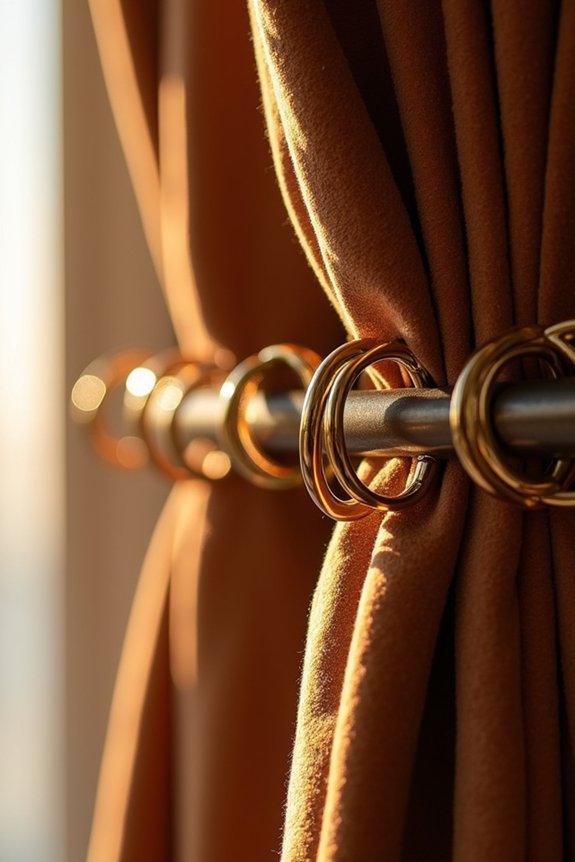
Velvet, linen, and heavyweight damask demand markedly more curtain rings than their lightweight counterparts, and there’s a structural reason why. Heavier fabrics require additional rings because weight distribution across multiple secure points prevents sagging and maintains panel shape.
| Fabric Type | Ring Spacing | Ring Count (84″ Panel) |
|---|---|---|
| Lightweight | 6 inches | 14 rings |
| Medium | 5 inches | 17 rings |
| Heavy | 4 inches | 21 rings |
Space rings roughly every 4 inches along heavy fabric panels to maintain adequate support. This closer spacing distributes fullness evenly and reduces strain on your rod. Plan for higher ring counts upfront—expect more rings than standard lighter panels. Fabric density directly determines your ring requirements, so assess your material’s weight before purchasing.
Standard vs. Full Fullness: What’s the Difference?
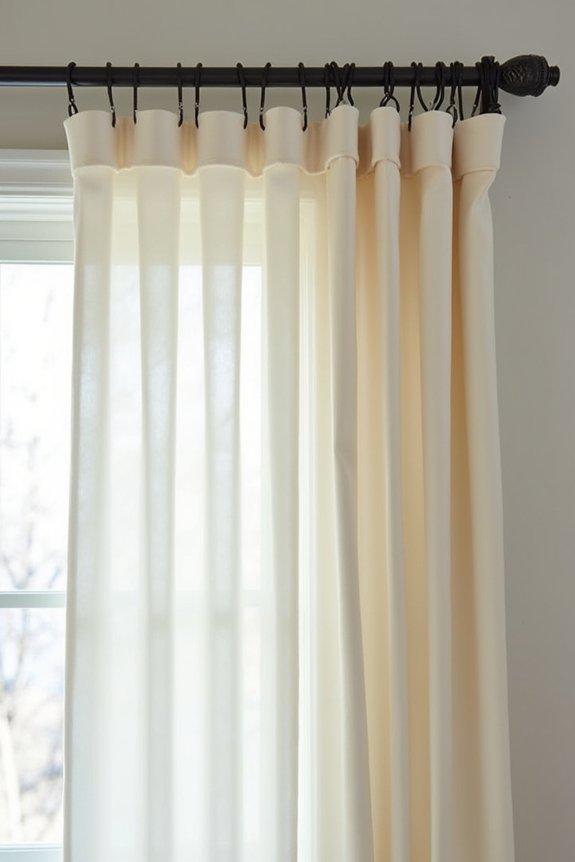
The amount of fabric you gather onto your rod fundamentally changes how many rings you’ll need.
Standard fullness multiplies your window width by 1.5 to 2 times. Full fullness increases that multiplier to 2.5 to 3 times. This difference directly impacts your curtain rings count and overall drape appearance.
Here’s what distinguishes these categories:
- Standard fullness divides rod length by 3 to estimate ring spacing, creating moderate folds with less fabric density
- Full fullness divides rod length by 4, requiring closer ring placement to support increased fabric weight and volume
- Visual outcome varies significantly: standard delivers controlled pleating, while full creates luxurious, dramatic cascading folds
Determining your fullness category before purchasing curtain rings allows proper spacing and even distribution across your panel. This upfront decision prevents purchasing insufficient rings or creating gaps between hanging points that compromise your intended aesthetic.
Spacing Flat Panels: The 5-to-7-Inch Rule
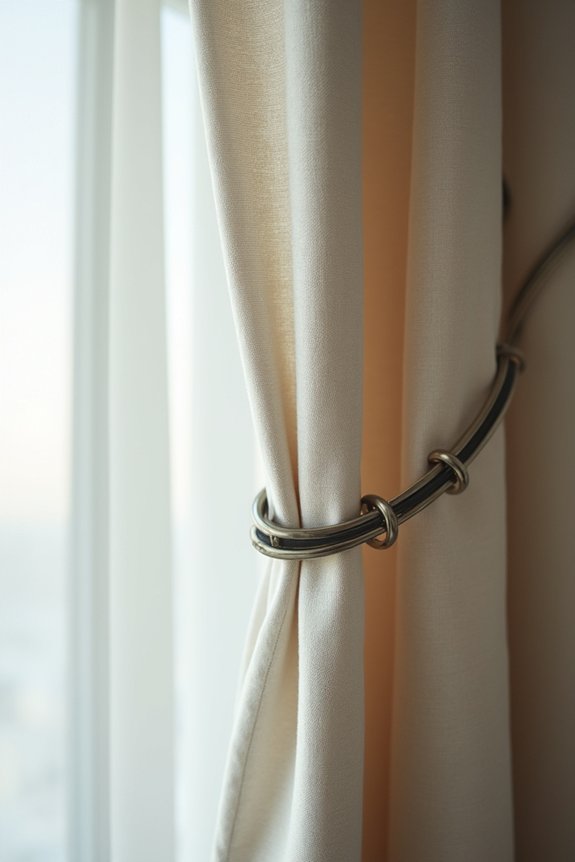
Once you’ve settled on your fullness category, flat panels demand a different spacing approach than their gathered counterparts. I recommend positioning rings every 5 to 7 inches across your panel’s width for a balanced aesthetic. This spacing range gives you flexibility to customize your look based on personal preference.
Closer ring intervals create a flatter, sleeker appearance. Wider spacing between rings produces a fuller, more gathered effect. When your panels include back tabs, place rings at each tab location and on both ends. This maintains even weight distribution and prevents sagging.
The spacing strategy prioritizes visual balance over mathematical precision. You’re adjusting ring placement to achieve your desired drapery effect. Consider measuring your panel width, then dividing by your preferred spacing interval to determine your exact ring count. This approach combines guidance with creative control.
The Folding Method: Spacing Rings Evenly Before Hanging

Achieving perfectly even ring spacing doesn’t require mathematical calculations or trial-and-error adjustments on your panel. I use the folding method to establish precise placement before hanging. Here’s how I maintain consistent spacing:
- Fold the curtain panel lengthwise three times to create visible creases that guide ring clip placement
- Position nine ring clips strategically: one on each end, one at the folded middle, four in the middle section on each layer, and two on the opposite edge
- Unfold the panel after positioning all ring clips to reveal evenly distributed spacing along the original creases
This technique removes guesswork. The creases act as permanent guides for ring clip placement. When you unfold the panel, the rings remain perfectly spaced without measuring or adjusting individual positions. The method works because folding creates symmetrical reference points that translate to balanced spacing across the full width.
Why Rings Too Far Apart Cause Sagging (and How to Fix It)

Why do curtain panels sag when rings space too far apart? Insufficient drapery rings create gaps in support along the rod length, allowing fabric weight to pull downward between attachment points. This creates visible dips and uneven tension across your panel.
You’ll want 3 to 4 rings per foot of panel width to maintain fullness and prevent sag. For standard fullness, divide your rod length by 3; for fuller effects, divide by 4. Flat panels with spacing every 5–7 inches help maintain even tension.
If you’re experiencing sagging, add more drapery rings per panel or adjust your fullness category upward. More rings distribute fabric weight evenly. This approach eliminates slack and restores a polished appearance to your curtains.
The 3-to-4 Rings-Per-Foot Fallback When Specs Are Unknown

When you’re shopping for curtain rings without access to your drapery’s fullness specifications or pleat style details, the 3-to-4 rings-per-foot guideline serves as your practical baseline. This standard approach helps you estimate ring placement when exact design specs remain unavailable.
Here’s how to apply the rings-per-foot method:
- Measure your panel width in feet, then multiply by 3 or 4 to determine total ring quantity
- Use 3 rings per foot for standard fullness; increase to 4 for fuller, more gathered appearances
- Space rings approximately 5–7 inches apart to align with this baseline calculation
This flexible guideline prevents sagging between attachment points while accommodating various pleat styles. However, remember that fullness level and pleat choice ultimately determine your exact ring count. Use this fallback method as a starting framework, not your sole calculation tool.